Dicey Dungeons has a wonderfully direct hook: you are a walking die, trapped on Lady Luck’s game show, trying to fight your way through a dungeon where every plan begins with a roll. It looks playful, almost toy-like, but the best runs are built from careful arithmetic, smart risk and a little stubborn optimism.
- Developer
- Terry Cavanagh
- Publisher
- Terry Cavanagh
- Release date
- August 13, 2019
- Platforms
- Windows, macOS and Linux
- Price checked
- $14.99 / GBP 12.79 / EUR 14.79 on Steam, checked May 16, 2026
- Where to buy
- Steam
The setup is simple and strange in the right way. A sinister host offers each contestant a prize, then turns them into a die and sends them into a chain of rooms filled with enemies, shops, treasure chests and upgrade spots. A run moves quickly: choose a node, fight, take a reward, make one or two build decisions, then push deeper until the whole thing either clicks or collapses.
Combat is small maths with personality
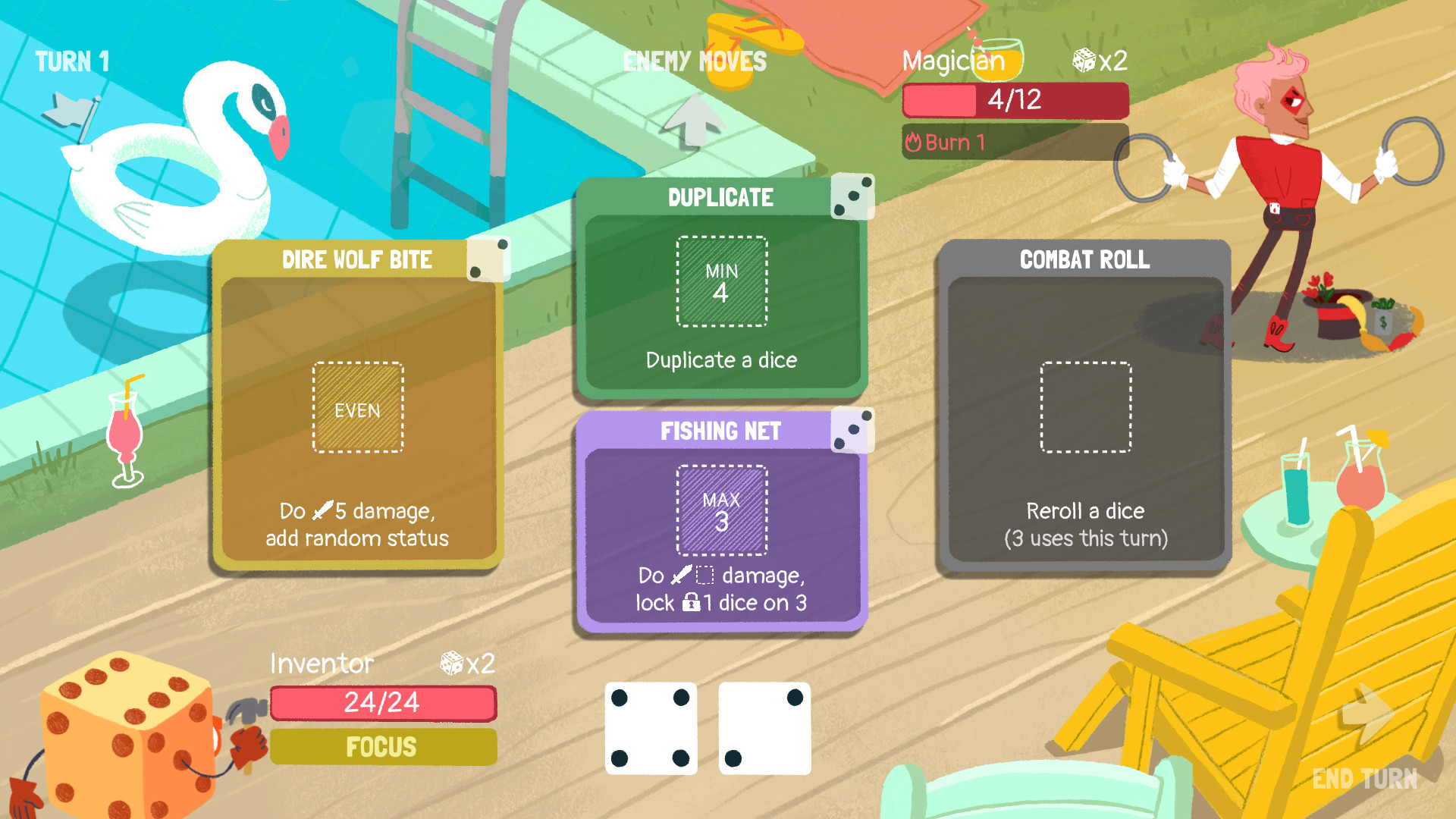
Each turn gives you a handful of dice. You drag them onto equipment slots to attack, defend, heal or trigger status effects. A sword may simply deal damage equal to the die placed on it. A hammer might hit harder when fed a high number. Other cards require even numbers, pairs, countdown totals or exact values. The result is a combat system that feels readable at first glance but keeps asking better questions as your equipment improves.

The clever part is that Dicey Dungeons rarely treats randomness as an excuse. A bad roll is not the game shrugging at you; it is a little puzzle. Can you split the numbers into enough shield to survive? Should you use a weak die now to unlock shocked equipment? Is it worth burning health to play a die that has been set on fire? The best turns feel like solving a tiny budget problem while a cartoon monster grins at you from across the table.
Every character bends the rules
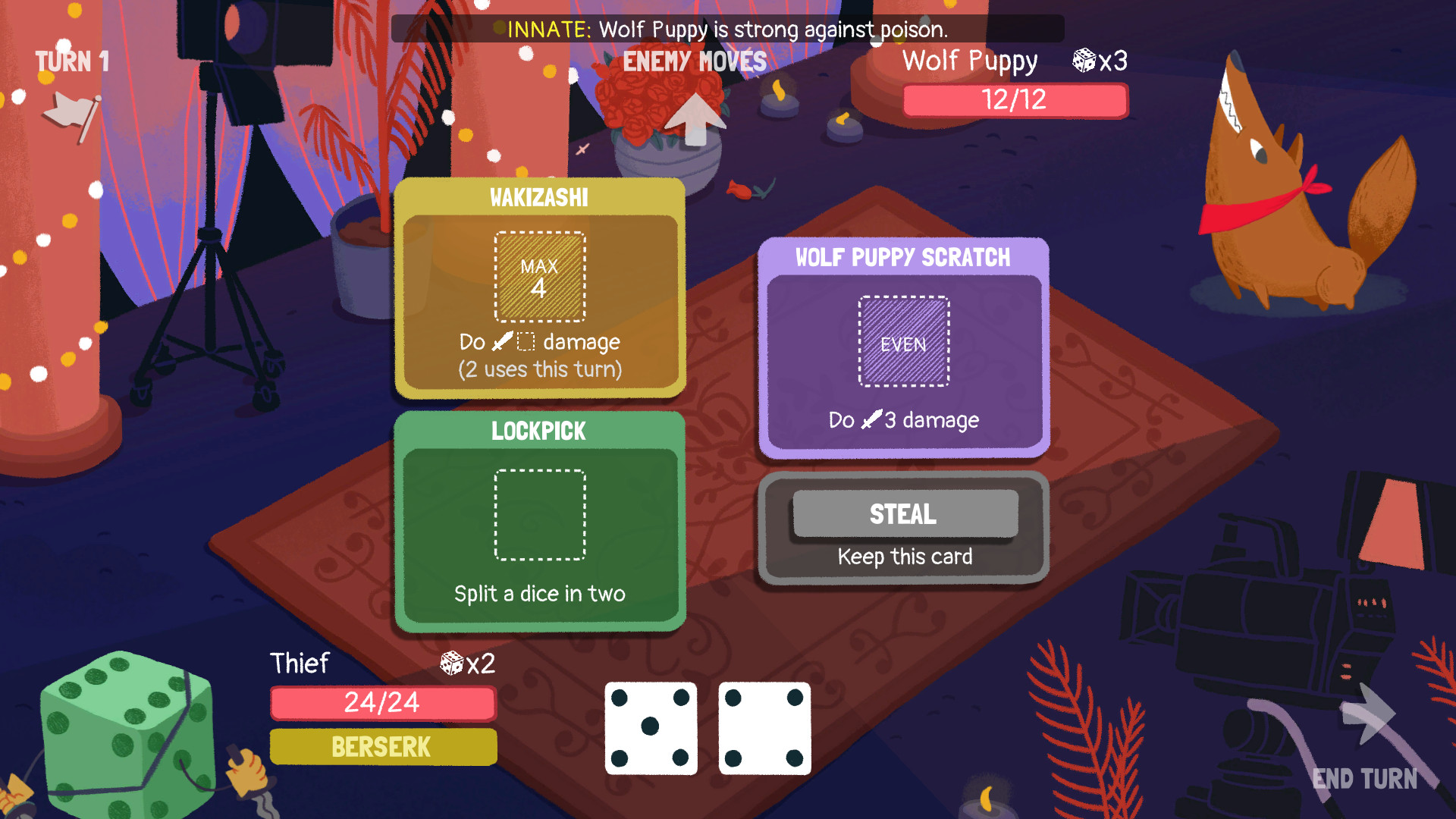
The six playable classes are the real engine of the game. The Warrior is the clean introduction, with rerolls and straightforward damage. The Thief steals enemy equipment and improvises around whatever the room provides. The Robot turns dice generation into a push-your-luck meter. The Inventor keeps destroying gear to create gadgets, which makes every reward a little painful. The Witch is slower and more demanding, asking you to prepare spells before you can use them efficiently. The Jester shuffles through a mini deck and rewards timing.
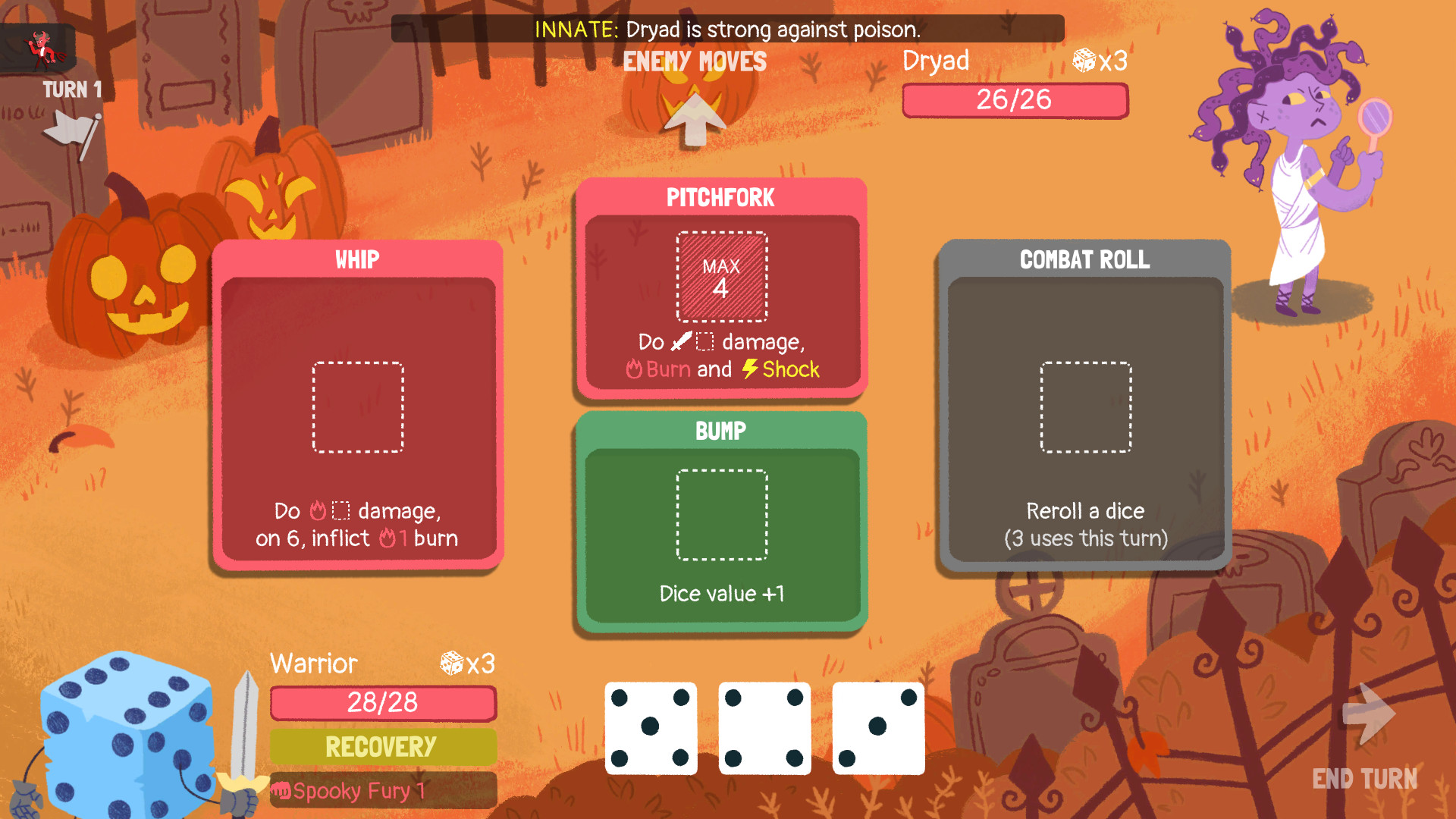
That variety matters because the basic dungeon format is intentionally compact. A floor is not sprawling, and a fight is not bloated with needless animation. The pleasure comes from seeing the same objects behave differently in a new ruleset. A piece of equipment that felt ordinary for the Warrior can become vital for the Witch or disposable fuel for the Inventor.
Bright, fast and a little mean
The presentation does a lot of heavy lifting. Marlowe Dobbe’s art gives even small enemies immediate character, and Chipzel’s soundtrack has the fizz of a game show that has gone cheerfully wrong. Dicey Dungeons is easy to read, quick to restart and full of expressive little touches, from the smugness of Lady Luck to the way status icons make danger obvious without slowing the pace.
It can also be harsher than its candy-colored look suggests. A run can fall apart late because one enemy matchup punishes your build, and some episodes are much less forgiving than others. Progress is tied to clearing challenges rather than earning steady upgrades, so a failed attempt mostly sends you back wiser rather than stronger. For players who enjoy roguelikes, that is part of the bargain. For anyone expecting a breezy puzzle game, it can sting.

Verdict
Dicey Dungeons is still one of the most approachable deckbuilding roguelikes because it makes its tactics visible. You do not need to memorize a huge card pool before the fun begins; you just need to understand what your dice can do this turn. Then, as the classes and episodes twist the rules, that simplicity becomes a surprisingly durable strategy game.
Original source: Rock Paper Shotgun.