
Aztec Batman Pushes the Dark Knight’s Mythology Past Its Breaking Point
Few comic-book icons are as adaptable as Batman, a fact that Warner Bros. Animation has leaned into by transplanting the Dark Knight into wildly different eras. From feudal Japan in Batman Ninja to Victorian London in Batman: Gotham by Gaslight, and even 1920s cosmic terror in Batman: The Doom That Came to Gotham, those experiments usually produce strikingly original takes. Juan Meza-León’s Aztec Batman: Clash of Empires follows that impulse, relocating familiar elements to 16th-century Mesoamerica — but the film struggles to reconcile Batman’s mythology with a story centered on the historical Spanish invasion of Tenochtitlán.
Some of the earlier time-shifted Batman projects worked precisely because they embraced genre mash-ups and gleeful excess. Others grounded their departures by leaning into Batman’s status as the world’s premier detective. Meza-León’s protagonist, Yohualli Coatl (voiced by Horacio García Rojas), occasionally wears the trappings of Batman, but he rarely behaves like the detective or the icon, and that mismatch undercuts much of the film’s dramatic weight.
The movie follows several familiar beats from origin myths like Batman: Year One: after Hernán Cortés (Álvaro Morte) slays his father, Yohualli vows revenge, trains, adopts a disguise and experiences early setbacks before meeting Jaguar Woman (Teresa Ruiz). Yet unlike those detective-driven origins, Yohualli never conducts meaningful investigations or cultivates a reputation that terrifies his enemies. He functions more as a conventional heroic figure rallying his people than as a calculating symbol of fear — closer to a Zorro-style avenger than the cerebral Gotham vigilante.
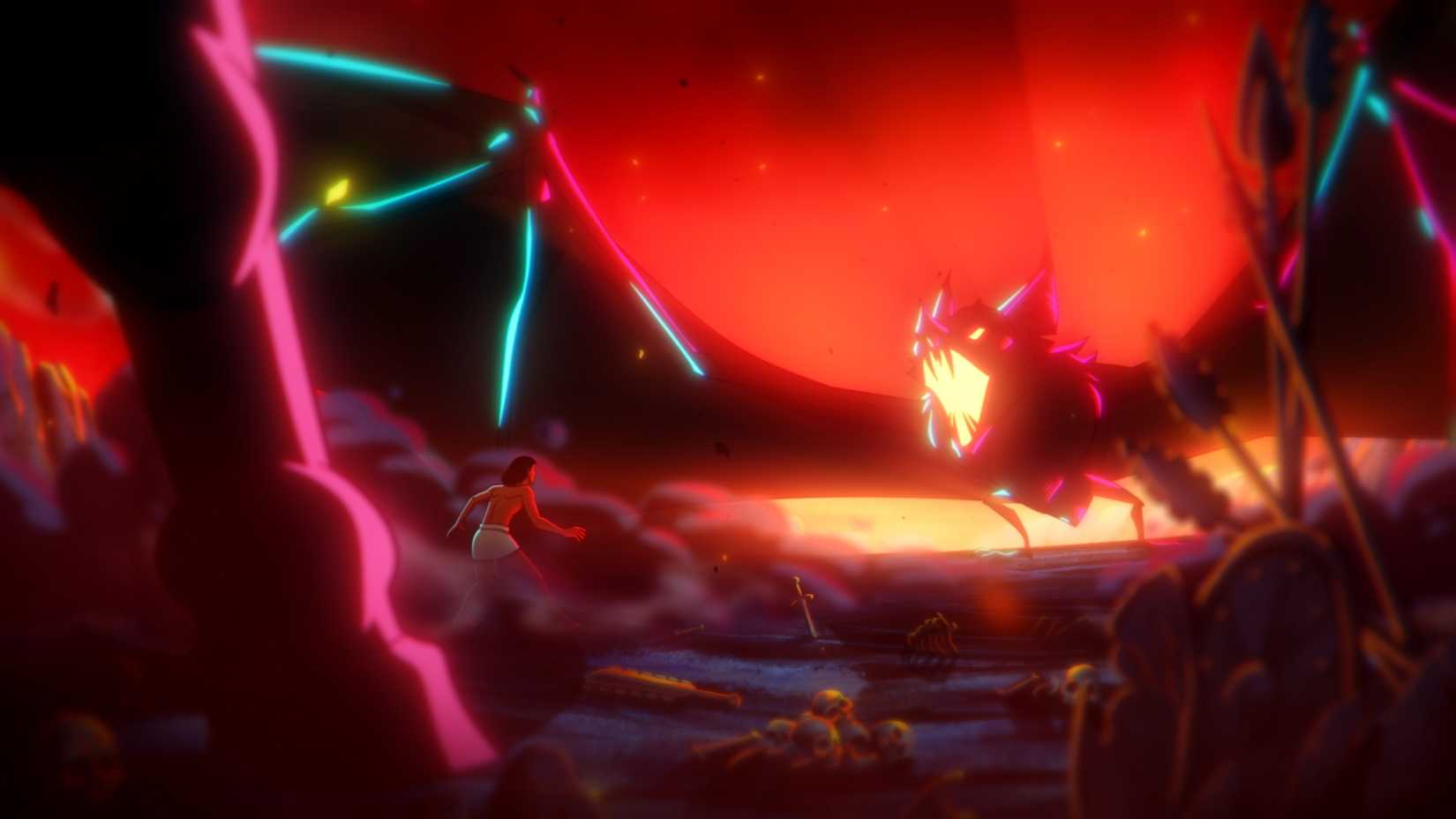
The film’s tonal friction becomes apparent early: Yohualli receives prophetic visions from the bat god Tzinacan — an explicitly supernatural framing that turns his transformation into the mantle into an act of religious destiny rather than the obsessive, self-fashioned crusade audiences usually associate with Batman. Meanwhile, King Moctezuma’s high priest Yoka (Omar Chaparro) champions human sacrifice and counsels the ruler to regard the conquistadors as divine agents. The neon-hued gods Meza-León envisions are visually arresting, but they often act as plot devices that strip human characters of agency rather than deepen their motives.
Yoka is set up with unnerving detail and an origin that echoes Joker-like manipulation, yet he functions mostly as a manipulative adviser pushing Moctezuma (Humberto Busto) toward catastrophe. Structurally, the film spends more time laying groundwork for a follow-up than delivering a self-contained, emotionally satisfying narrative. Many supporting figures feel underwritten: Forest Ivy (Maya Zapata) appears in a luminous, dreamlike scene wearing a crown of maize, but she serves more as an archetypal forest spirit than a developed character; Pedro de Alvarado (José C. Illanes Puentes) operates as a one-note lieutenant; and Cortés’s gradual slide toward madness cleverly echoes Two-Face, yet the film reduces that arc to a familiar portrait of avarice.
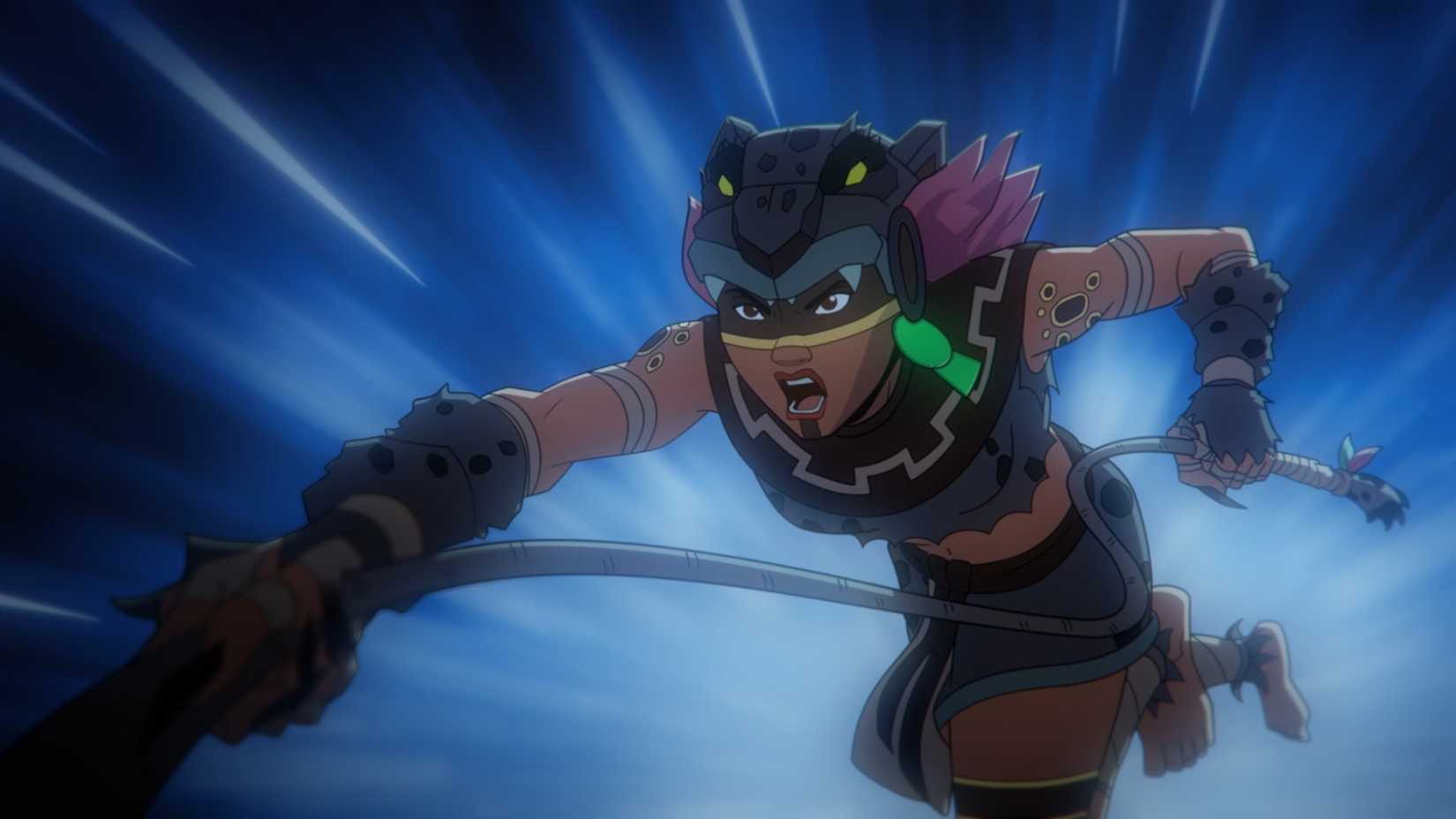
If the goal was to dramatize a divine struggle in Mesoamerica using DC’s roster, a character like Wonder Woman might have been a more natural centerpiece — the comics have already introduced Latin American figures such as Yara Flor, and Diana’s mythic scale fits large-scale battlefield mythmaking better than a shadowy detective who operates outside the limelight. That isn’t to say a Mesoamerican Batman couldn’t work — approached as a pulp-era, Zorro-inspired vigilante it could be compelling — but the film’s choices often leave Batman’s essential qualities sidelined.
Animation studio Ánima stages several sequences with kinetic energy: chase scenes featuring Yohualli and Jaguar Woman are fluid and engaging. Still, the confrontations between Yohualli and Cortés frequently feel stiff by comparison, which exposes a reliance on shock and spectacle over choreographic clarity. When the action falters, the script falls back on stock villain boasts and stilted heroics rather than robust character beats.
There’s promise in the concept — a Mexican creative team telling stories about the Spanish conquest and its aftermath could yield rich cinema — but packing historical trauma, mythic gods and a transplanted superhero into the same frame leaves Aztec Batman uneven. The result is an ambitious experiment that never quite finds the right fit for the Dark Knight’s core identity.
Aztec Batman will be available on VOD platforms on September 19, 2025.
Source: Polygon
Related articles
 “The Bunker” starring Bardem and Cruz screened at Venice
 The Librarians: The Next Chapter Season 2 Has Concluded
 “The Mummy 4” filming has begun
 Urfin Jus Movie Announced
 Ellen Burstyn Receives Honorary Golden Lion
 Danny Boyle used artificial intelligence in his new film “Inks”
 Gary Oldman Reveals the Name of the New Bond
 Summer 2026 Becomes the Highest-Grossing Season in U.S. Box Office History