
A Line in Pluribus Reveals Carol Is in Far Greater Danger Than She Realizes

Pluribus episode six detonates expectations. Carol (Rhea Seehorn) recoils from a discovery about what the hivemind consumes and, unwilling to trust a filtered account, resolves to deliver the news in person — an impulse that only exposes her to deeper and more unsettling truths about the Others. “HDP” expands our understanding of the hivemind’s constraints around joining and consumption. At first, learning those limits feels like a reprieve for Carol, but in truth it heightens the peril she faces of being transformed.
Ed. note: Spoilers ahead for Pluribus episode 6.

When Carol flies to Las Vegas to confront Koumba Diabaté (Samba Schutte) with her discovery that the Others are consuming people, she’s stunned to discover he isn’t surprised. In a recorded message for Carol, John Cena calmly argues that ingesting “human-derived protein” — HDP — prevents the waste of the roughly 886 million bodies produced during the initial joining, along with subsequent deaths. As Zosia (Karolina Wydra) observed in episode two, the hivemind would rather subsist on non-animal sources, but its prohibitions against harming living beings extend even to harvesting plants. Even with HDP as a stopgap, their projections suggest mass starvation could decimate humanity within a decade.
Pressing Koumba for how he can be so composed — especially since he and the hivemind will eventually starve unless survivors join them — Carol learns that spending time dialoguing with the Others changed his perspective. The joining was triggered by a virus to which the twelve survivors are naturally immune. To infect those survivors, the Others would need to engineer a bespoke virus that requires stem cells: an intrusive procedure the Others claim they won’t perform without consent.
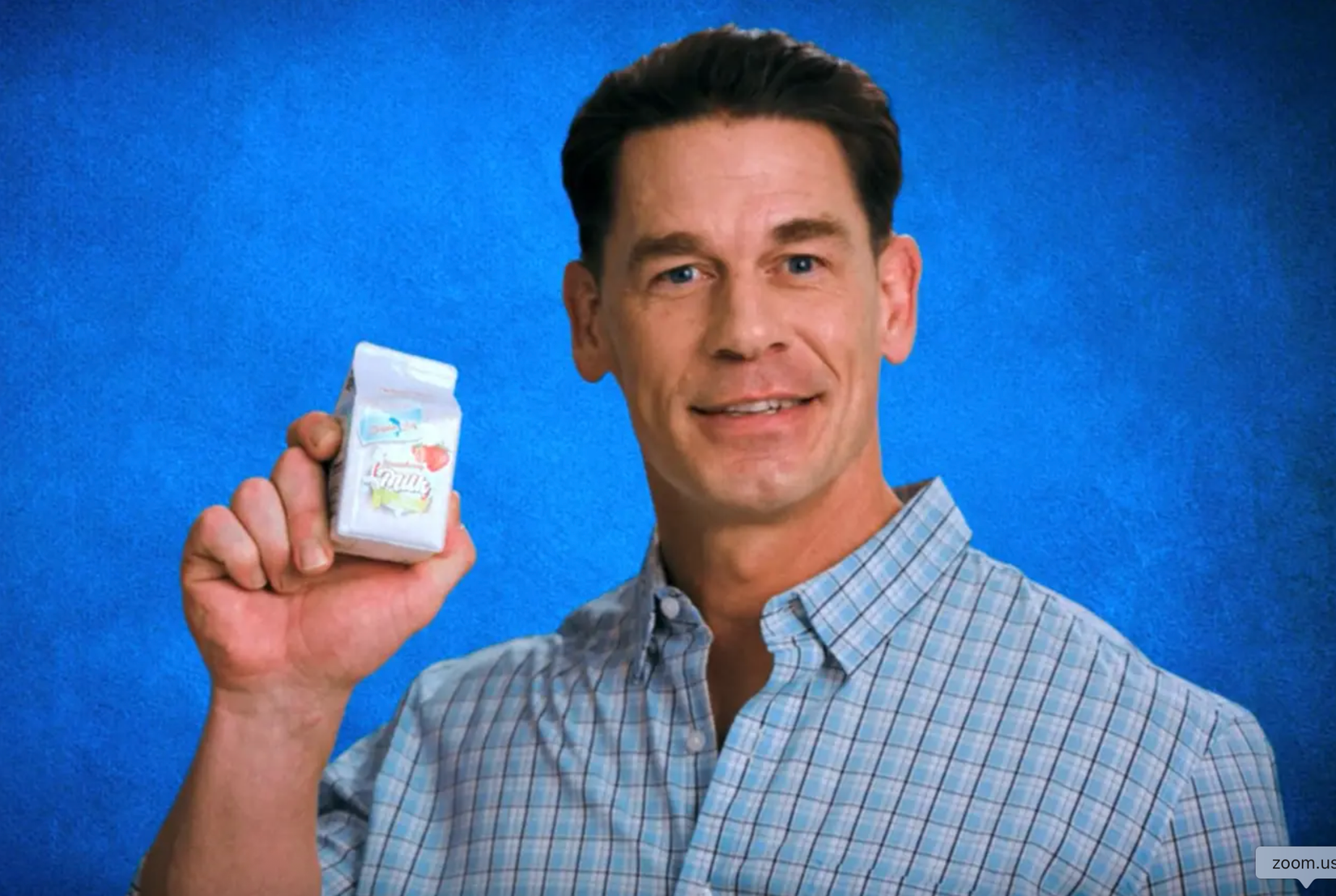
Relieved by Koumba’s assertion, Carol contacts the Others to confirm. She explicitly withholds consent; they respond, “We hear you, Carol. You do not consent. No stem cells will be collected from your body. Your wishes will be respected.” Buoyed, she returns to Albuquerque, comforted by that assurance.
But Carol’s safety is precarious. A quip from a flashback in episode three — when she visited an ice hotel with her partner Helen (Miriam Shor) and joked she could have frozen her eggs there — unexpectedly reveals a vulnerability: those eggs contain Carol’s genetic material and, by extension, stem cells. While extracting Koumba’s stem cells would require invasive procedures like bone marrow harvesting, the Others could obtain Carol’s genetic material without touching her directly.
The Others are bound by a literal inability to lie, yet they can answer questions in ways that obscure inconvenient facts. When survivors asked if they were vegetarians, the Others replied they preferred to be — a formulation that concealed what they actually consumed. And when Carol insisted she did not consent to stem cell extraction, the response that “no stem cells will be collected from your body” does not preclude obtaining those cells from elsewhere. Because the Others possess Helen’s memories, they know of the frozen eggs and precisely where to find them.
Having labored to devise a means of bringing survivors into the hivemind, the Others recently discovered a method to custom-tailor a virus. They’re conflicted about how this technique collides with their aversion to harm, but they also have a workaround where it matters most: Carol, who has repeatedly caused them distress. Expect them to pursue a solution that adheres to the literal terms of her refusal while subverting its spirit — satisfying their biological imperative to make her “happy” even if that happiness requires bending consent to the letter rather than the intent.
Source: Polygon
Related articles
 “Gangsterland” starring Tom Hardy renewed for a third season
 Martin McDonagh Presents “Wild Horse” Starring Malkovich and Rockwell in Venice
 Werner Herzog dedicates the film “Bad Lieutenant” to David Lynch
 First still from the film “The Luckiest Girl Alive” featuring Kate and Rooney Mara
 First still from the film “The Luckiest Girl Alive” featuring Kate and Rooney Mara released
 Friday the 13th Screenwriter Victor Miller Dies
 “Borat” screening cancelled due to racist jokes
 «Obsession» Star Inde Navarrette to Be Submitted for Oscar Consideration