
The Most Underrated Batman Movie Ever Is Now Streaming on Paramount Plus

Opinion on Joel Schumacher’s Batman Forever has softened considerably since the mid-1990s, when critics fixated on the film’s more theatrical touches — yes, even the notorious latex additions to the Batsuit. Back then, Schumacher’s entries were dismissed as garish departures from the darker tone that Tim Burton established. Over time, though, many viewers have come to appreciate Schumacher’s sensibility on its own terms. I’ll go further: Batman Forever is, in several key respects, truer to the comics’ spirit than it’s given credit for, and Schumacher might have grasped elements of Batman’s mythos more fully than Burton did. Read more.
Before you balk, consider revisiting the film with fresh eyes — it rewards repeat viewings. If you haven’t seen it recently, it’s currently available to stream on Paramount+ alongside other entries in the franchise, offering a convenient way to reevaluate Schumacher’s approach.
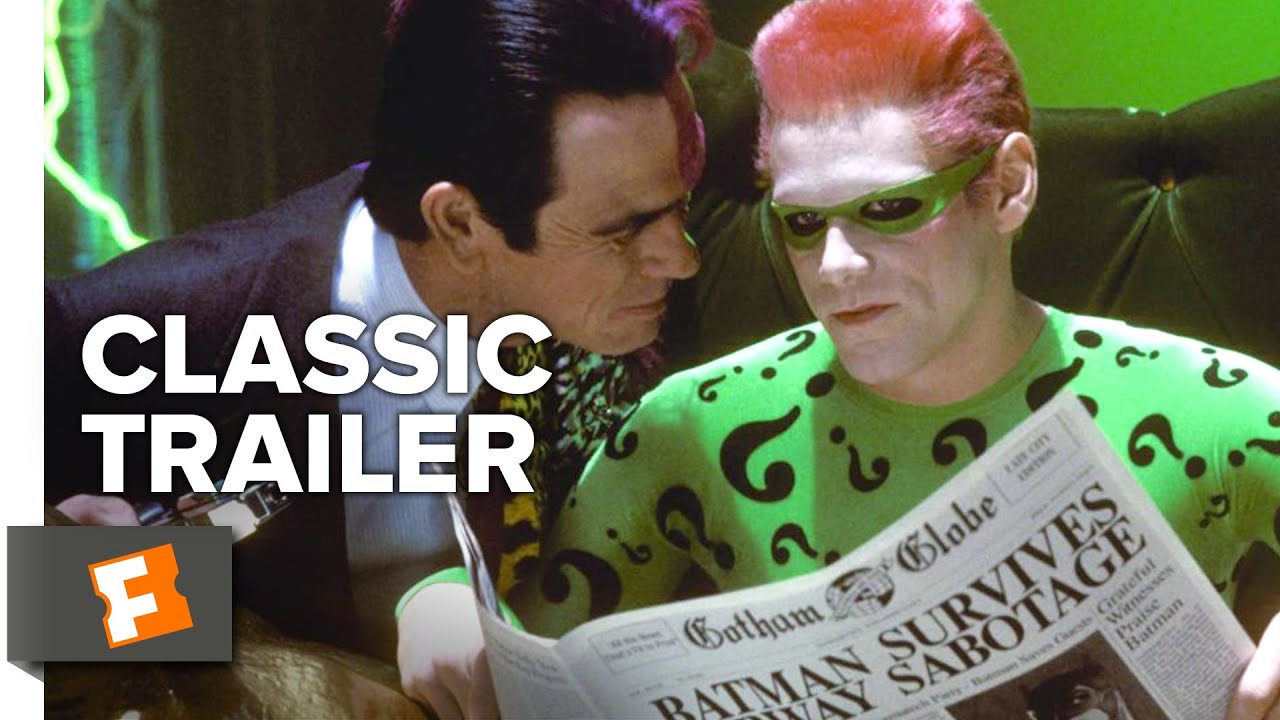
Batman Forever follows Bruce Wayne (Val Kilmer) as Gotham is ambushed by two very different nemeses: Harvey Dent — transformed into Two-Face by tragedy and played by Tommy Lee Jones — and Edward Nygma, the Riddler, portrayed with manic energy by Jim Carrey. As their plots escalate, Bruce wrestles with the trauma that underpins his war on crime and the new responsibility of mentoring the orphaned acrobat Dick Grayson (Chris O’Donnell), who becomes Robin. Nicole Kidman’s Dr. Chase Meridian supplies both psychological insight and a romantic counterpoint. The film mixes broad, comic-book spectacle with genuine character stakes — it’s playful, but it also has emotional ballast.
Burton’s Batman films were marketed and remembered as dark, but on close inspection they can feel theatrical in their own right: stylized set pieces, flamboyant villainy and moments of odd tonal looseness. The spectacle in those films sometimes drifts into the same heightened register as earlier, lighter adaptations of the character.

Schumacher’s film shows a clearer reverence for comic-book relationships than some of Burton’s entries. Burton himself has said he wasn’t an avid comics reader, and Schumacher leans into origin beats and motivations that reflect the source material. In Forever, we see a version of Harvey Dent’s transformation that nods to the canonical story — the scarring event and its psychological fallout are treated as central to his descent — a fidelity that later filmmakers have sometimes glossed over.
Rather than dressing Gotham in period gloom, Schumacher pushed the cityscape toward a neon, futuristic edge — a deliberate, pop-tinged aesthetic. Costuming and production design favor bold colors and exaggerated props; henchmen read like comic extras, and the film’s palette signals that it’s operating in an intentionally heightened world.
Val Kilmer’s Bruce Wayne brings the character’s public persona into sharper relief. Kilmer leans into Wayne’s suave, sometimes roguish side in a way Michael Keaton—who often felt like an outsider in his own films—did not. That distinction changes the dynamic between Wayne and the rogues’ gallery: Schumacher’s Wayne is more comfortable in the performative aspects of the playboy façade.

Importantly, Schumacher’s Batman generally adheres to the comics’ ethical boundaries: the character avoids killing and the film treats loss and grief — such as Robin’s origin — with sincere consequence rather than as a throwaway spectacle. That emotional clarity helps anchor the film amid its more extravagant flourishes.
I’m not arguing that Burton’s films are without merit — his gothic impulses and visual inventiveness left a lasting mark on Batman adaptations and even influenced animated interpretations of the character. But Burton’s style often foregrounds the director’s vision above the comics’ narrative rhythms. Schumacher, by contrast, mines the source material for character dynamics and origin beats, mixing camp and fidelity in a way that, for many viewers, makes Forever feel surprisingly loyal to Batman’s comic lineage.
Seen through that lens, Batman Forever becomes less an outlier and more an alternative reading of the myth — one that leans into the pageantry of the source material while still delivering emotional weight. It deserves a reappraisal for how it channels the comics into a bold, colorful cinematic form.
Source: Polygon
Related articles
 “Gangsterland” starring Tom Hardy renewed for a third season
 Martin McDonagh Presents “Wild Horse” Starring Malkovich and Rockwell in Venice
 Werner Herzog dedicates the film “Bad Lieutenant” to David Lynch
 First still from the film “The Luckiest Girl Alive” featuring Kate and Rooney Mara
 First still from the film “The Luckiest Girl Alive” featuring Kate and Rooney Mara released
 Friday the 13th Screenwriter Victor Miller Dies
 “Borat” screening cancelled due to racist jokes
 «Obsession» Star Inde Navarrette to Be Submitted for Oscar Consideration