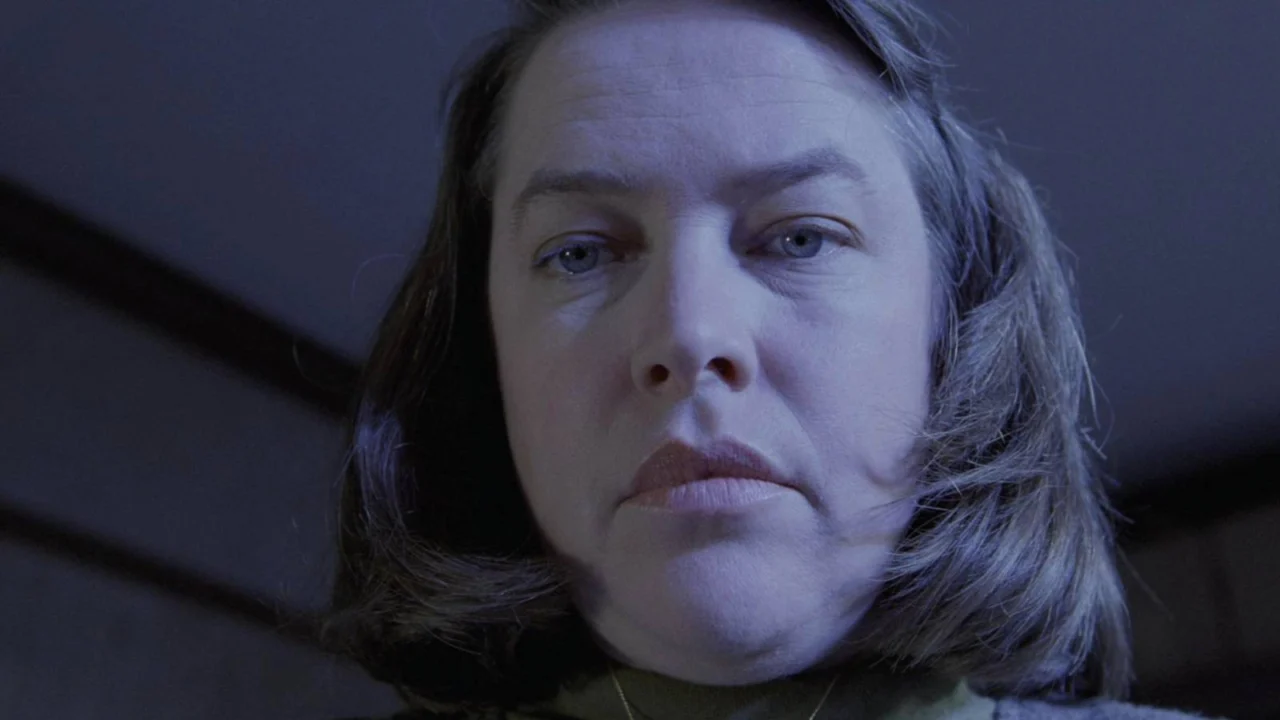
Stephen King’s Scariest Psychological Thriller Was 35 Years Ahead of Its Time

Misery, Rob Reiner’s film adaptation of Stephen King’s novel, premiered on November 30, 1990. The movie pairs James Caan’s Paul Sheldon — a celebrated romance novelist — with Kathy Bates’s Annie Wilkes, an increasingly dangerous admirer. At its core, the film dissects how adulation can curdle into control and the very real costs fame can exact on creators.
Paul is famous for the Misery Chastain romances: ornate, Victorian-set tales that have won him wealth and recognition but no personal satisfaction. Tired of formulaic acclaim, he’s eager to publish a darker, more serious book that departs from the Misery formula. (His frustration mirrors that of other fictional romance authors — see this comparison to Pluribus — where commercial success clashes with creative ambition.) Read more about the parallel here.
While driving to deliver his finished manuscript, Paul is caught in a snowstorm and crashes. He survives only because a passerby finds him — Annie Wilkes, a reclusive former nurse who professes to be his biggest fan. Initially, her care seems providential; soon it becomes clear she knows more about Paul’s life and work than a stranger ought to.

With both legs broken and phone lines down from the storm, Paul has little choice but to accept Annie’s help. She patches him up and then, upon learning that Paul killed off Misery Chastain in his latest book, reacts violently — destroying the manuscript. That escalation culminates in one of the film’s most harrowing sequences, in which Annie deliberately worsens Paul’s injuries to make sure he cannot escape until he rewrites the story to her liking.
I first saw Misery as a teenager and remember thinking the whole nightmare could have been averted if Paul had simply emailed his manuscript. Revisiting it now — in the age of BookTok, Patreon, and nonstop social promotion — I’m convinced the dynamic would play out similarly. Technology might prevent certain incidents, but it also amplifies the pressure on creators to remain accessible and responsive to an ever-larger, more entangled fanbase.

Expressing admiration for a creator is natural and appropriate, and reciprocity between artists and supporters can be healthy. Yet the internet flattens boundaries that used to protect both sides, making parasocial attachments easier to form and harder to manage. Creators are often incentivized to publicly reveal personal details to fuel engagement, which can invite entitlement and blur the line between appreciation and obsession.
Misery endures largely because of the craftsmanship behind it: King’s source material, Reiner’s direction, and Bates’s chilling performance combine to create something truly unsettling. What lingers, though, is a modern unease — that obsessive behavior toward artists has become more visible and sometimes encouraged, deepening a fraught dynamic between fame, audience expectation, and personal safety.
Source: Polygon
Related articles
 “Obsession” Star to Play Waitress in Apple Sci-Fi Series
 Paul Thomas Anderson is working on a new project
 Gal Gadot’s “Heart of Stone” receives scathing reviews
 Netflix and Alfonso Cuarón Developing Dungeons & Dragons Horror Series
 Critics approve of the second season of Guy Ritchie’s The Gentlemen
 “Gangsterland” starring Tom Hardy renewed for a third season
 Martin McDonagh Presents “Wild Horse” Starring Malkovich and Rockwell in Venice
 Werner Herzog dedicates the film “Bad Lieutenant” to David Lynch