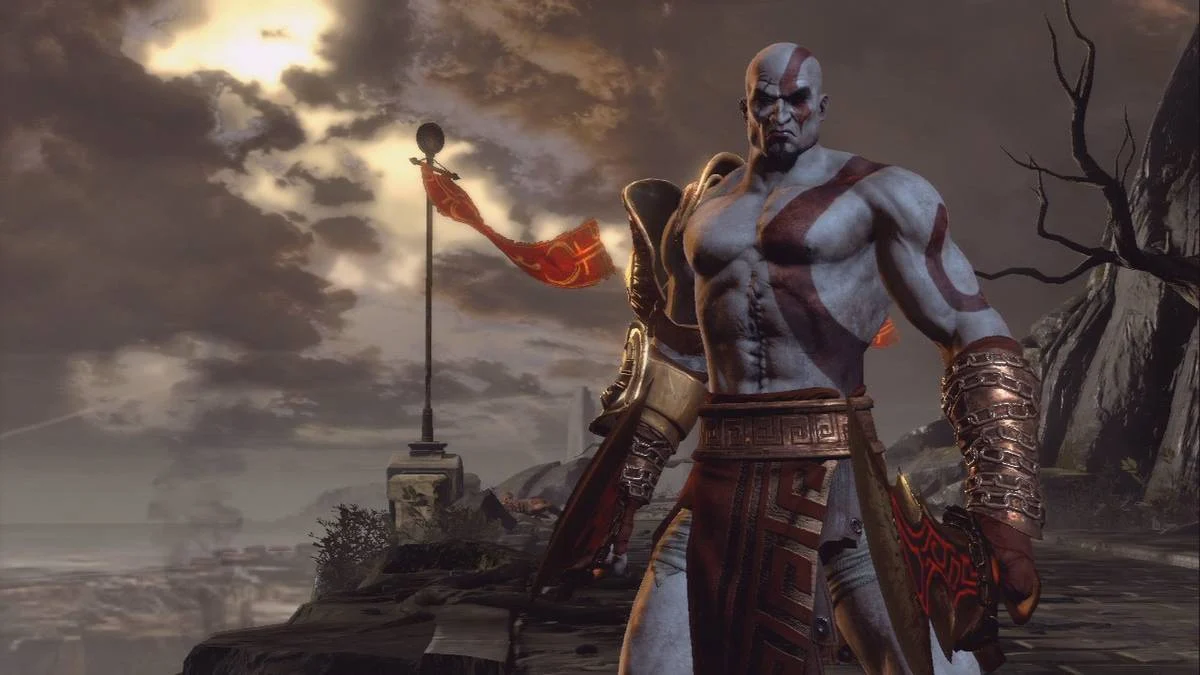
Women were behind the sex minigames in the original God of War trilogy
For those who joined the God of War saga during its Norse era, Kratos is defined by his stoic restraint—a grieving widower and a protective, if stern, father. However, the Kratos of the early 2000s was a vastly different beast: a volatile, impulsive, and deeply carnal warrior. Throughout the original Greek trilogy, the Ghost of Sparta was frequently depicted in a hyper-masculine light, often finding himself the object of affection for numerous women, including the goddess of love herself, Aphrodite. These encounters manifested as rhythmic, off-screen “sex minigames,” requiring players to hit button prompts in time with the action to succeed.
Alanah Pearce, a former writer for Santa Monica Studio, recently provided some fascinating context regarding these provocative sequences during a livestream, debunking many assumptions about their creation.
“Here is a bit of trivia: those God of War erotic encounters were actually spearheaded by women,” Pearce revealed. “I worked alongside one of the developers from that era. A significant portion of that content was designed by the women on the team. For instance, when Kratos enters Aphrodite’s chambers, the environment was intentionally crafted—by a group of women—to mirror female anatomy. It was designed to be evocative of a vagina. While that might seem obvious in hindsight, many players missed the subtext. The woman I worked with was incredibly proud of that subversive design; she thought it was brilliant.”
“You can actually glean a lot about a character by observing their sexuality,” Pearce added. “I’m an advocate for including these types of scenes. While they certainly felt a bit tongue-in-cheek in the original God of War titles, I believe they should remain intact for any potential remakes. They belong in that world. I never viewed them as derogatory toward women; if anything, the narrative uses Kratos’s hedonism as a critique of his unhinged persona.”
The initial trilogy is a quintessential relic of the mid-2000s cultural landscape—an era defined by the “lad mag” aesthetic and a generally unfiltered approach to sexuality in media. These games are a reflection of that specific zeitgeist. While it remains to be seen if Sony will leave these suggestive moments untouched in the rumored Greek trilogy remasters, they remain more atmospheric than explicit, often utilizing sound cues and environmental visual metaphors rather than direct imagery. Regardless of how they are viewed today, it is clear that a talented group of women played a pivotal role in shaping that controversial legacy.
Source: Polygon
Related articles
 The Wolf Among Us Remastered to Launch Later on One of the Platforms
 Dan Houser Says His GTA: Vice City Writing Was “Awful,” Credits Ray Liotta With Making It Sound Good
 Call of Duty: Modern Warfare 4 Campaign Gets a Surprisingly Positive Early Response
 PlayStation 6 Memory Cost Reportedly Already Exceeds PS5 Console Price, Insider Claims
 Fake GTA VI Disc Editions Appear as Chinese Sellers Notice Demand for Full Physical Versions
 Steam Beta Update Speeds Up Startup Again, Fixes Vulkan Game Hangs on Linux and NCAA Football 27 Input Bug
 Stephen King’s Time-Travel Series 11.22.63 Remains a Top Sci-Fi Pick on Streaming
 Demon’s Souls Runs at 60 FPS on PC in KyTyPS5 Emulator Tests, While God of War Ragnarok Still Blinds Players