
The Mandalorian and Grogu repeats a classic Star Wars trope in the weirdest way possible

The Star Wars galaxy has evolved into a vast creative playground where tone is surprisingly elastic. The gritty, grounded espionage of Andor exists in the same universe as the whimsical, slapstick nature of characters like Jar Jar Binks. Yet, despite this tonal range, the franchise remains anchored by one central, recurring motif: the fraught, often tragic legacy between fathers and their successors. From the iconic betrayal of Anakin and Obi-Wan to the turbulent dynamic between Han Solo and his son Kylo Ren, the saga is essentially a tapestry of family trauma.
The Mandalorian and Grogu leans into this lineage. We have the stoic, protective bounty hunter and his Force-sensitive ward, tied together by a poignant, albeit quiet, conflict: the reality that Din Djarin’s mortal life is merely a blink of an eye compared to Grogu’s centuries-long lifespan. However, while their bond provides the emotional heartbeat of the film, the most bizarre and compelling father-son exploration arrives in the form of a shredded, surprisingly athletic descendant of Jabba the Hutt.
[Ed. note: Light spoilers ahead for the plot of The Mandalorian and Grogu.]
Leading up to the premiere, the inclusion of Rotta the Hutt—the heir to the infamous crime lord—was arguably the film’s most surreal hook. Even more head-scratching was the casting of The Bear star Jeremy Allen White as the voice of this gladiator-slug. Director Jon Favreau reportedly leveraged their shared history from the 2014 film Chef to secure the performance, a behind-the-scenes detail that only adds to the overall sense of surrealism.
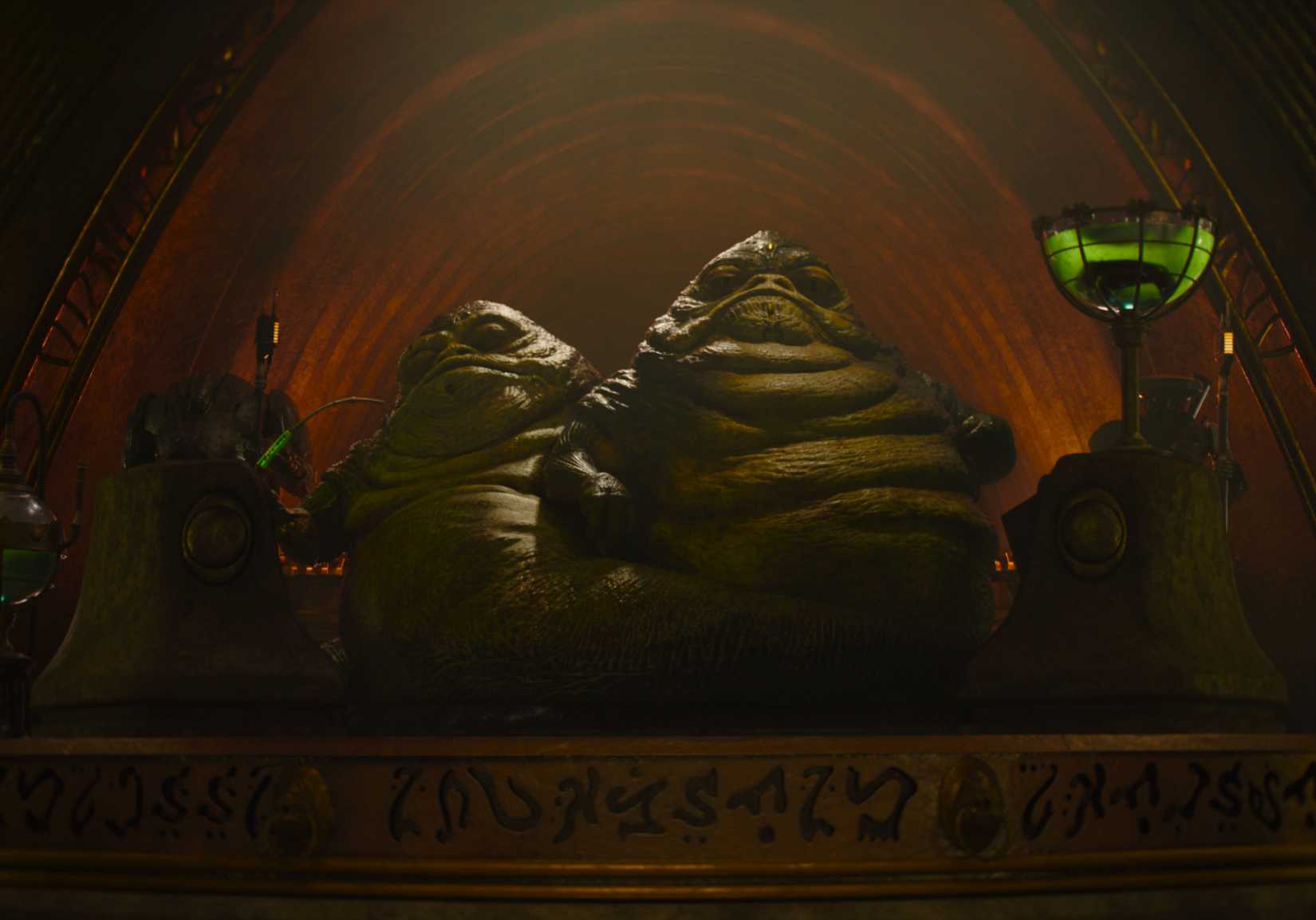
Image: Lucasfilm
In the narrative, Din Djarin is tasked by the New Republic to hunt down rogue Imperial warlords. His path crosses with the Hutt Twins—first seen in The Book of Boba Fett—who agree to provide intelligence on an Imperial officer only if Din rescues their nephew, Rotta, from a brutal fighting pit on the world of Shakari.
Upon arrival, however, Din discovers that Rotta isn’t exactly a victim; he has fully embraced his life as a gladiator. Rotta reveals that his relatives seek his return only to execute him and consolidate their hold over the criminal syndicate. He insists, with surprising conviction, that he has no desire to follow in his father’s footsteps or run the family empire.
It’s a classic Star Wars trope to see a child wrestling with the fear of inheriting a parent’s darkness. Yet, seeing this existential crisis play out through a giant, muscular slug is admittedly jarring. The script—penned by Jon Favreau, Dave Filoni, and Noah Kloor—occasionally feels thin, relying on repetitive dialogue about wanting to be “nothing like his dad” while he and Grogu strike up an unexpected, charming friendship.
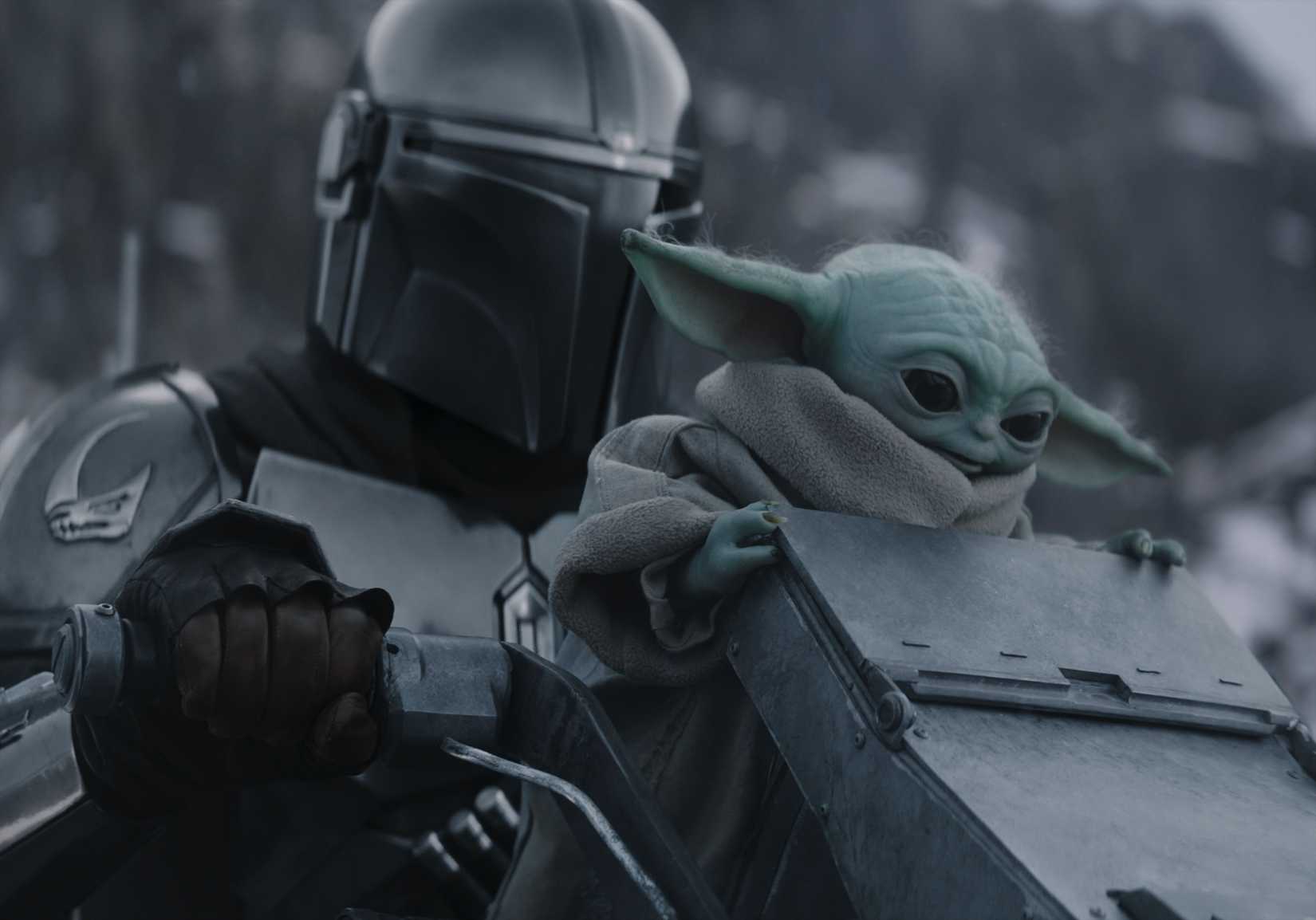
Image: Lucasfilm
The film’s central frustration lies in its failure to reconcile the contradiction of Rotta’s existence. While he claims to reject the Hutt legacy, he exhibits little moral hesitation, utilizing lethal force against rivals and stormtroopers alike. The movie moves at such a brisk pace that we rarely get to sit with the complexity of a character who has quite literally chiseled his body for a life of violence, despite supposedly rejecting his heritage.
Ultimately, Rotta the Hutt is an unforgettable, albeit underdeveloped, addition to the canon. In a franchise where non-human entities are usually categorized as either “cute” or “monstrous,” he lands somewhere in the middle—a bizarre, strangely grounded figure who avoids being a total joke. Yet, memorable screen presence isn’t a substitute for thematic weight. The Mandalorian and Grogu stumbles upon a genuinely inventive premise regarding identity and legacy, but it lacks the narrative courage to fully explore it, leaving us with a film that hints at greatness but settles for merely being a curiosity.
Source: Polygon
Related articles
 GTA VI Rival Paradise MIA for 18 Months Following Controversy
 PS5 Pro Operated for a Year Inside a Cardboard Box in User Experiment
 Star Citizen Sees Drop in Revenue and New Player Inflow, Analyst Reports
 2K Warns Players As One of the Best Basketball Simulators Is Removed From Steam and Other Stores
 Fans Release Remaster of Canceled Borderlands Online After 11 Years
 Roman Smirnov Demonstrates Improved Destruction System in The Finals Ahead of Major Update
 Modders Convert Diablo II Resurrected into Virtual Reality First Person Game
 The 12 Best Video Game Series of the 1980s and ’90s, Ranked