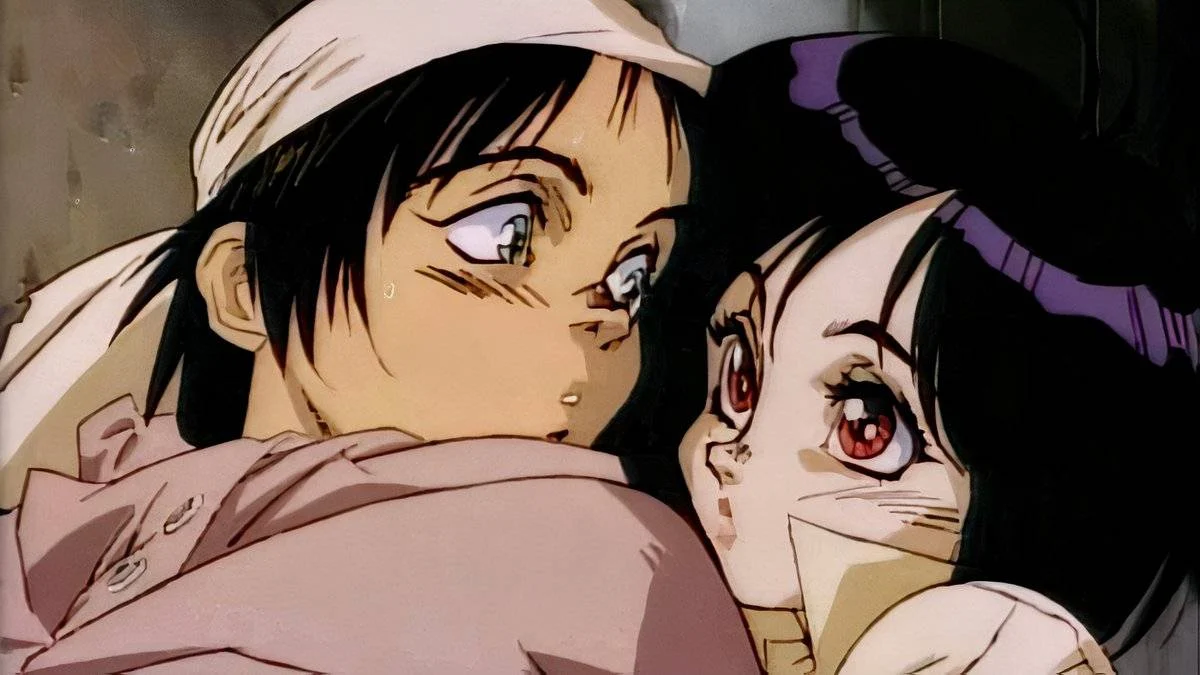

Guillermo del Toro and James Cameron share a longstanding friendship rooted in mutual admiration — and apparently, late-night anime sessions. Del Toro recently recalled living in Cameron’s home for an extended period, during which they watched Japanese animation together. Cameron introduced del Toro to Patlabor; del Toro returned the favor by showing him Battle Angel, a choice that would have ripple effects years later.
That casual exchange—two directors hunched over a TV watching OVAs—caught wider attention when the anecdote circulated online, partly because it underscores del Toro’s role in nudging Cameron toward Alita: Battle Angel, the 2019 live-action adaptation produced by Cameron and directed by Robert Rodriguez. Curious, I revisited the 1993 Battle Angel OVA and then dove into Yukito Kishiro’s manga. Both the anime and the source material surprised me: the OVA’s elegance is immediate, but the manga’s scope and darker revelations are far-reaching and often devastating.

Hiroshi Fukutomi’s two-part OVA adapts the earliest volumes of Kishiro’s Gunnm (known outside Japan as Battle Angel). Its plot centers on Dr. Ido, a cybernetic surgeon who salvages the battered remains of a young cyborg and rebuilds her as Gally (Alita in later translations). Reawakened with no memory, she becomes a formidable hunter-warrior, and as she searches for identity amid Iron City’s brutality she develops a fraught bond with a streetwise boy named Yugo. His yearning to reach the floating metropolis of Zalem drags them into a collision with the city’s corrupt guardians and the bitter realities beneath its gloss.
The animation is handcrafted and striking: traditional cel techniques bring Gally’s combat — the manga’s Panzer Kunst — to life with fluidity and weight. The production design starkly contrasts the soot-streaked Scrapyard with Zalem’s gleaming architecture, visualizing a chasm of wealth and exploitation. In the Scrapyard, survival often requires augmentation, and the line between human and machine is deliberately porous. Those themes — institutional indifference, class stratification, bodily modification — helped codify cyberpunk’s visual and moral vocabulary in the late 20th century.

Battle Angel stands alongside Akira and Ghost in the Shell as a foundational touchstone for late-20th-century cyberpunk. Its influence radiates outward — you can trace echoes to Neon Genesis Evangelion, Ergo Proxy, Western animators’ Æon Flux, and major Hollywood films like The Matrix. Even video game worlds such as Final Fantasy VII’s Midgar mirror Battle Angel’s layered verticality, with wealthy towers feeding on the toil below. Contemporary series that probe systemic injustice and technological alienation still bear Kishiro’s imprint.
That said, the OVA only scratches the story’s surface. Its two episodes — Rusty Angel and Tears Sign — compress roughly the first two volumes of the manga. Some details differ (the heroine is named Gally in the original adaptation), and the brisk pacing leaves many subplots and later revelations untouched. Rodriguez and Cameron’s live-action adaptation pulls from later arcs while also echoing moments from the OVA, which explains the film’s mixture of compressed exposition and ambitious worldbuilding.
Kishiro’s narrative often reads like a darker, grittier reimagining of Pinocchio: an artificial life searching for identity and meaning. Unlike Astro Boy’s hopeful embrace of robot–human coexistence, Battle Angel foregrounds desperation, class immobility, and the lengths people will go to escape entrapment. Its bleak view of society — and the catastrophic truths slowly unearthed about Zalem and those who rule it — drives the story toward increasingly harrowing territory.

As the manga progresses, it veers into increasingly surreal and uncompromising territory. The finale forces readers to confront hard truths about human nature, war, and the illusions that bind societies together. Where the OVA offers an elegiac, character-focused glimpse, Kishiro’s full saga expands into philosophical and often brutal territory that lingers long after the final page.
Even so, Fukutomi’s adaptation captures the core emotional beats — the romance between Gally and Yugo, the search for self, and the corrosive systems that shape their lives. It’s easy to see why filmmakers return to this universe: Alita is a richly layered protagonist and her world is vast enough to merit a complete, unrushed adaptation. Cameron’s enthusiasm for revisiting the property is understandable; outside the manga itself, Gunnm has rarely been given the exhaustive treatment its complexity deserves.
For anyone intrigued by cyberpunk’s origin stories or invested in character-driven science fiction, both the OVA and the manga reward deeper exploration. The OVA is a beautiful, compact entry point; the manga is a sprawling, often harrowing odyssey that explains why Battle Angel remains so resonant decades after it first appeared.
Source: Polygon
 Actors cast as Dobby and Tom Riddle for Harry Potter season two
 International “Doker” Film Festival Kicks Off in Moscow
 Milla Jovovich to Appear in the New Season of “Hot Rivalry”
 The first excerpt from Zach Cregger’s “Companion” has been released
 “Obsession” Star to Play Waitress in Apple Sci-Fi Series
 Paul Thomas Anderson is working on a new project
 Gal Gadot’s “Heart of Stone” receives scathing reviews
 Netflix and Alfonso Cuarón Developing Dungeons & Dragons Horror Series