
Shelby Oaks Director Chris Stuckmann Breaks Down the Film’s Disturbing Ending

Shelby Oaks opens with a vanished group: a band of amateur investigators known as the Paranormal Paranoids—led by Riley Brennan (Sarah Durn)—enter an abandoned amusement park for their YouTube series and never return. Their disappearance explodes online, turning the missing friends into macabre internet lore. Ten years later the world has mostly moved on, but Riley’s sister Mia (Camille Sullivan) refuses to let the story rest and plunges into a search that uncovers something far uglier than anyone expected.
For filmmaker Chris Stuckmann—who rose to prominence as a YouTube critic before directing Shelby Oaks—the film became a vehicle to examine how unresolved childhood wounds can fester and reshape a life if they’re never addressed.
“We all carry things from our youth,” Stuckmann tells Polygon—“some more damaging than others.” Ahead of the film’s release he walked us through the movie’s major revelations and the darker places it explores, acting as an unusually candid guide through what may be one of this year’s most unsettling horror entries.
Trigger warning
Shelby Oaks contains depictions of sexual assault and mature thematic material. The summary below discusses the film’s full plot, including scenes from the ending that may be disturbing.
Shelby Oaks and the incubus
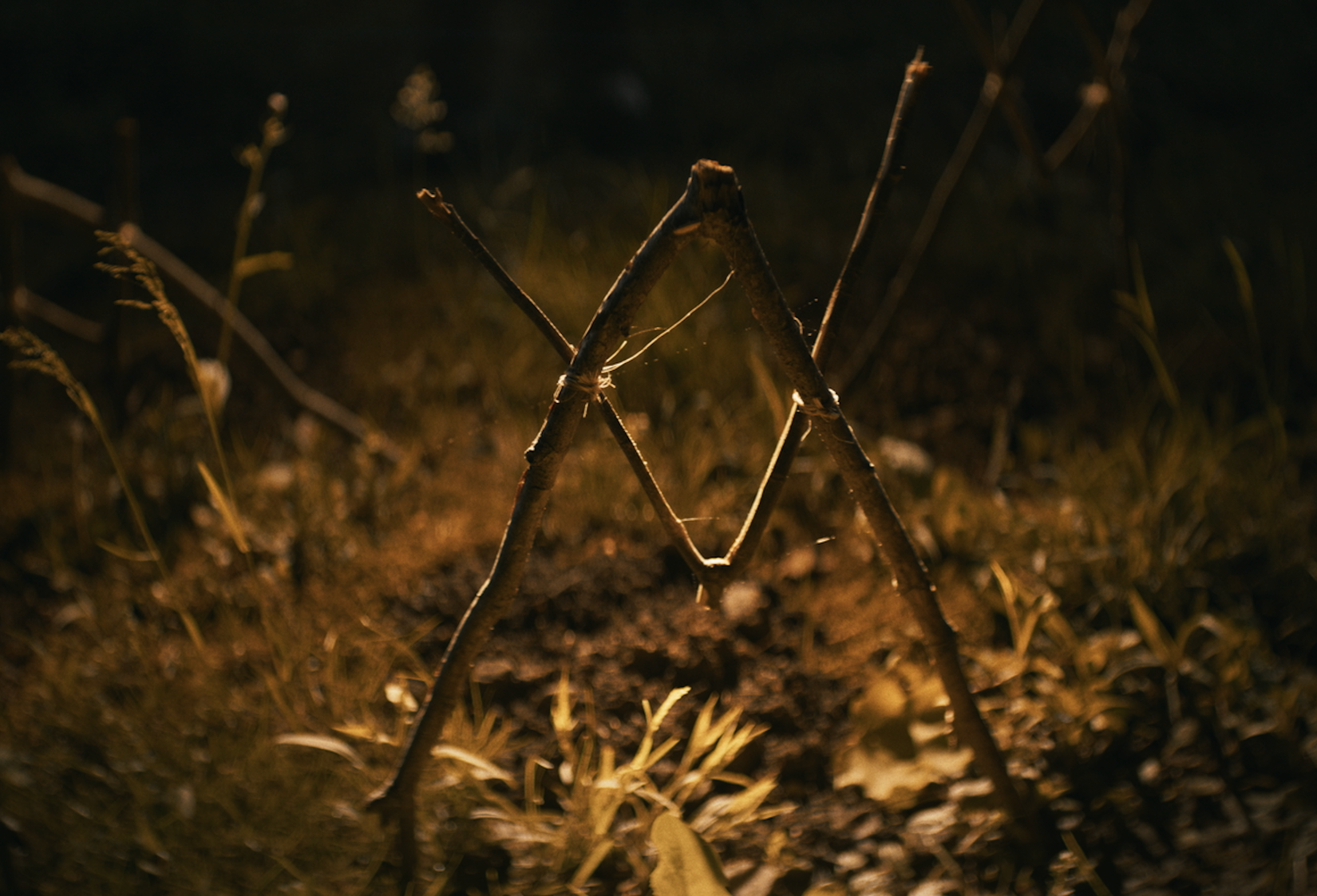
The enigmatic events that kick off Shelby Oaks ultimately trace back to an incubus—a mythic male demon historically associated with sexual violation. In the film, the creature has been haunting Riley and Mia since childhood, first glimpsed through a broken pane in Riley’s bedroom window. Years later the entity escalates: it abducts Riley and the members of her group, committing horrendous acts and, with the apparent collusion of a household under its influence, attempting to impregnate her with its offspring.
Stuckmann delayed revealing the demon’s form until later in the movie, aiming for a design that felt eternal and raw. “It needed to read like an old, unhealed wound,” he says. He began the creature’s development with personal concept sketches—disturbing notebooks of ideas—and collaborated with artist Carlos Huante (whose credits include Dune, Blade Runner 2049, and Prometheus) to arrive at finalized creature concepts that, in Stuckmann’s words, “blew my mind.”
From concept to practical effect, Jason Hamer—an Emmy-winning designer—helped translate those visuals into a wearable suit, which was ultimately inhabited on set by stunt performer Derek Mears (known for his physical character work in the Friday the 13th franchise). “Derek has played so many terrifying characters, but he’s absolutely one of the kindest people I’ve met—an angelic presence who also happens to be 6’8.”
The photo-album scene
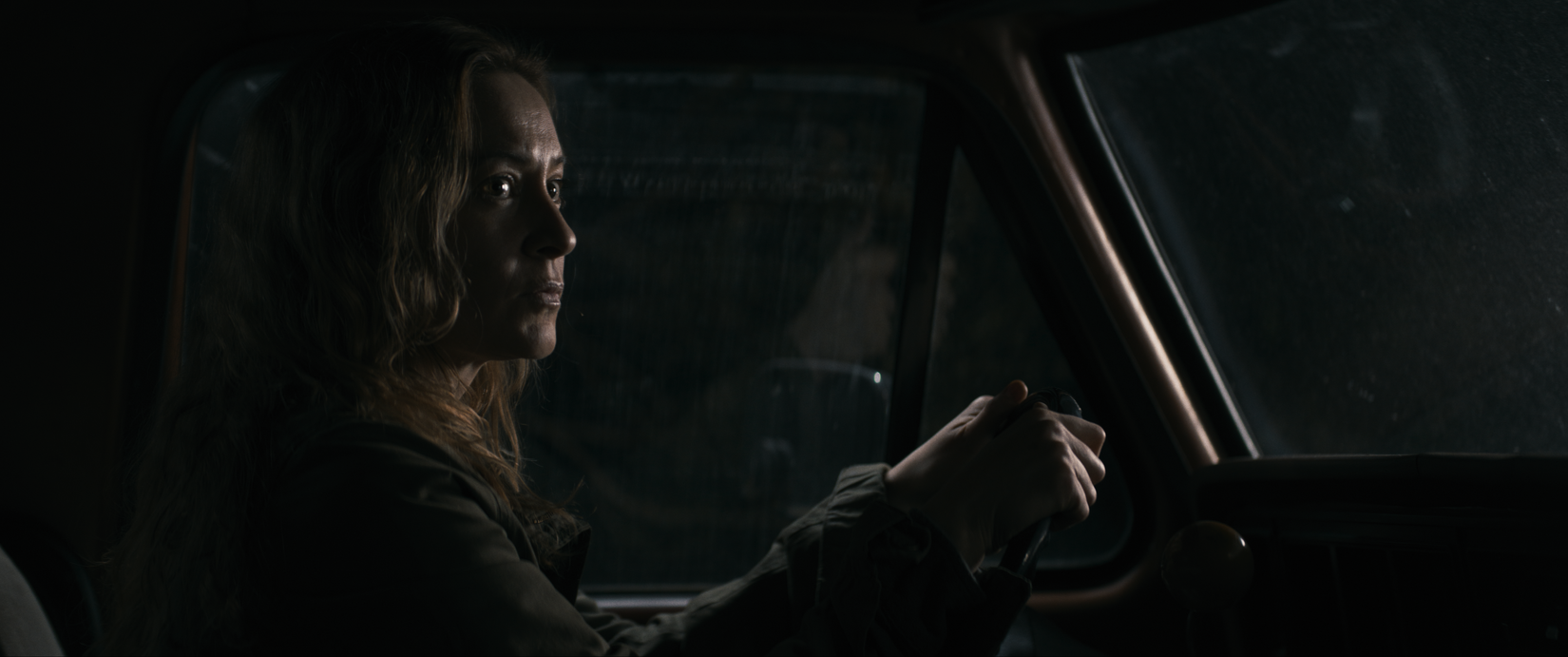
Near the film’s climax Mia discovers a trove of photographs in an aging home owned by Norma (Robin Bartlett). The images silently reveal Riley’s fate: forced into marriage with Norma’s disturbed son—an unstable man who appears to be possessed—Riley endures repeated trauma, becomes pregnant, and suffers multiple miscarriages, which are implied by a row of small graves outside the property. The revelation is handled in near silence, as if the movie briefly becomes a cold slideshow.
Stuckmann says the photo sequence was deliberately chosen because it shows rather than explains, which he believes heightens the scene’s impact. Earlier cuts reportedly included far more images—“like 1,000 photos”—many removed for being too graphic. The director also points out a chilling subtext: the idea of a family album—normally reserved for joy—being repurposed to chronicle abuse is particularly grotesque.
How Shelby Oaks ends
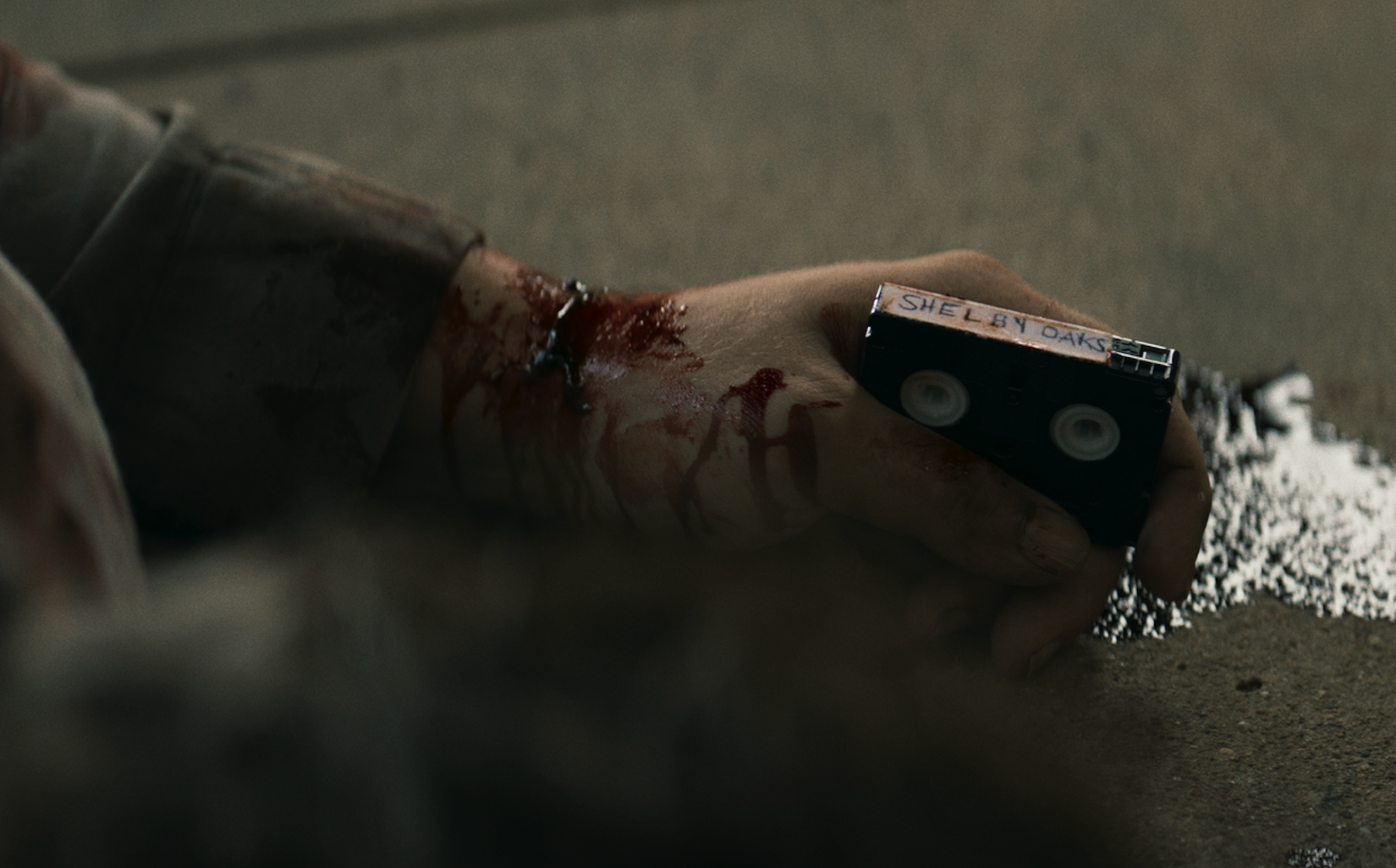
Mia eventually locates Riley and the infant in Norma’s basement and frees them; Norma sacrifices herself during a ritual the sisters witness. For a moment the story offers relief—Riley appears to begin healing and the newborn seems healthy despite its horrific origins. But the reprieve is brief: that night Riley attempts to kill the baby, insisting it is evil. In the struggle Mia intervenes; Riley plummets from a window and dies.
At that moment the incubus emerges from the shadows and places a hand on Mia’s shoulder, revealing that Mia—not Riley—had been the demon’s principal quarry all along. The film’s central metaphor becomes explicit: unresolved childhood trauma, left unattended, can grow and transform a life in corrosive ways. The broken bedroom window, visible throughout the movie, functions as an emblem of such an injury—left unfixed, it splinters outward and eventually consumes.
Stuckmann frames each character’s arc as a form of sacrifice: the Paranormal Paranoids trade privacy for fleeting fame; Mia wanted a family and ultimately attains one only by surrendering her sister. The film leaves Mia’s fate ambiguous—whether she will be coerced into servitude, killed, or somehow accept the monstrous bargain is left for the viewer to imagine. There is, however, an uneasy suggestion that desire and compromise are intertwined: “Sometimes, to get something you want, you have to sacrifice something you have,” Stuckmann observes.
Shelby Oaks is in theaters now.
Source: Polygon
Related articles
 Zach Cregger Will Not Direct Franchises After “Resident Evil”
 The Rolling Stones to Receive a Biopic
 Robert Pattinson Responds to Chris Hansen’s Complaints About the Movie “Primetime”
 Ryan Reynolds’ “Mayday” receives positive reviews from critics
 Michael Keaton to Direct Western Starring Morgan Freeman
 “Daddy’s Daughters” wedding sequel to be released in 2027
 Halle Berry and Colin Firth to Star in New Rom-Com
 Netflix Begins Filming New Dan Brown Adaptation