The Infamous Time Stanley Kubrick Chained a Drugged Leopard to a Rotting Horse

Article Contents
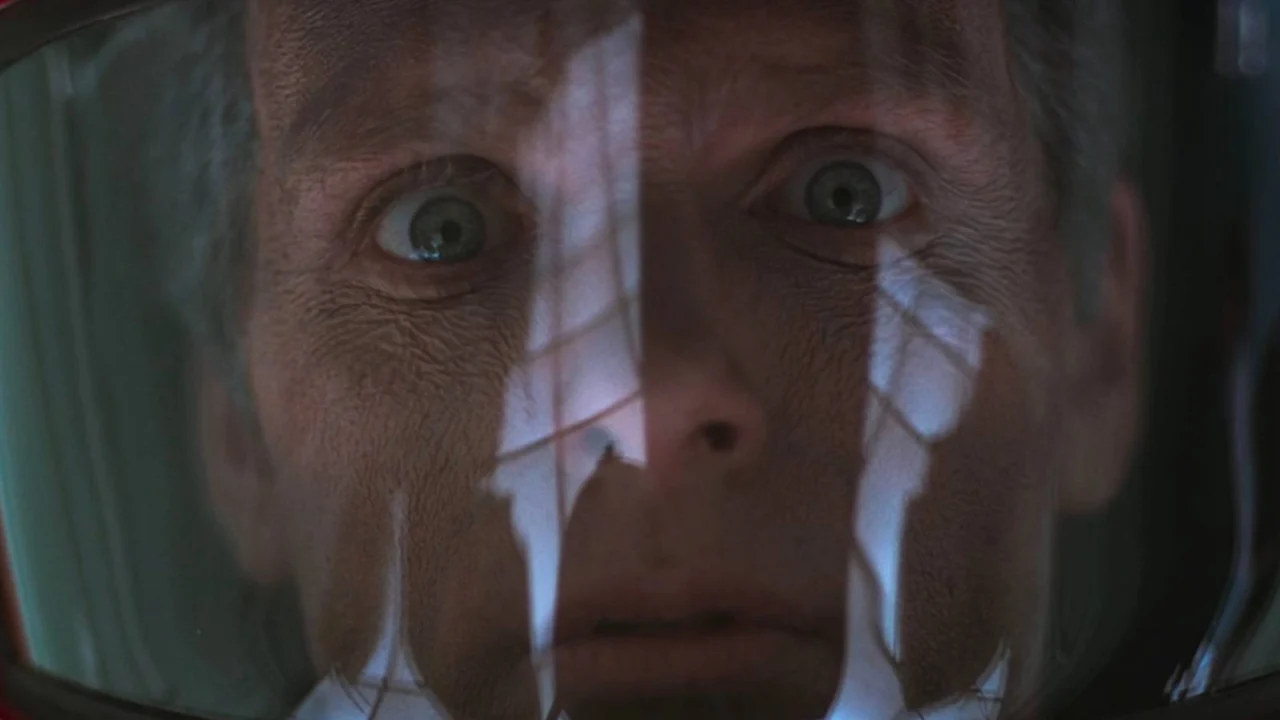
More than five decades since its theatrical debut in April 1968, Stanley Kubrick’s 2001: A Space Odyssey stands as a monumental achievement in cinema, a definitive pivot point for the science fiction genre. Film historian Howard Suber famously described it in his Criterion Collection analysis as one of the most transformative motion pictures ever produced. Yet, this cinematic masterpiece emerged from surprisingly chaotic and unrefined origins. A 1978 archival interview with Douglas Trumbull, the film’s legendary visual effects supervisor, found on The Internet Archive, unearths rare details regarding the film’s initial development and the grueling realities of its production.
Trumbull was a visionary in his own right, initially capturing Kubrick’s attention with his inventive short film To the Moon and Beyond. Following his groundbreaking work on 2001, he became a titan of industry effects, contributing to Spielberg’s Close Encounters of the Third Kind and Ridley Scott’s Blade Runner, while also directing sci-fi staples like Silent Running.
However, the collaboration between Trumbull and Kubrick was famously fraught. The two experienced a bitter professional schism when Kubrick claimed the film’s sole Academy Award for Special Visual Effects for himself—the only Oscar he would ever receive. Trumbull maintained that while Kubrick directed the vision, he did not physically create the effects. “There was an inherent unfairness in him taking that award,” Trumbull remarked during a 2014 interview. Consequently, Trumbull’s recollections carry the weight of a man who felt his contributions were overshadowed by a director’s ego.
The Primitive and Unpolished Early Drafts
 Image: MGM
Trumbull didn’t mince words when describing the initial screenplay, calling it “a piece of crap” in a discussion with Fantastic Films. According to him, the document was riddled with blank pages containing vague placeholders. “The scripts essentially said, ‘Amazing special effects happen here,’ followed by a promise that the crew was working on something unprecedented,” Trumbull recalled. He characterized the entire pitch to MGM as an elaborate “snow job” designed to secure financing before the story was even finalized.
At the time, Kubrick and Arthur C. Clarke were experiencing creative friction. While Clarke is a credited co-writer, he eventually pivoted to publish his own prose version to resolve their narrative disagreements. Iconic elements like the sentient computer HAL 9000 were absent from the earliest iterations. The “Dawn of Man” section was originally far more literal: the mysterious monolith was envisioned as a transparent cube that functioned as a “teaching film,” holographically demonstrating to the apes how to use tools and kill for survival.
Kubrick’s Gruesome Quest for Authenticity
 Image: MGM/HBO Max
Trumbull shared a visceral anecdote concerning a specific shot in the “Dawn of Man” sequence featuring a predator and its zebra prey. Kubrick insisted on a dead zebra for the scene, but since ethics and logistics prevented killing an animal for the production, the crew had to improvise. They eventually acquired a horse that had died of natural causes, painted it with zebra stripes, and brought it to the set.
Delays in the shooting schedule led to a macabre situation: the horse carcass sat for a week before the cameras rolled. “The smell was unimaginable,” Trumbull said. To make matters more difficult, the jaguar used for the scene refused to approach the rotting carrion, forcing the production to drug the animal and physically chain it to the “zebra” to capture the necessary footage. It was a stark example of Kubrick’s uncompromising, often grueling, approach to visual realism.
The Alternate Reality Without HAL 9000
 Image: MGM/HBO Max
The definitive version of 2001 features a tense battle of wits between Dr. Dave Bowman and the malfunctioning HAL 9000. Yet, Trumbull reveals that HAL was not part of the original equation. In the earliest draft, all five crew members survived the trip to Jupiter, discovering a massive “rectangular slot” in space that led to a distant star system.
Instead of the abstract, metaphysical ending we know today, the script originally featured a literal extraterrestrial encounter. The astronauts were to land on a bizarre planet and eventually encounter a 20-foot-tall green alien. Trumbull recalled telling Kubrick that the plot had too many loose ends with the extra crew members lingering around. He suggested it would be narratively cleaner if something went wrong and they were killed off. Though Kubrick initially dismissed the suggestion as an “asinine idea,” he integrated that exact plot point into the script just a month later.
Unlock the Vault of Cinematic History
Fascinated by the hidden stories of film production? Subscribe for exclusive access to archival interviews, deep dives into practical effects, and the untold history behind your favorite classics.
By joining, you agree to our Terms of Use and Privacy Policy.
Working under Kubrick was described by Trumbull as a constant, unpredictable juggle. The director’s legendary perfectionism extended to every minute detail of the set, yet he was known to rewrite dialogue and redesign sequences on the fly. “In many ways, Kubrick is really hard to work for,” Trumbull admitted, noting that while the production had the luxury of time and budget, the behind-the-scenes atmosphere was one of persistent friction and evolution.
Source: Polygon
Related articles
 Nvidia Plans to Double DLSS 5 Speed and Add New Game Support
 Phantom Blade Zero Developers Show Boss Fight and Deluxe Edition Costume
 Reporter Claims to Have Seen GTA VI Ahead of Jason Schreier’s Major Article
 Sony Lawyers Target Hacked PS5 Consoles as Unofficial Game Store Shuts Down
 Looking Back at Buffy the Vampire Slayer Season 3 Episode 3
 Battlefield 6 Accused of Using AI for Battle Pass Cosmetics
 Analysts Estimate Marvel’s Wolverine Revenue at Nearly $193 Million
 Xbox is paying players to launch Gears of War: E-Day