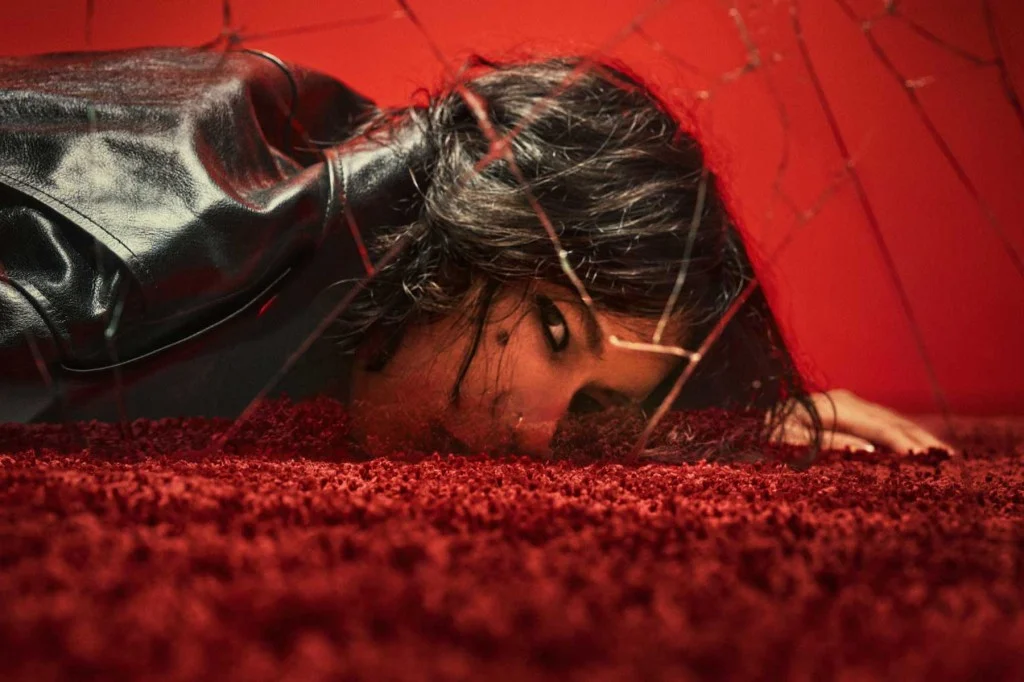

Kenshi Yonezu recently spoke with Billboard Japan about his new double A-side single, “IRIS OUT / JANE DOE.”
“IRIS OUT” serves as the theme for CHAINSAW MAN — THE MOVIE: REZE ARC and pairs impulsive vocals and playful, almost absurd lyrics with a swinging groove;
by contrast, “JANE DOE,” a duet with Hikaru Utada, explores a world that is simultaneously luminous and ominous. Together the two tracks create a vivid counterpoint.
The single’s reception has been remarkable: on Billboard Japan, “IRIS OUT” reached 100 million streams within four weeks of release — a record pace on that chart —
and the song also climbed to No. 5 on the U.S. Billboard Global 200 dated Oct. 4, marking an unprecedented peak for a Japanese-language track.
Aligned with the film’s launch, the record is resonating both domestically and internationally.
In this interview, Yonezu reflects on the creative choices behind the two songs and describes how life has shifted for him since finishing his Kenshi Yonezu 2025 TOUR / JUNK in April.
First off, how have you been since wrapping the 2025 tour? After such an expansive world tour — including stops overseas — have you experienced any changes in your outlook?
Touring in places I’d never performed before — Korea, the U.S., and multiple European cities — was eye-opening. Realizing how many people were waiting for the shows felt humbling and unexpectedly affirming.
Hearing fans call out “Hachi,” a name I haven’t been addressed by publicly in years, was deeply moving and left me with a renewed sense of clarity.
Since then I’ve tried to live more purposefully. Small, ordinary practices I once neglected — keeping a daily routine, paying attention to my health — have become part of my life.
For many that might sound late, but for me it represents a significant personal shift. I can’t say the concerts alone caused it, but they certainly influenced the change.
I saw your concerts in Seoul and Los Angeles. You told the audience you’d return — was that meant as a promise?
It nearly slipped out as an offhand remark. At the time there wasn’t a concrete plan, so I worried I’d spoken irresponsibly. Still, the scenes from the tour were radiant; for the first time I felt a genuine, reciprocal connection with the audience.
Tell us about how “IRIS OUT” and “JANE DOE” came together. When you were asked to contribute music to CHAINSAW MAN — THE MOVIE: REZE ARC, where did you begin?
I was asked to create two pieces: one designated as the ending theme and the other to be placed where it fit best in the film. “JANE DOE” came to me with a pretty clear concept from the outset, whereas “IRIS OUT” evolved more organically during production.
Having written “KICK BACK” for CHAINSAW MAN before, did you try to avoid repeating that sound?
Absolutely. I didn’t want to make “KICK BACK Part 2.” “JANE DOE” didn’t present that risk, but with “IRIS OUT” I was careful to steer away from similarities.
Where “KICK BACK” feels like an elaborate, twisting ride, I aimed for “IRIS OUT” to hit with a sudden, straight-ahead intensity — a jolt that races forward and cuts off decisively.
“IRIS OUT” seems tightly focused on Denji as a character. Do you see it that way?
Yes. Because the Reze arc centers so much on her relationship with Denji, I kept the song firmly anchored to that dynamic. In Tatsuki Fujimoto’s work there’s a pattern of women who destabilize men, and Reze exemplifies that — alluring, inscrutable, and able to throw Denji off balance.
By zeroing in on that single axis, the song avoids becoming like “KICK BACK” and instead captures Denji’s mesmerized perspective.
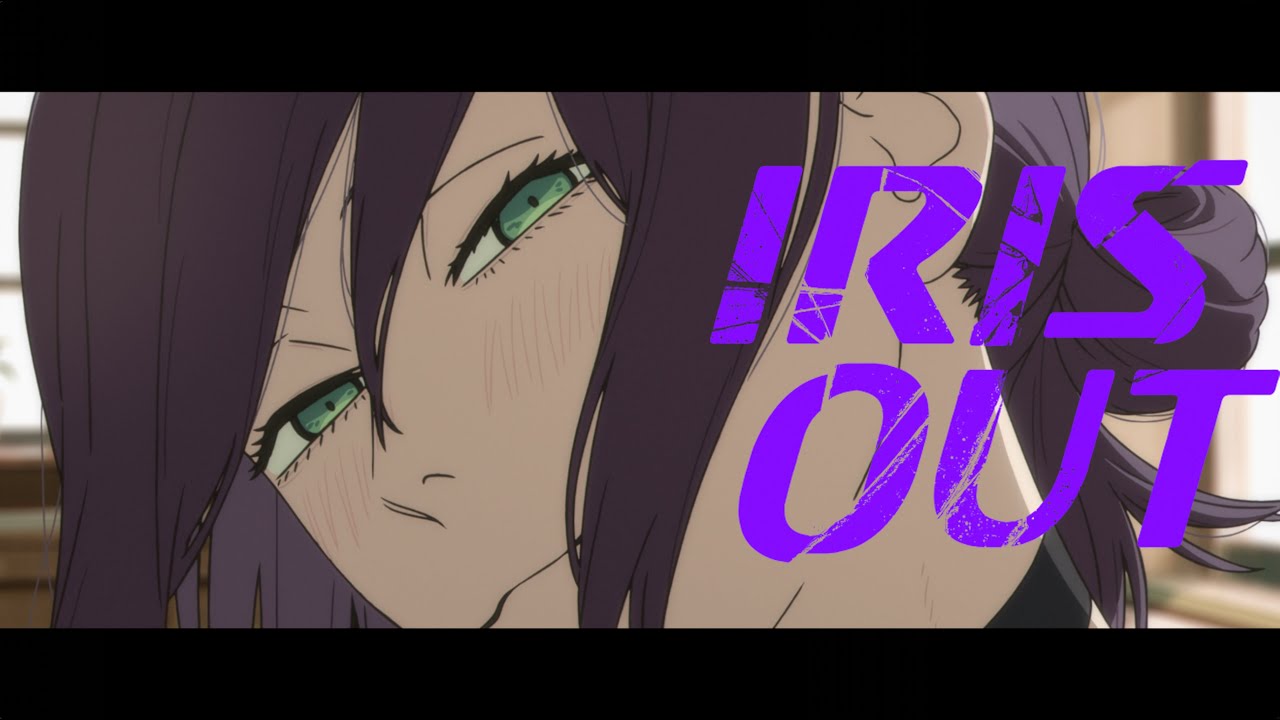
What makes Reze so compelling as a character?
She has a playful way of unsettling Denji: a coy smile, a blush, gestures that both tease and reveal affection. That combination — a teasing intimacy mixed with mystery — makes her irresistible.
In a sense, Denji’s willingness to be deceived is part of the story’s romance; Reze’s enigmatic presence draws him in.
About “JANE DOE”: since it was meant for the ending of the Reze Arc movie, how did you imagine the song initially?
Early on I thought a female vocal would better suit the ending’s tone; my voice didn’t feel appropriate for that space. I was inspired by duets like Björk and Thom Yorke’s “I’ve Seen It All” — an intimate, melancholic pairing — and pursued that mood.
I experimented with versions that felt nostalgic or youthful, but ultimately a slightly dark, elegiac duet felt most fitting.
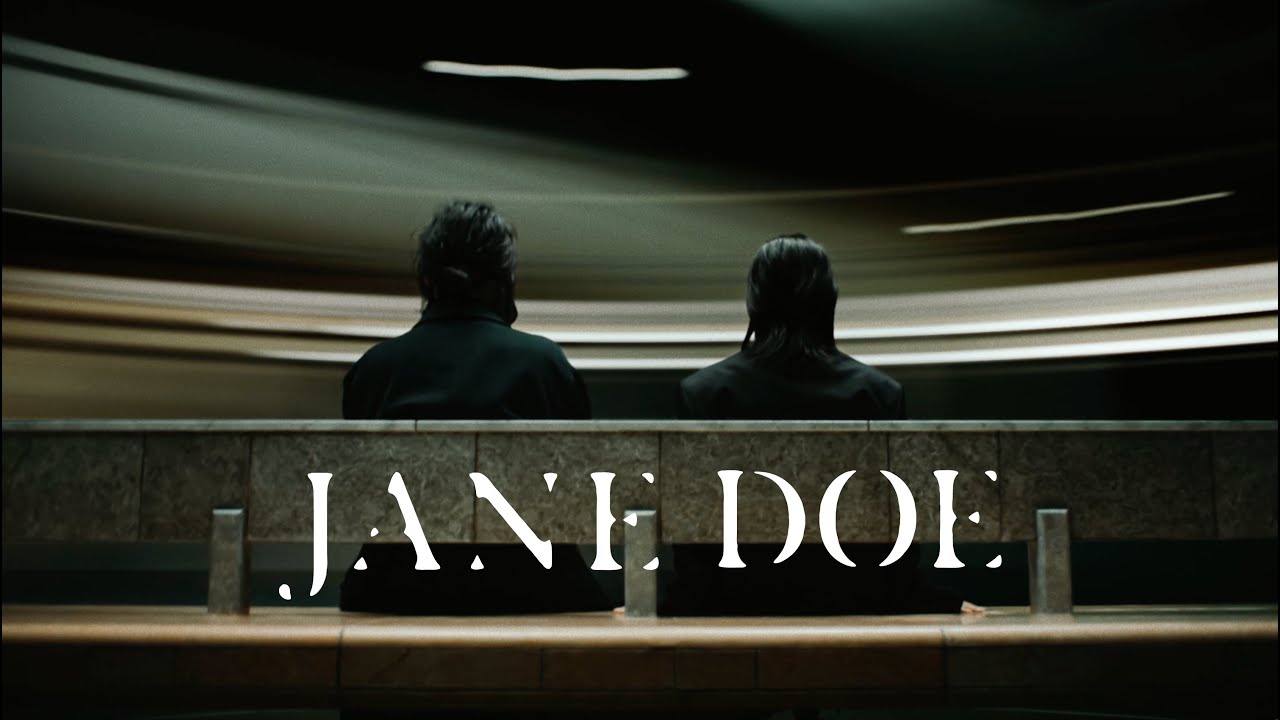
When did Hikaru Utada come to mind for the duet?
The piano riff and the first verse’s melody led me there. Utada’s voice carries both melancholy and an airy freshness — a presence that’s at once intimate and vast. Their timbre and emotional range felt essential to realize the song’s duality.
Utada’s work often explores a sense of loss. Did that quality influence your choice?
Songs like “FINAL DISTANCE” and “Dareka no Negai ga Kanau Koro” were formative for me. Utada’s music can juxtapose sorrow with light, producing a bittersweet ambiguity that resonated with Reze’s character. That ambiguous, fragile strength felt like a natural match for the track.
In “IRIS OUT” you sing from Denji’s viewpoint, while “JANE DOE” feels like Utada is voicing Reze. Was that intentional?
I described to Utada the idea of a duet where a girl carries an overwhelming complexity and a boy doesn’t fully grasp it. They interpreted that concept in their own way, and their performance naturally embodied Reze’s perspective opposite Denji’s.
How did you coordinate the recording and production with Utada?
Utada records in London, so we exchanged files and notes remotely, like letters passing back and forth. We had one phone call in which they suggested vocal choices that helped my voice sit better in the mix — advice I really appreciated.
Our different musical backgrounds — Utada’s roots in R&B and groove versus my Vocaloid and electronic influences — created a productive contrast, and combining those sensibilities made the duet feel complete in a way neither of us could have achieved alone.
Lines such as “Let’s fill this world with mistakes” in “JANE DOE” and “In this world right now, you’re my one-and-only perfect answer” in “IRIS OUT” seem to echo one another. Were those links planned?
Not deliberately. When I’m composing I get absorbed in each song individually and often notice thematic connections only afterward. Even the title “JANE DOE” aligned with a song in the film — a Russian piece Reze sings that mentions “Jane slept in a church” — and that link only became clear to me after I finished writing. I find those unconscious intersections intriguing.
 Ben Saunders, First-Ever ‘The Voice’ Winner, Found Dead at 43
 Macklemore Donates $1M in Ed Sheeran Tour Earnings to Palestinian Aid and Calls on Robert Kraft to Match It
 Cookie Monster Releases Chappell Roan Parody Video Titled Got to Go Potty for Sesame Street
 Kelli Giddish Reveals How Taylor Swift’s Cat Appeared on Law & Order: SVU Emmys Sketch
 Taylor Swift Music Videos Are Now Available on Spotify, From Tim McGraw to Opalite
 Tinashe, Rachel Chinouriri, Nxdia, and Fousheé to tour college campuses for Tabby Tour
 Selena Gomez Says Fans Want Her to Still Look Like She Did in 2016
 Charli xcx is featured in Playboy and discusses her personality traits and Jack Black