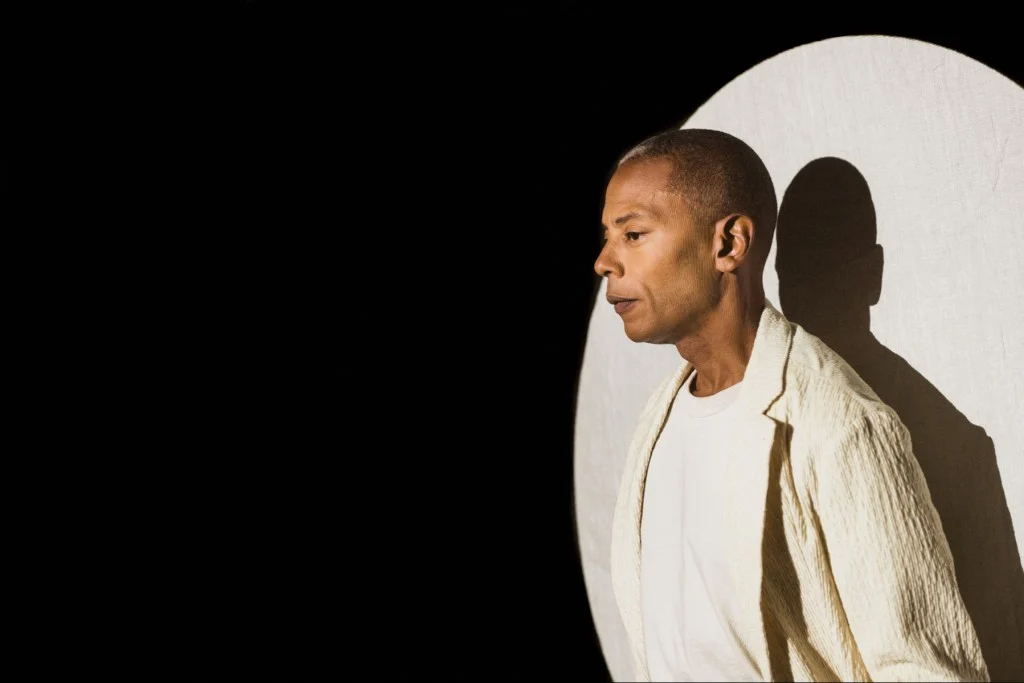
Jeff Mills: Why Better Technology Doesn’t Guarantee Better Electronic Music
Jeff Mills: Reflecting on the Legacy of ‘Live at the Liquid Room’ and the Future of Techno

Recorded at Tokyo’s legendary Liquidroom in 1995 and unleashed as a live document the following year, Jeff Mills’ Live at the Liquid Room is widely regarded as a sonic Rosetta Stone. It serves as a vital architectural blueprint that instructed a generation of producers on how to construct, harness, and manipulate the raw energy of techno.
In 1996, at just 23 years old, Mills was already a vanguard of the movement. A native of Detroit—the genre’s spiritual birthplace—he honed his craft in industrial and rock circles before pivoting toward electronic music. His residency in Berlin further solidified his status as a cornerstone of the burgeoning global scene.
Three decades later, Mills sits in the serene lobby of a luxury hotel in downtown Los Angeles. His presence is characterized by an understated sophistication and a calm, introspective depth. His expansive body of work now transcends the dancefloor, encompassing cinema and conceptual art that explores the cosmos, nature, and the metaphysical essence of life.
Commonly hailed as one of the preeminent DJs and producers in history—though he contends that such rankings have led DJ culture astray—Mills is currently in Southern California for his 60-date anniversary tour. The trek has seen him sell out venues across Europe, Asia, and North America, drawing crowds that range from seasoned techno veterans to a new generation of enthusiasts.
In the following conversation, Mills reflects on the Liquid Room legacy and explains how a practice of “intentional forgetting” allows him to sustain his creative longevity.
1. Where are you currently, and what does your environment look like?
I’m in Los Angeles. The atmosphere is quintessential Southern California—brilliant sunshine, clear skies, and a perfect clarity that defines this time of year.
2. What was the inaugural piece of music you purchased, and in what format?
I believe it was a 7-inch vinyl single of Elton John’s “Philadelphia Freedom.”
3. What were your parents’ professions, and how did they perceive your career path?
My mother was a homemaker and model, while my father was a civil engineer. Growing up in Detroit, pursuing music isn’t an outlandish ambition; the city is steeped in the success of Motown and rock. When I secured my own radio program in the early ’80s, my parents realized the depth of my commitment, and their reservations faded.
4. Aside from studio gear, what was your first significant purchase as a professional artist?
I bought a watch in the late ’80s. I was working relentlessly, balancing multiple residencies in Detroit. I actually slept through my birthday because of the exhaustion. I woke up the next morning and realized I had nothing tangible to show for my labor, so I went out and bought a Rolex. It remains the oldest item I own.
5. If you could recommend a single album for someone exploring electronic music, which would it be?
I would suggest Steely Dan’s Aja. It’s a masterclass in musicianship, recording technique, and storytelling. The sonic quality, the ambiguous lyrics, and the complex chord structures offer lessons that transcend any specific genre.
6. You’ve described your track “The Bells” as taking the dancefloor to a “point of no return.” How does it achieve that shift?
It’s about psychological conditioning. When played at the right moment, it establishes a nonverbal pact with the audience. It triggers a specific rhythmic response that allows me to elevate the intensity of the night. It was engineered specifically for that purpose.
7. You’ve mentioned that your mind stays several steps ahead of your hands during a set. How do you manage that cognitive split?
High-level DJing is akin to being a professional athlete. You must bifurcate your consciousness to monitor acoustics, the room’s energy, and the future sequence of tracks simultaneously. This develops a heightened peripheral sense that bleeds into everyday life. It allows for a unique brand of calm multitasking—I can balance composing albums, traveling, and domestic life without feeling overwhelmed.
8. Does that level of dedication require personal sacrifice?
Inevitably. You relinquish a “normal” existence. Traveling for decades means missing birthdays, anniversaries, and the simple consistency of a daily routine. You give up a lot of the small things to sustain a career at this level.
9. Was there a specific moment when you accepted this trade-off?
Every creator faces that crossroads. At 62, this life feels entirely natural. I don’t have to force myself out of bed to do it. The transition from a quiet room to a chaotic warehouse with 8,000 people is now effortless.
10. How do you decompress after the intensity of a club performance?
I’ve conditioned myself to practice “intentional forgetting.” I don’t focus on individual faces or specific moments in the booth. By the time I hit the pillow, the event feels like it happened weeks ago. This mental hygiene keeps me at ease and prevents me from obsessing over minor technical glitches.
11. Do you sympathize with young artists who are tethered to social media metrics?
I don’t, because we are all fundamentally free. No corporation is forcing you to play a specific sound or post on Instagram. The moment you engage with a synthesizer, you have total creative autonomy. We have never been freer in this industry than we are right now.
12. Why do you feel that way?
Participation in social media is a conscious choice. If you are serious about music, you focus on the quality that earns you a place in the booth. The goal isn’t perfection; it’s ensuring the audience leaves with a feeling they didn’t have when they arrived.
13. How has the role of the DJ evolved since your early days?
We used to be part of a technical collective, much like the lighting engineer. Now, the DJ is a superstar, and the culture has shifted to focus on personality over musicianship. We’ve moved into a space where celebrity often overshadows creativity.
14. When did this shift toward stardom become dominant?
It was a choice made in the early ’90s, largely driven by the European market’s desire for iconic personalities and hierarchical rankings. In the US, we respected everyone equally—from Frankie Knuckles to Derrick May. The industry became obsessed with who was “number one,” which pushed music construction to the side.
15. Do you still view technology as a tool for a better future?
I find it overhyped. Technology doesn’t inherently make you smarter or more creative. I see young DJs playing the same loop for four hours without the musical breadth needed to build a narrative. If the machine is doing something you don’t understand, then it’s the sequencer’s skill, not yours.
16. Could a different version of DJ culture have existed?
I was there at ground zero in Berlin and Detroit. We prioritized individual success over the health of the art form. American DJs often had to conform to European standards to survive, and we sacrificed a lot of our original vision in that process.
17. Is a course correction possible?
There is hope in the younger generation that has lived with electronic music since birth. We don’t have our Jimi Hendrix or Miles Davis yet, but the sheer volume of global events suggests the foundation is strong enough to eventually produce those seminal figures.
18. Does techno have a unique ability to inspire?
Techno is distinct because it can evoke a sense of the future within seconds, without a single lyric. It’s a powerful, almost religious tool that convinces the listener they are part of something valuable and transformative in the present moment.
19. How did you support the genre during the pandemic?
I feared the shutdown would decimate the community, so I signed 60 artists to my label. I required them to submit a conceptual framework first—to explain the “why” behind their music. This resulted in a series of albums focused on the cosmos and higher dimensions, proving that the heart of the art form lies in big subjects and longevity.
20. Who was your greatest mentor?
Prince. Not just for his virtuosity, but for his mastery of his own creative universe. His work ethic and ability to manage every detail of his output was unparalleled. I’ve never seen another artist navigate the public sphere with that level of intensity and control.
Related articles
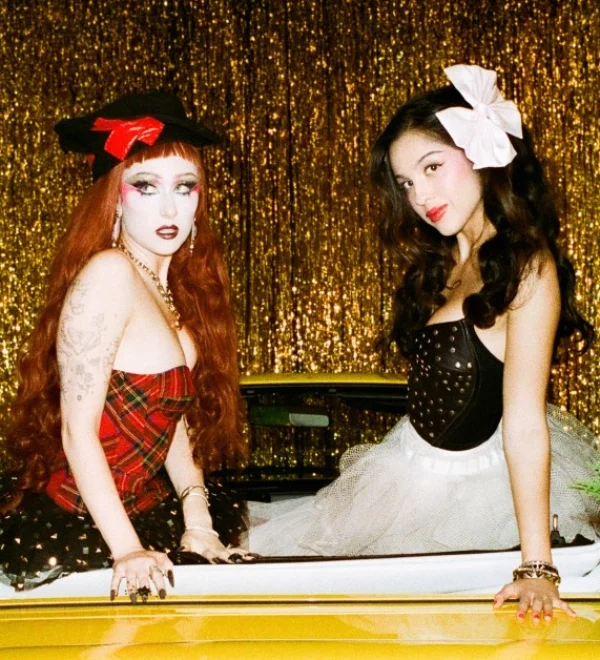 Olivia Rodrigo and Chappell Roan Release Remix and Video Starring David Byrne
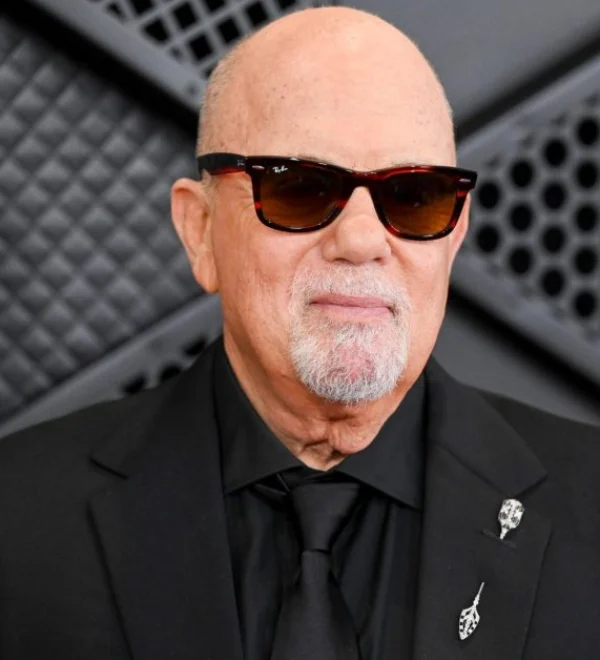 Billy Joel shares health update and discusses his motorcycle collection
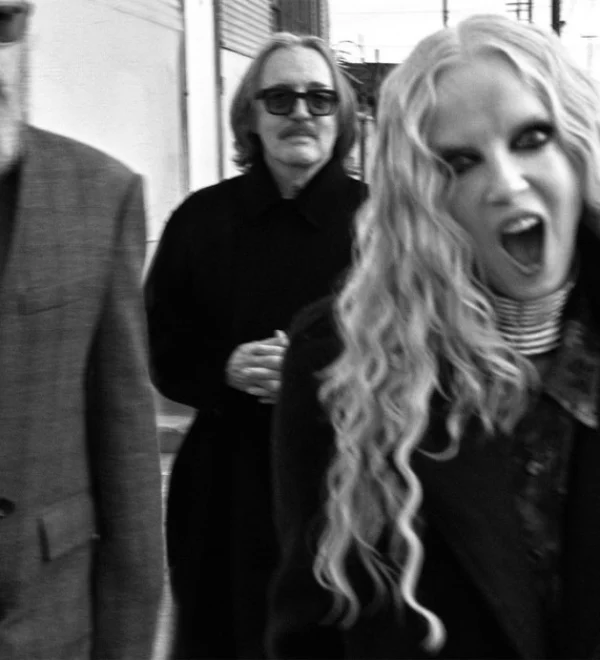 Garbage to Close 2026 Tour With Free Show at Mexico City’s Zócalo
 Recording Academy Black Music Collective and Amazon Music Announce 2026 HBCU Scholarship Recipients
 Lola Young Praises Chappell Roan’s Trick for Private Conversations
 Cardi B Says She Lost Her Birkin Esmeralda Bag
 Justice Created the Score for Grand Theft Auto VI and Released a New Song With Tame Impala and SZA
 Stephanie Mills Recalls Encounter With Lady Gaga and Calls Her a Culture Vulture