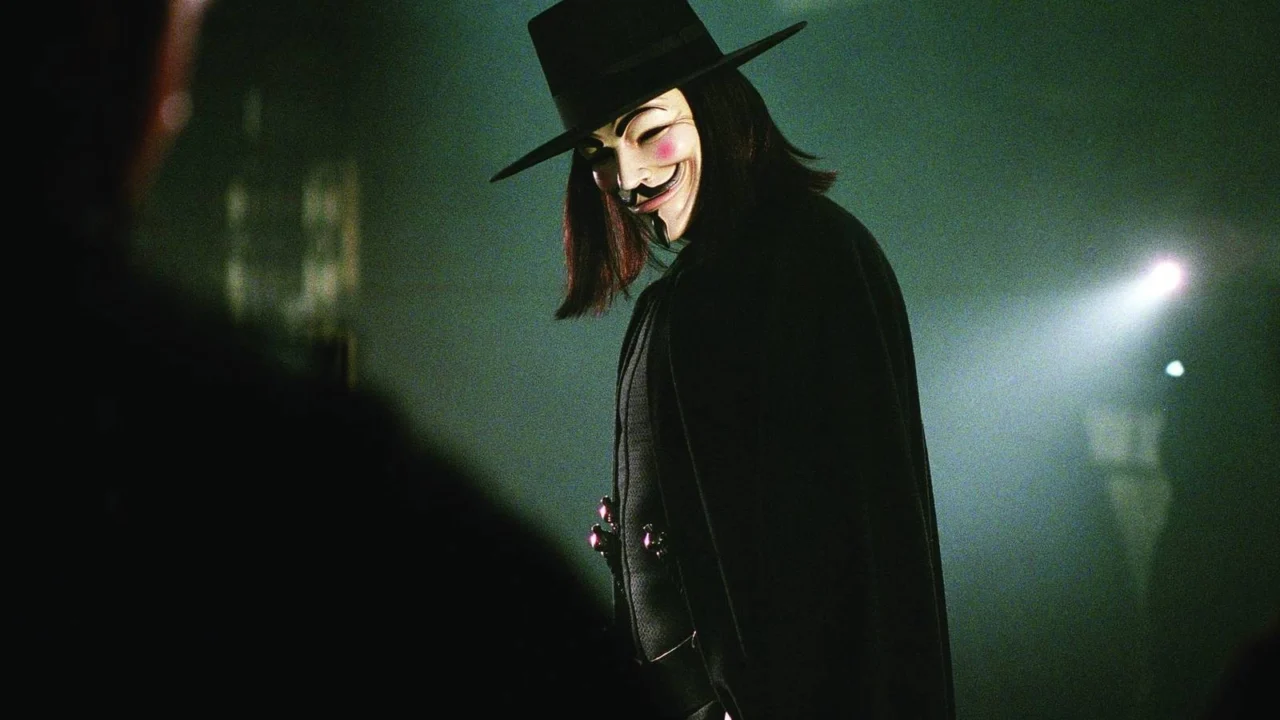
HBO’s “V for Vendetta” Needs One Bold Move to Succeed

Ideas endure — and lucrative intellectual property often follows. This week Variety reported that V for Vendetta — the 1982 graphic novel by writer Alan Moore and artist David Lloyd, later adapted into a 2005 film by the Wachowskis and James McTeigue — is being developed as an HBO series. DC Studios co-CEOs James Gunn and Peter Safran are attached as executive producers, while Pete Jackson (not to be confused with director Peter Jackson) is credited as the series writer.
Given Warner Bros. Discovery’s recent push to extract maximum value from its catalog, this move is unsurprising. The company is busy expanding the Game of Thrones universe, launched the It prequel Welcome to Derry, and is planning a multi-season adaptation of the Harry Potter saga.
On the surface, an HBO adaptation of V for Vendetta might simply replay the original narrative — perhaps reversing some of the screenplay changes the Wachowskis made — but there’s also scope for a more inventive approach.
 Mark Hill/HBO
HBO’s 2019 adaptation of Watchmen surprised many by becoming one of the most accomplished superhero series in recent memory. Showrunner Damon Lindelof didn’t merely retell the comic; he created a narrative sequel that extended the original mythos, allowing the show to confront contemporary issues — including racism and police brutality — while still honoring Alan Moore’s source material.
Applied to V for Vendetta, that same strategy could be compelling. Moore’s graphic novel ends without an official continuation, but there’s ample room to explore what follows the uprising at its center: does the revolt usher in lasting change, or does it collapse under new pressures? The question resonates today, arguably as much as it did amid the conservative politics of Margaret Thatcher and Ronald Reagan.
That said, Lindelof came to Watchmen with a track record — his work on Lost and The Leftovers gave him the standing to pursue an ambitious reinterpretation. Pete Jackson’s television credits are far less established. Being an unfamiliar name could be an asset if he brings a bold vision, or a liability if studio imperatives dilute the material.
For now the outcome is uncertain, but it’s worth hoping HBO applies the lessons of Watchmen and treats V for Vendetta as an opportunity to expand the story thoughtfully rather than simply monetize nostalgia. Anything less would squander a provocative idea.
Source: Polygon
Related articles
 Ryan Reynolds’ “Mayday” receives positive reviews from critics
 Michael Keaton to Direct Western Starring Morgan Freeman
 “Daddy’s Daughters” wedding sequel to be released in 2027
 Halle Berry and Colin Firth to Star in New Rom-Com
 Netflix Begins Filming New Dan Brown Adaptation
 Spider-Noir series canceled after first season
 Actors cast as Dobby and Tom Riddle for Harry Potter season two
 International “Doker” Film Festival Kicks Off in Moscow