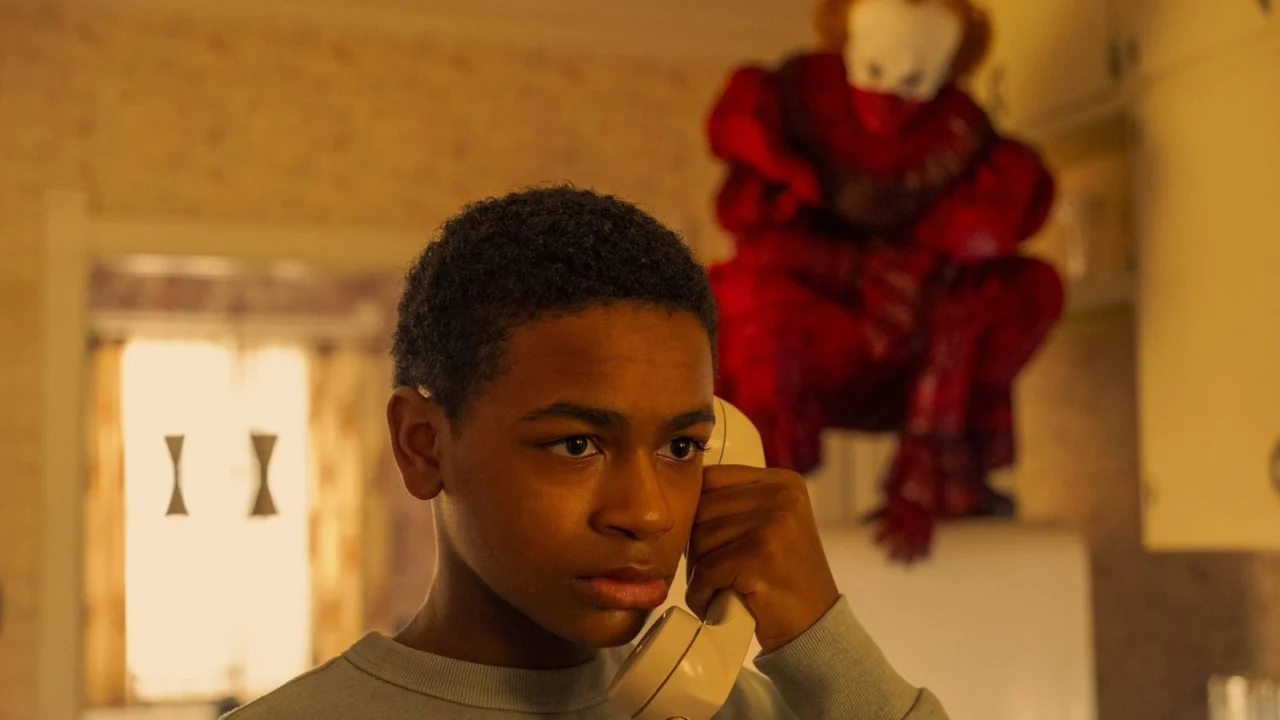
HBO’s It Prequel Just Upended Stephen King’s Timeline

It: Welcome to Derry continues to distinguish itself as one of this year’s most compelling series, answering last week’s setup with chilling revelations about Pennywise’s origins and bringing Ingrid (Madeleine Stowe)’s storyline to a grim conclusion while depicting the Black Spot catastrophe in devastating detail. The blaze that destroyed Derry’s Black nightclub also extinguished the fragile relationship between Rich (Arian S. Cartaya) and Marge (Matilda Lawler) — but the consequences that follow may prove even more consequential.
Ed. note: Spoilers ahead for It: Welcome to Derry episode 7.
With Ingrid unmasked as the force that amplified the Black Spot’s terror to sustain It, the creature consumes the club’s victims and then slips back into dormancy — leaving Ingrid to float away as a final, eerie trophy. Yet because the military has exhumed one of the Indigenous artifacts that once restrained It, the barrier that should have enforced the entity’s 27-year cycle has been compromised. As a result, Pennywise rouses himself earlier than the book’s timetable, attacking now that nothing remains to bind him.

This twist primes the season for a brutal finale: a fresh wave of victims appears probable, beginning with Will Hanlon (Blake Cameron James). More significantly, the show’s decision to have Pennywise awaken outside of his canonical 27-year cycle risks reshaping the timeline fans know from Stephen King’s novel. The revived threat — enabled by the artifact’s disturbance — introduces violent episodes not recorded in the original text.
Complicating matters further, the military’s apparent attempt to weaponize It against American citizens turns Derry’s horrors into something with national stakes, echoing the way the town has often been read as a reflection of contemporary traumas. With the artifact now destroyed, the creature may begin to haunt the descendants and communities who once held him at bay — specifically the newer generations in Wabanaki Country who carry the memory and legacy of those protective rituals. The Hanlon family’s multigenerational entanglement with Pennywise suggests he will find ways to follow and torment the living across years and families.
According to the 2017 film, Will eventually perishes in a fire — an ending that mirrors the inferno he narrowly escapes in this episode. Given the developments here, it’s plausible the series is hinting that Pennywise had a hand in the blaze that ultimately claims Will, and that turning him into a floating emblem now may be how the entity keeps tabs on him for the rest of his life — much as Pennywise continued to influence Ingrid into her old age in It: Chapter Two.
In short, the finale is steering the show into territory that the novel and Andy Muschietti’s films did not document. Where the previous adaptations stayed within the book’s major beats, this series is filling in — and at times reinterpreting — Derry’s dark history. Muschietti has said the show will jump backward through time: season 1 is set in 1962, season 2 in 1935, and season 3 in 1908, drawing on the novel’s interludes that chronicle Mike Hanlon’s research into the town’s major tragedies. That structure means season 1 sits closest to the films’ timeline, but its finale may cast parts of those movies in a new light. Read more on Muschietti’s timeline.
When Welcome to Derry concludes next week, many viewers will likely revisit It and It: Chapter Two with fresh eyes — eager to see how the series’ changes ripple back through the familiar story.
It: Welcome to Derry
Source: Polygon
Related articles
 “Gangsterland” starring Tom Hardy renewed for a third season
 First still from the film “The Luckiest Girl Alive” featuring Kate and Rooney Mara released
 Friday the 13th Screenwriter Victor Miller Dies
 “Borat” screening cancelled due to racist jokes
 «Obsession» Star Inde Navarrette to Be Submitted for Oscar Consideration
 George Clooney awarded honorary Golden Lion for career achievement
 Danny Boyle’s “Inks” Opens the 83rd Venice Film Festival
 Volga to Release Teen Melodrama “My Hooligan”