
Hazbin Hotel’s Secret Silmarillion — The Lore That Matters

I’ve rarely seen a modern animated universe organized the way Vivienne Medrano’s Hellaverse is. The closest analogue I can think of is how J.R.R. Tolkien’s small, published tales sit beside an enormous trove of background lore in The Silmarillion and the posthumous compilations: the core stories are compact, while the world behind them is vast and often scattered. That same imbalance is true of Hazbin Hotel and its sister series Helluva Boss—there’s far more context spread across interviews, livestreams, and social posts than appears on screen.
Unlike Tolkien’s estate, which collected and formalized his notes, Medrano’s worldbuilding exists all over the internet: Tumblr posts, livestream Q&As, social-media sketches, and decade-old webcomics. If you only watch the episodes, you’ll miss many clarifying details she’s revealed outside the show; for fans who follow her closely, those extras dramatically deepen the story.

Medrano has essentially developed Hazbin Hotel in public over more than ten years—through Tumblr, Bluesky, Instagram, and her YouTube channel. Along the way she’s shared sketches, origin notes, and offhand explanations that expand the Hellaverse far beyond what the episodes directly convey. For viewers who aren’t tracking those extras, many narrative choices can feel oddly under-explained.
While researching the Hellaverse—both for interviews and my own curiosity—I unearthed numerous details that I wish I’d known before watching the series. None of these revelations spoil Season 2 of Hazbin Hotel; they’re background context that helps explain character motivations and the world’s structural oddities.
Below are the most useful pieces of contextual lore Medrano has disclosed outside the shows. (For exhaustive sourcing and fan research, the Hellaverse Wiki collects many primary links; I lean on that resource when I want to follow a citation trail.)
Sinners and Hellborn characters are radically different

Most of Hazbin Hotel’s central cast are former humans—Sinner Demons—who shed their mortal bodies and reconstituted into demonic forms after death. Their designs frequently recall animals (Angel Dust as a spider, Husk as a cat, Alastor with deer elements), a holdover from Medrano’s earlier work on the anthropomorphic webcomic ZooPhobia. Medrano has also noted that a character’s animalistic appearance isn’t always a literal map to their sins or personality.
In contrast, Hellborn like Charlie Morningstar are a different class entirely. Charlie, as the daughter of Lucifer and Lilith, is a Hellborn demon who never led a mortal life. She does not age, regenerates from non-angelic injuries, and—critically—cannot leave the Pride Ring like Sinners can’t. That distinction explains much about Charlie’s optimism and her inability to fully grasp the lived experiences of the Sinner population she’s trying to save.
There are, of course, exceptions and intermediaries—Lucifer himself was once angelic, Lilith’s exact origin is ambiguous, and characters such as Vaggie have angelic ties. But the Sinner/Hellborn divide is a foundational worldbuilding rule: it affects who Heaven targets with its Extermination squads, who can be redeemed, and how individuals navigate Hell’s social order.

Why this matters: Charlie’s Hellborn nature reframes her role and the show’s moral architecture. She’s campaigning for the salvation of beings whose lives, regrets, and punishments she hasn’t lived, and she isn’t protected from Heaven’s political calculus in the same way Sinners are. That asymmetry generates dramatic friction: Charlie’s compassion is genuine yet incomplete, and her interventions carry different stakes because she doesn’t occupy the same existential category as most of the cast.
Hazbin Hotel’s setting is a traditional Hell—except when it isn’t
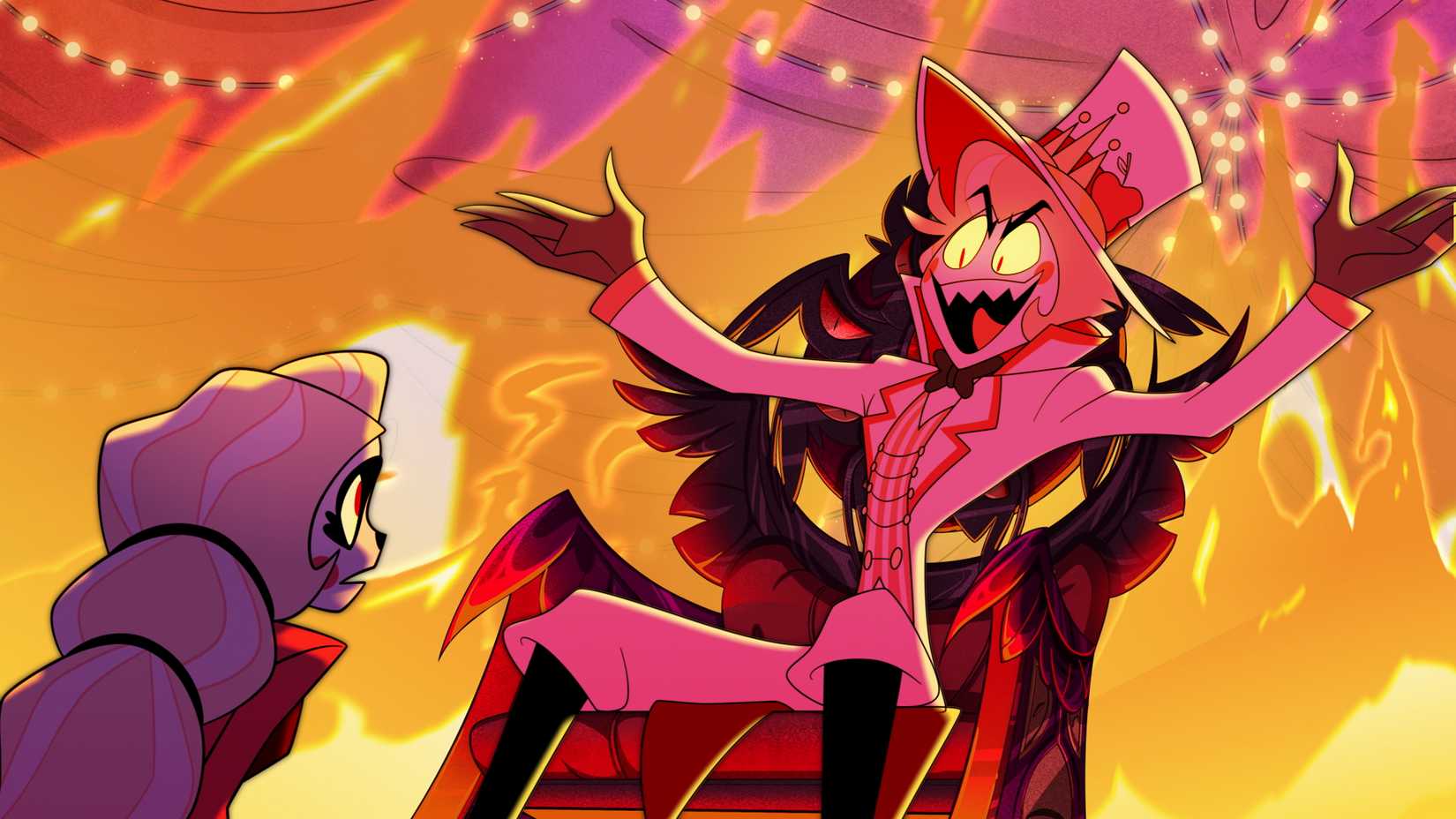
The Pride Ring—the primary locale of Hazbin Hotel—borrows heavily from classical depictions of Hell, especially Dante’s Inferno: separate zones correspond to the Seven Deadly Sins and are dominated by powerful entities tied to those vices. Medrano and fans also reference occult grimoires and demonologies for design cues, including the Ars Goetia and the Key of Solomon.
Yet, despite the theatrical trappings of punishment and sin, the show rarely presents Hell as a site of relentless, systematic torment. Instead, the suffering frequently reads as social and existential: Sinners are denied access to Heaven and must survive in an overcrowded, violent ring of other damned souls. The absence of constant, organized torture raises questions about what Heaven and Hell actually intend to accomplish in this cosmology.
Why this matters: The Pride Ring’s structure and the apparent lack of an overseer actively shepherding souls complicate any straightforward moral reading of the Hellaverse. If Hell’s “punishment” is chiefly exclusion from a blissful Heaven, and Heaven permits wholesale extermination without clear checks, then big-picture questions about purpose and stewardship naturally follow—questions the series is set up to explore.
Extermination has left Hell in a constant state of war

Heaven’s policy of Extermination—targeted strikes that permanently remove powerful Sinner Demons—creates recurring power vacuums in the Pride Ring. Because most deaths by mundane, Hellish means eventually heal or regenerate, the stakes for everyday violence are muted; but when Extermination intervenes, the effect is permanent and destabilizing. Those permanent losses reorder hierarchies and invite brutal contests for dominance.
Why this matters: Season 2 revolves around that instability: characters like the TV-overlord Vox exploit the disorder left by previous conflicts and Heaven’s interference. The ongoing cycle of death, regeneration (except for exterminated souls), and turf struggle normalizes violence in the Pride Ring and primes Sinners to view Heaven itself as another rival faction to be conquered or subverted.
Hazbin Hotel’s characters have sprawling backstories

Because Medrano has iterated on these characters over many years, fans can trace long creative histories for nearly everyone in the cast: earlier concept art, discarded designs, and extended origin stories that predate the shows. That archival material means nearly any character you care about will have lengthy biographies, trivia lists, and fan analyses online.
Why this matters: Most trivia—favorite drinks, family details, or small design origins—doesn’t change the series’ dramatic throughlines. Still, those minutiae sometimes clarify odd choices in the animation (for instance, why Husk has wings despite being a cat-demon) and enrich fan appreciation when treated as optional worldbuilding rather than essential canon.
Any and all of this is subject to change

Much of the detail fans have compiled comes from scattered, informal sources: livestreams, throwaway posts, convention panels, and archived threads. Because those materials weren’t always produced to be permanent canonical statements, Medrano and her team have occasionally revised or retconned earlier elements to fit the evolving series—for example, reworking the Helluva Boss pilot material when the show joined Prime Video.
That means you should treat many peripheral facts with caution. Certain structural points—like the Sinner vs. Hellborn distinction—are central enough to the current narrative that they’re unlikely to disappear. Other bits of trivia may be reinterpreted or dropped as the series’ priorities shift.
Be careful where you get your Hazbin Hotel information

The internet is saturated with fan-created content—fanfiction, speculative wikis, and AI-generated write-ups—that often blur the line between Medrano’s confirmed canon and enthusiastic extrapolation. Some automated content farms and poorly sourced articles regurgitate fanon as fact, which makes careful source-checking essential when you’re researching lore.
If you’re digging into background material, follow links back to primary sources: Medrano’s social media, official interviews, and recorded panels. The Hellaverse Wiki is a comprehensive fan repository that cites original statements; use it as a starting point for tracing provenance rather than as an unquestioned authority. In short: verify, don’t assume.
Medrano’s body of shared lore is already immense—more than enough to keep any curious viewer occupied—so approach ancillary material thoughtfully and enjoy the rabbit hole in moderation.
Source: Polygon
Related articles
 Robert Pattinson Responds to Chris Hansen’s Complaints About the Movie “Primetime”
 Ryan Reynolds’ “Mayday” receives positive reviews from critics
 Michael Keaton to Direct Western Starring Morgan Freeman
 “Daddy’s Daughters” wedding sequel to be released in 2027
 Halle Berry and Colin Firth to Star in New Rom-Com
 Netflix Begins Filming New Dan Brown Adaptation
 Spider-Noir series canceled after first season
 Actors cast as Dobby and Tom Riddle for Harry Potter season two