
Avatar: Fire and Ash Review: James Cameron’s Moving and Monumental Masterpiece
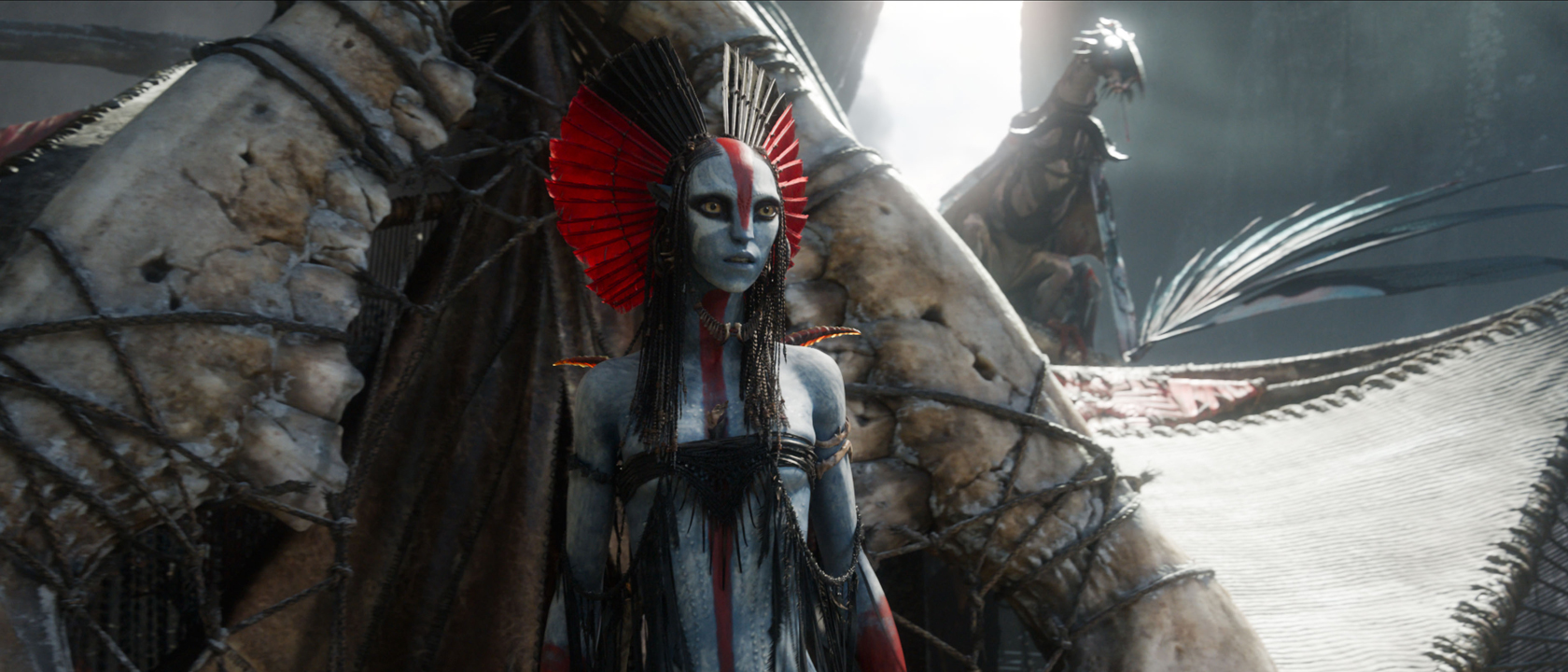
James Cameron remains a titan of modern cinema, a visionary whose work is inextricably linked with the cutting edge of film technology. Nowhere is his ambition more evident than in the Avatar saga. Following the 2009 original, audiences endured a decade-long hiatus before The Way of Water finally arrived. Fortunately, Cameron’s decision to shoot the second and third installments concurrently means that the threequel, Fire and Ash, is ready to captivate moviegoers this holiday season.
Release Date: December 19, 2025
Director: James Cameron
Screenplay: James Cameron, Rick Jaffa, Amanda Silver
Cast: Sam Worthington, Zoe Saldaña, Sigourney Weaver, Stephen Lang, Kate Winslet
Rating: PG-13 for intense action, sequences of violence, and thematic elements
Runtime: 197 minutes
Fire and Ash resumes the narrative almost immediately after the tumultuous conclusion of the second film. However, the perspective shifts; rather than Jake Sully’s narration, we experience the world through the eyes of his second son, Lo’ak (played by Britain Dalton). This installment feels less like a traditional sequel and more like a direct, organic extension of The Way of Water. For those who need a refresher, the film skillfully weaves in necessary exposition early on to bridge the gap.
The core ensemble returns in full force, led by Worthington and Zoe Saldaña. The story continues to follow the Sully children and the Metkayina clan, while Stephen Lang’s Quaritch persists in his Na’vi form. The scope of Pandora expands significantly with the introduction of the Mangkwan, also known as the “Ash People.” This marks the first time we witness internal Na’vi discord, anchored by a commanding performance from newcomer Oona Chaplin as the antagonist Varang.
Simultaneously, the threat of the RDA remains ever-present as they continue their ruthless exploitation of Pandora. This arc brings back General Ardmore (Edie Falco) and Parker Selfridge (Giovanni Ribisi). Quaritch finds himself navigating the space between the human invaders and the Mangkwan clan, leading to a precarious and unexpected alliance. The result is an epic of grand proportions, teeming with character revelations and the breathtaking visual escapism for which Cameron is famous.
A Poignant Exploration of Grief
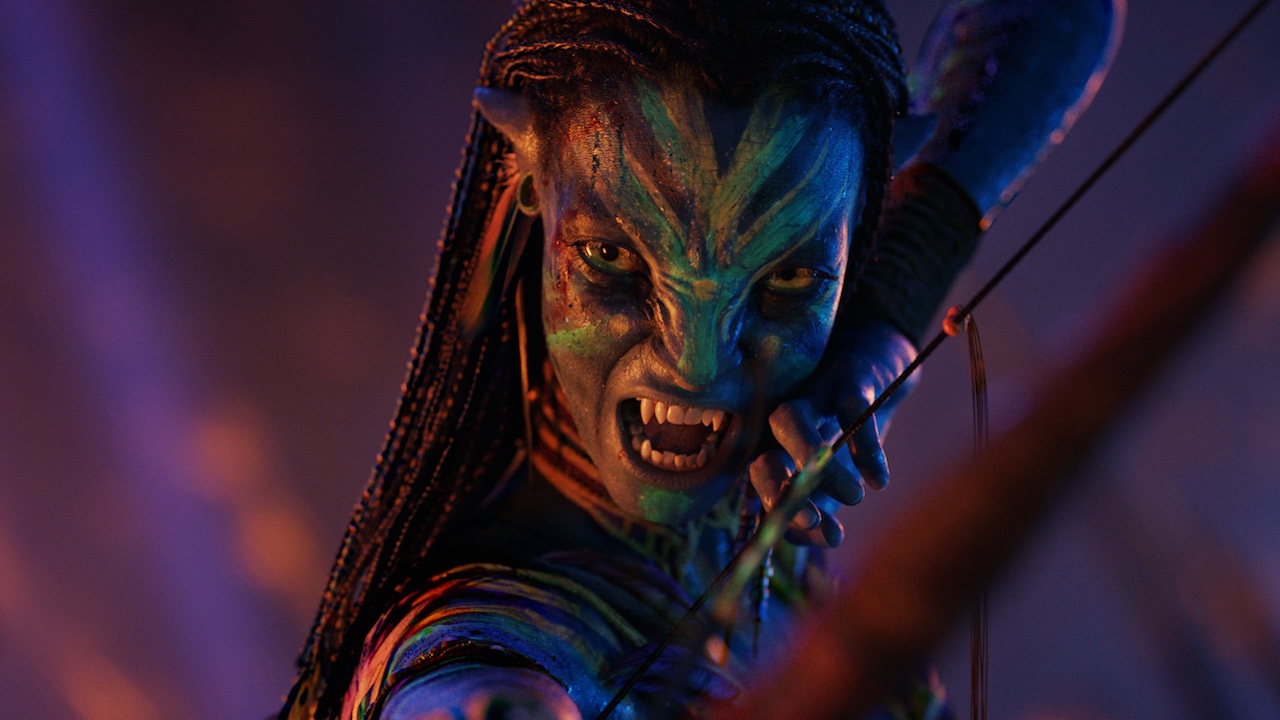
The heart of Fire and Ash is inextricably linked to the tragic loss of Neteyam at the end of the previous film. Picking up shortly after his passing, the movie explores the deep-seated sorrow fracturing the Sully family. Lo’ak provides a somber account of how this tragedy has altered their family dynamic, specifically regarding Zoe Saldaña’s Neytiri.
Neytiri, usually the family’s emotional anchor, is consumed by a blinding rage toward humanity. This resentment extends even to their adopted human son, Spider, creating a palpable tension that builds toward a dramatic confrontation. Despite the alien landscape and towering blue protagonists, this grounded, human story of loss makes the Sullys’ journey deeply relatable to audiences.
STAY UPDATED WITH CINEMABLEND
The latest entertainment news delivered to your inbox.
Greater Narrative Depth, Less Environmental Novelty
While the franchise is celebrated for its visual innovation—particularly when viewed in 3D—Fire and Ash offers fewer “new” wonders of Pandora than its predecessors. Instead, the film prioritizes its character-driven narrative over the wide-eyed discovery that defined the first two entries.
The 2009 debut was an introduction to a bioluminescent paradise, and The Way of Water unveiled an entire oceanic ecosystem. In contrast, Fire and Ash stays largely within established boundaries. The Fire People may have different cultural markings and colors, but they utilize familiar creatures like the Ikran. While some may miss the constant sense of environmental discovery, the shift allows Cameron to focus more intensely on the personal stakes of his characters.
A Massive Runtime with Significant Payoffs
Clocking in at 197 minutes, Avatar: Fire and Ash is the longest entry in the series to date. This duration is certainly felt, and there are moments where the pacing could have been tightened to prevent audience fatigue before the final act. However, the conclusion makes the investment worthwhile.
The finale is masterfully executed, providing every character with a defining moment. Several sequences are profoundly moving, benefiting from the years of character development we’ve shared with the Sully family. Even during the film’s slower stretches, the sheer weight of the emotional beats keeps the audience tethered to the screen.
Crucially, Fire and Ash does not feel like a mere bridge in a five-movie plan. The stakes are genuine; Cameron isn’t afraid to kill off significant characters or push survivors through transformative changes. By the time the credits roll, the stage is set for a compelling future. Ultimately, Avatar: Fire and Ash is a visual and emotional powerhouse that, despite its length, proves James Cameron’s mastery of epic storytelling.
Related articles
 First still from the film “The Luckiest Girl Alive” featuring Kate and Rooney Mara released
 “Borat” screening cancelled due to racist jokes
 «Obsession» Star Inde Navarrette to Be Submitted for Oscar Consideration
 George Clooney awarded honorary Golden Lion for career achievement
 Danny Boyle’s “Inks” Opens the 83rd Venice Film Festival
 Volga to Release Teen Melodrama “My Hooligan”
 “The Number of the Beast” becomes the most popular detective series of the summer on Ivi
 Maggie Gyllenhaal addresses the lack of female directors at the Venice Film Festival