
Dave Filoni Is Fundamentally Wrong About Darth Vader in One Concerning Way

Following Kathleen Kennedy’s departure from the presidency of Lucasfilm after a 13-year tenure, the future of Star Wars now rests in the hands of Lynwen Brennan and George Lucas’ protege, Dave Filoni. Despite the franchise’s uneven trajectory in recent years, I remained optimistic that Filoni’s leadership would propel the saga in fresh, compelling directions, provided he doesn’t lean too heavily on the crutch of nostalgia. That hope remains intact, bolstered by the exceptional first season of Maul – Shadow Lord.
That said—and it pains me to say this—Dave, I believe you are fundamentally mistaken regarding Darth Vader.
During a May 4th event honoring the two-part conclusion of Star Wars: Maul – Shadow Lord, Filoni articulated his perspective on the Sith Lord.
“For me, the essential truth of Vader is that he is not Anakin,” Filoni stated. “He doesn’t acknowledge that connection. He can’t. Anything that evokes Anakin is something he feels compelled to eradicate. When he encounters a Jedi, he destroys them because they serve as a conscious or unconscious reminder that he betrayed everything he held dear and everyone he loved. And for what? For nothing. He sacrificed his entire life, was manipulated, and lied to. He cannot face that reality.”
 Image: Lucasfilm/Disney
Filoni continued, suggesting that while Anakin exists somewhere deep within, Vader suppresses him entirely. “The goal isn’t to develop a complex character for Vader. He is devoid of personality because he feels nothing. Darth Vader is not driven by empathy; he does not truly ‘see’ others. He exists only to identify and dismantle what he wishes to destroy.”
While I agree with the majority of Filoni’s interpretation regarding Vader’s actions, I find the assertion that Vader isn’t Anakin—or that he lacks depth as a character—to be misguided.
Ever since his 1977 debut, creators, fans, and George Lucas himself have delved into the man beneath the iconic mask. The revelation of his paternity in The Empire Strikes Back stands as a seminal moment in pop culture history. Subsequently, the prequel trilogy provided a tragic, necessary exploration of Anakin Skywalker, mapping his descent into the formidable villain we have come to both fear and admire.
 Image: Greg Pak, Raffaele Ienco/Marvel Comics
Vader’s evolution has continued across novels, comics, and games, with one narrative thread remaining constant: the persistent, inescapable reality that he remains Anakin Skywalker. While many stories highlight his cold, calculated brutality—such as his relentless assault in Rogue One or the cold-blooded dispatching of his own subordinates—the argument that he has ceased to exist as a character denies the nuance of his arc.
Consider the 2025 novel Master of Evil by Adam Christopher. Set shortly after Revenge of the Sith, the book depicts Vader showing flickers of genuine empathy, such as repairing a clone trooper’s prosthetic and prioritizing the safety of his men amidst the wreckage of a ship. Similarly, Marvel’s 2020 Darth Vader series depicts him repeatedly safeguarding Padmé’s decoy, Sabé. While this protection stems from her resemblance to his late wife, it serves as undeniable proof that the psyche of Anakin Skywalker is deeply woven into Vader’s motivations.
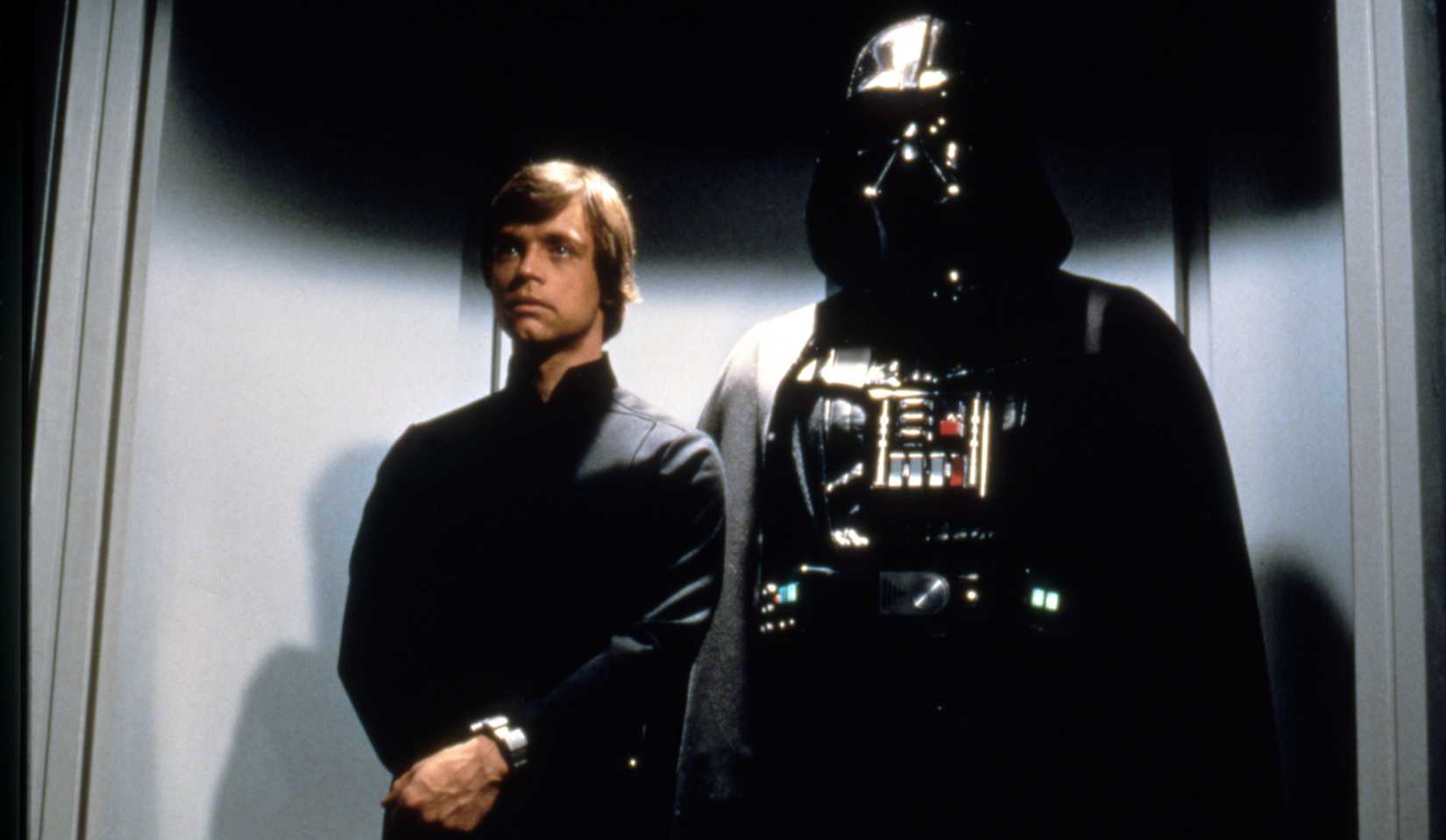 Image: Lucasfilm/Disney
Perhaps the most definitive evidence appears in Deborah Chow’s Obi-Wan Kenobi. During their climactic duel, when Obi-Wan reveals Anakin’s fractured face behind the mask, Anakin offers solace to his former mentor, claiming he wasn’t responsible for his fall. In that moment, he effectively concedes that Anakin didn’t die—Vader murdered him.
Deepen your understanding of Star Wars lore
Subscribe to our newsletter for insightful, in-depth analyses of Star Wars characters and the evolution of the franchise. Perfect for those seeking nuanced discussion and detailed context.
By subscribing, you agree to receive our newsletter. See our Terms and Privacy Policy.
While one could argue this supports Filoni’s view of them as distinct personas, the truth is more nuanced. Vader may cling to the illusion that Anakin is dead, but the very act of attempting to comfort Obi-Wan proves that Anakin’s affection and history endure.
The discourse regarding what remains of a Jedi after they embrace the Dark Side has persisted among fans for years. To me, separating the two feels like a distraction. Star Wars is, at its core, a sprawling, supernatural tragedy. Filoni is correct that Vader has Anakin “trapped,” yet he seems to stumble by viewing them as fundamentally separate beings.
The tragedy of Vader is precisely that, despite the manipulation and deceit he endured, his undoing was a consequence of his own fear and the betrayal of his own ideals. Anakin Skywalker made choices that culminated in the creation of Darth Vader. To disconnect the two is to dilute the weight of those actions. If you deny the connection, I have to wonder if the tragedy of the character is truly being understood at all.
Source: Polygon
Related articles
 Microsoft Redesigning Xbox App for Windows 11 with Major Update
 It Takes Two Headed to Nintendo Switch 2 with Free Update Within Days
 JND Studios Teases Hyper-Realistic Rubeus Hagrid Statue
 007 First Light Gets Performance Mode on Xbox Series S
 Remedy Begins Full Production on Max Payne Remakes
 New Crazy Taxi: World Tour Trailer Showcases Brazil
 Ubisoft Promotes Diversity, Equity, and Inclusion Director to Head of AI Implementation
 US Xbox Sales Hit Historic Low Amid Record Prices While PlayStation Sees Weakest Result Since 2013