
GameStop Begins Selling $5,000 Pokémon Packs Following $56 Billion eBay Bid
On Monday, GameStop stunned the financial world by announcing its ambition to acquire eBay—a technology giant with a valuation vastly exceeding that of the video game retailer. The immediate, burning question was: how could GameStop possibly finance such a gargantuan transaction? The answer, it appears, is rooted in the same controversial strategy currently keeping the company afloat: Pokémon cards.
GameStop merchandises “Power Packs,” curated bundles of Pokémon cards available in various tiers. The premium tiers promise higher odds of securing high-value assets. Crucially, the retailer dictates the contents of these packs. While the concept may invite skepticism, it serves as a workaround for collectors avoiding the inflated markups often found elsewhere in the Pokémon TCG market.
Previously, these packs spanned a price range of $25 to $2,500. GameStop even facilitated instant buybacks for lucky pulls—though at below-market rates, the convenience of offloading high-value items without the logistical burden of personal listing and shipping proved enticing to some. Now, the model is escalating significantly with the introduction of a new $5,000 ‘Neutronium’ Power Pack tier.
Marketing materials for the Neutronium tier showcase “grail” cards—including iconic Charizard and Pikachu variants—valued between $26,000 and $68,000, all professionally graded as PSA 9 or 10. However, the probability of cracking a pack valued over $40,000 is a staggering 0.4%. According to GameStop’s estimates, approximately 44% of Neutronium packs hold a market value between $3,000 and $4,000.
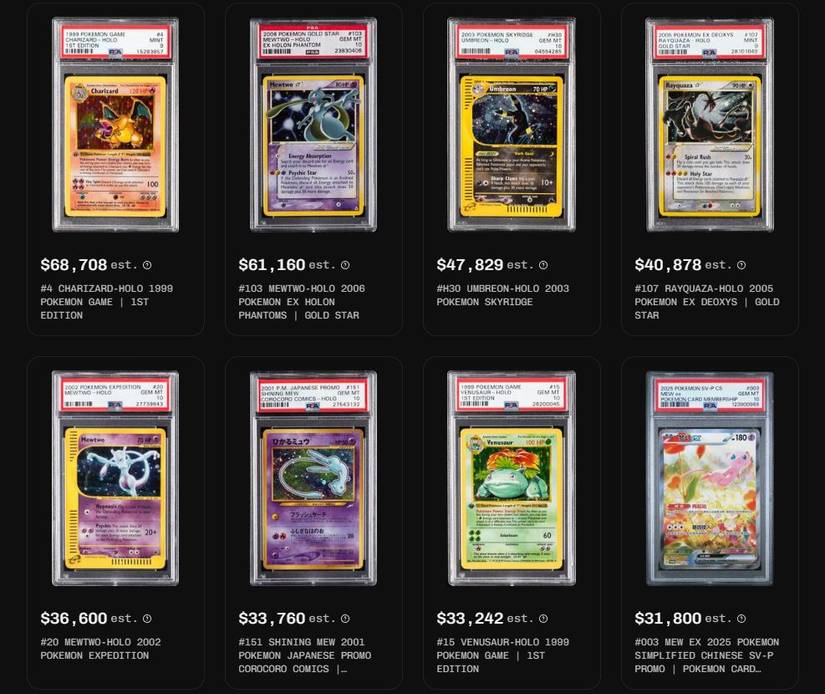 Image: GameStop
Notably, by incorporating pre-sealed booster packs, the company can theoretically justify a valuation far exceeding the contents. Much like “Schrödinger’s Pikachu,” a vintage pack’s true value is anchored in its mystery; once opened, the contents often plummet in value compared to the sealed premium. Furthermore, the opaque condition of items within sealed containers introduces another layer of risk, especially given that professional grading is the primary arbiter of value in this space.
Coupled with the fact that GameStop extracts fees from every platform transaction, the Power Pack ecosystem feels increasingly like a calculated racket. Nevertheless, it aligns with the company’s strategic pivot toward high-end collectibles announced in 2025. Acquiring eBay, a cornerstone of the secondary collectibles market, would grant GameStop unprecedented control and data transparency over this niche industry.
To realize this acquisition, however, GameStop faces an uphill battle to secure the necessary capital. While the company maintains a multi-billion dollar reserve and has reportedly been promised $20 billion in bank financing, a significant funding gap remains. The introduction of these high-stakes $5,000 Power Packs—occurring just a day after a widely panned interview in which CEO Ryan Cohen struggled to articulate the company’s financial strategy—strikes many observers as exceptionally questionable timing.
Source: Polygon
Related articles
 Valve Announces Dates for Upcoming Steam Sales and Festivals
 Microsoft Redesigning Xbox App for Windows 11 with Major Update
 It Takes Two Headed to Nintendo Switch 2 with Free Update Within Days
 JND Studios Teases Hyper-Realistic Rubeus Hagrid Statue
 007 First Light Gets Performance Mode on Xbox Series S
 Remedy Begins Full Production on Max Payne Remakes
 New Crazy Taxi: World Tour Trailer Showcases Brazil
 Ubisoft Promotes Diversity, Equity, and Inclusion Director to Head of AI Implementation