
Critical Role Alters Campaign 4 Characters, Potentially Triggering Major Repercussions

From the outset, Campaign 4 of Critical Role signalled a departure from the familiar. Rather than returning to Exandria, the story unfolds in the new, godless realm of Aramán, and it features an expanded ensemble led by award-winning storyteller Brennan Lee Mulligan as Dungeon Master. Reinvention is central to this chapter.
That reinvention extends beyond setting and cast. Beacon, Critical Role’s official platform, recently refreshed the Campaign 4 character pages, adding details like starting table, initial level, species and — notably — class designations.
Those class labels are where the most intriguing differences appear. Some characters who were previously marked as Wizards in the episode HUD are now listed as “Arcanists” on Beacon. Others received similarly substantive renamings: Azune Nayar (Luis Carazo) appears as a “Prodigy Mage/Exemplar” rather than Sorcerer/Paladin, and Kattigan Vale (Robbie Daymond) is called a “Tracker” instead of a Ranger.

Not every roster entry changed — Sir Julien Davinos (Matthew Mercer) remains listed as Fighter/Rogue and Halandil Fang (Liam O’Brien) still reads as Bard — but a majority were relabeled. The updated terminology is as follows:
- Wizard → Arcanist
- Sorcerer → Prodigy Mage
- Paladin → Exemplar
- Ranger → Tracker
- Warlock → Pact Magus
- Druid → Wild Mage
One interpretation is that these are cosmetic tweaks to underscore Aramán’s distinct identity — new names to match a new world where magic, celestials and fiends behave differently than in traditional Dungeons & Dragons lore. That would align with Campaign 4’s broader creative overhaul.

There’s also a commercial angle to consider. Critical Role has a track record of releasing settings and supplements — from Explorer’s Guide to Wildemount to Tal’Dorei Campaign Setting Reborn and Call of the Netherdeep — so a published Aramán rulebook would be a natural extension of the brand. With Campaign 4 attracting a broad audience (the premiere accumulated 4.3 million YouTube views), a market-ready setting could let players recreate Aramán at their table.
Historically, Critical Role’s books have been published through partners like Green Ronin and Darrington Press under D&D’s Open Game License, so renaming classes or reshaping mechanics for an Aramán product would be feasible even without direct intervention from Wizards of the Coast.
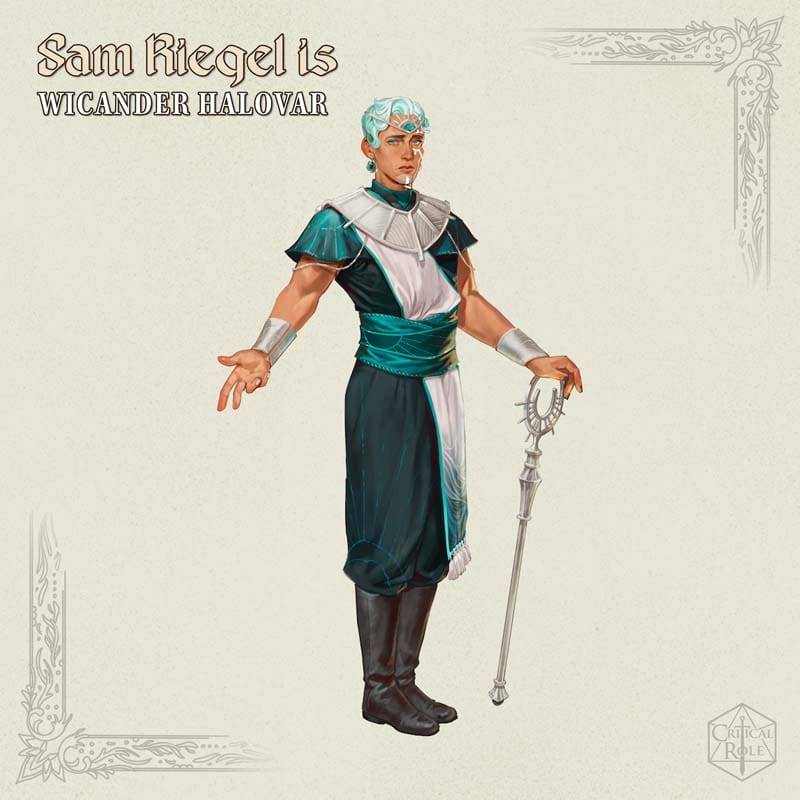
Wicander Halovar’s stats — low Wisdom but high Charisma — have already prompted fan theories that he might not be a traditional Cleric. His family’s celestial heritage offers an alternate explanation for innate magic, which fits better with class labels like Prodigy Mage than with a deity-granted Cleric. Indeed, Beacon’s profile lists Wicander in a way that blurs those lines.
The new Paladin label, Exemplar, is similarly evocative. It emphasizes reputation, leadership and moral stature over devotion to a specific deity — a useful reframing in a world without gods. Characters such as Vaelus (Ashley Johnson), Teor Pridesire (Travis Willingham) and Azune each read as figures whose prominence springs from deeds and civic roles rather than divine patronage.
At first glance, these renamings may feel cosmetic. But as Campaign 4 unfolds, those alternative titles could acquire distinct mechanical or narrative meanings that set Aramán apart from established D&D conventions. Whether they remain thematic labels or become rules-level distinctions will become clearer as the story and any companion products develop.
Source: Polygon
Related articles
 Ryan Reynolds’ “Mayday” receives positive reviews from critics
 Michael Keaton to Direct Western Starring Morgan Freeman
 “Daddy’s Daughters” wedding sequel to be released in 2027
 Halle Berry and Colin Firth to Star in New Rom-Com
 Netflix Begins Filming New Dan Brown Adaptation
 Spider-Noir series canceled after first season
 Actors cast as Dobby and Tom Riddle for Harry Potter season two
 International “Doker” Film Festival Kicks Off in Moscow