
The Perfect Director to Replace James Cameron on Avatar 4 Just Made One of 2025’s Best Movies

Avatar: Fire and Ash unexpectedly brought the works of William Shakespeare to mind. It wasn’t that James Cameron’s scripts have suddenly attained the linguistic heights of the Bard, but rather that the film pulsates with the same visceral, agonizing drama found in Hamnet—perhaps the most surprising cinematic parallel for the 2025 blockbuster season.
As a prestigious adaptation of one of the decade’s most celebrated novels and a primary Oscar contender, Hamnet seems worlds apart from the neon-soaked world of Fire and Ash. Collaborating with author Maggie O’Farrell, director Chloé Zhao traces the intimate trajectory of how a couple’s devastating loss eventually birthed the masterpiece Hamlet. Conversely, Fire and Ash is a sprawling sci-fi spectacle featuring sentient cetaceans and high-tech aerial warfare.
Yet, in their shared pursuit of profound human emotion, these two directors have converged into the same lane. I am now thoroughly convinced that Chloé Zhao is the only filmmaker capable of succeeding James Cameron should the 71-year-old visionary decide to hand over the reins after Avatar 4. Given Cameron’s recent comments, the need for a series successor feels more tangible than ever.
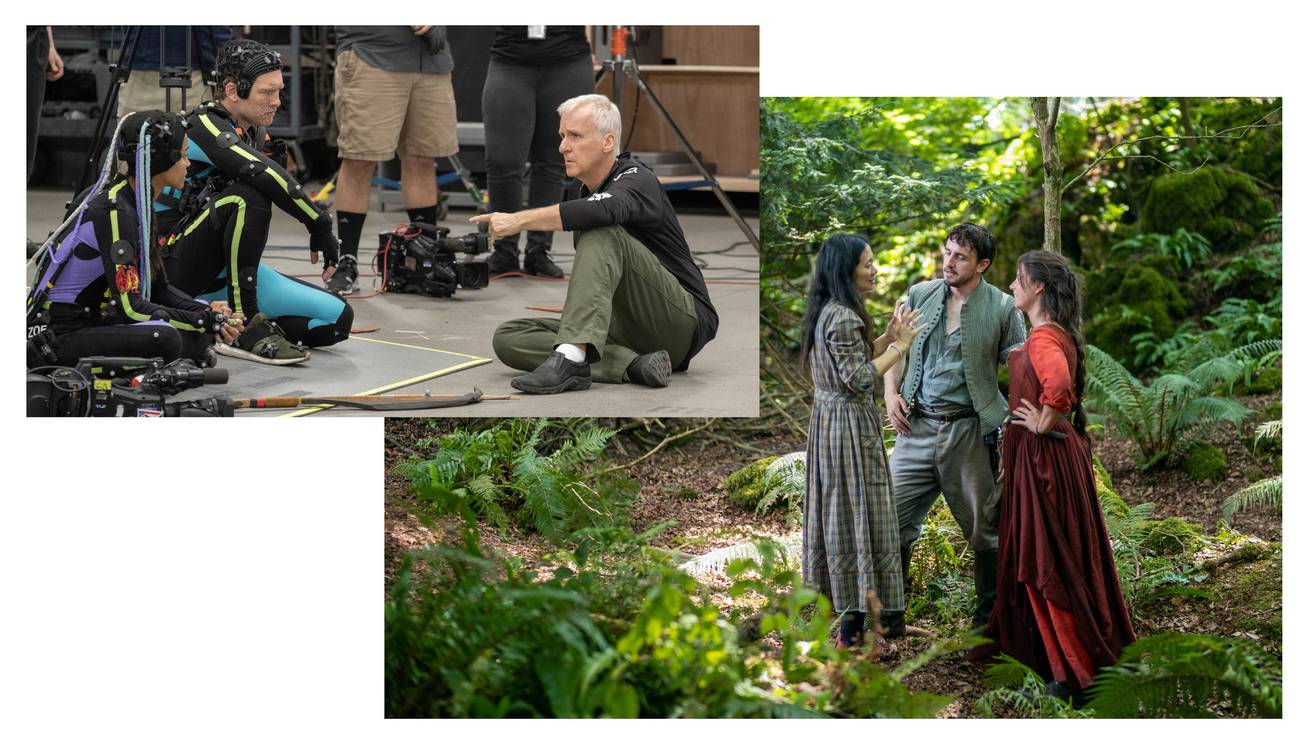
The continued existence of the Avatar saga feels like a miracle in a Hollywood landscape that has largely ossified into low-risk, assembly-line IP. Cameron remains a singular figure in cinematic history: a former special effects artist with a gritty screenwriting background who transformed into a commercial titan. After proving his mettle with hits like The Terminator and Aliens, his creative capital reached a point where he could secure a $120 million budget for “Romeo and Juliet on a sinking ship”—and then famously exceed that budget while inventing new technologies to film it.
Cameron consistently delivers, regardless of the research and development costs or the skepticism of the press. Even after dedicating decades to Pandora, he remains at the zenith of the industry. He possesses a level of clout that even Spielberg or Scorsese might envy; who else is permitted to build massive wave tanks just to perfect motion-capture physics? Only Cameron.
Unlike George Lucas, who drew heavily from vintage serials, Cameron has infused Avatar with every facet of his personal psychology. The franchise is a synthesis of his futurist sensibilities, his obsession with marine biology, his fetishistic appreciation for military hardware (a trait he shares with Hayao Miyazaki), and his own evolving perspective on fatherhood. It is a 100% undiluted vision from a man who spent 45 years building the credibility required to make it a reality.
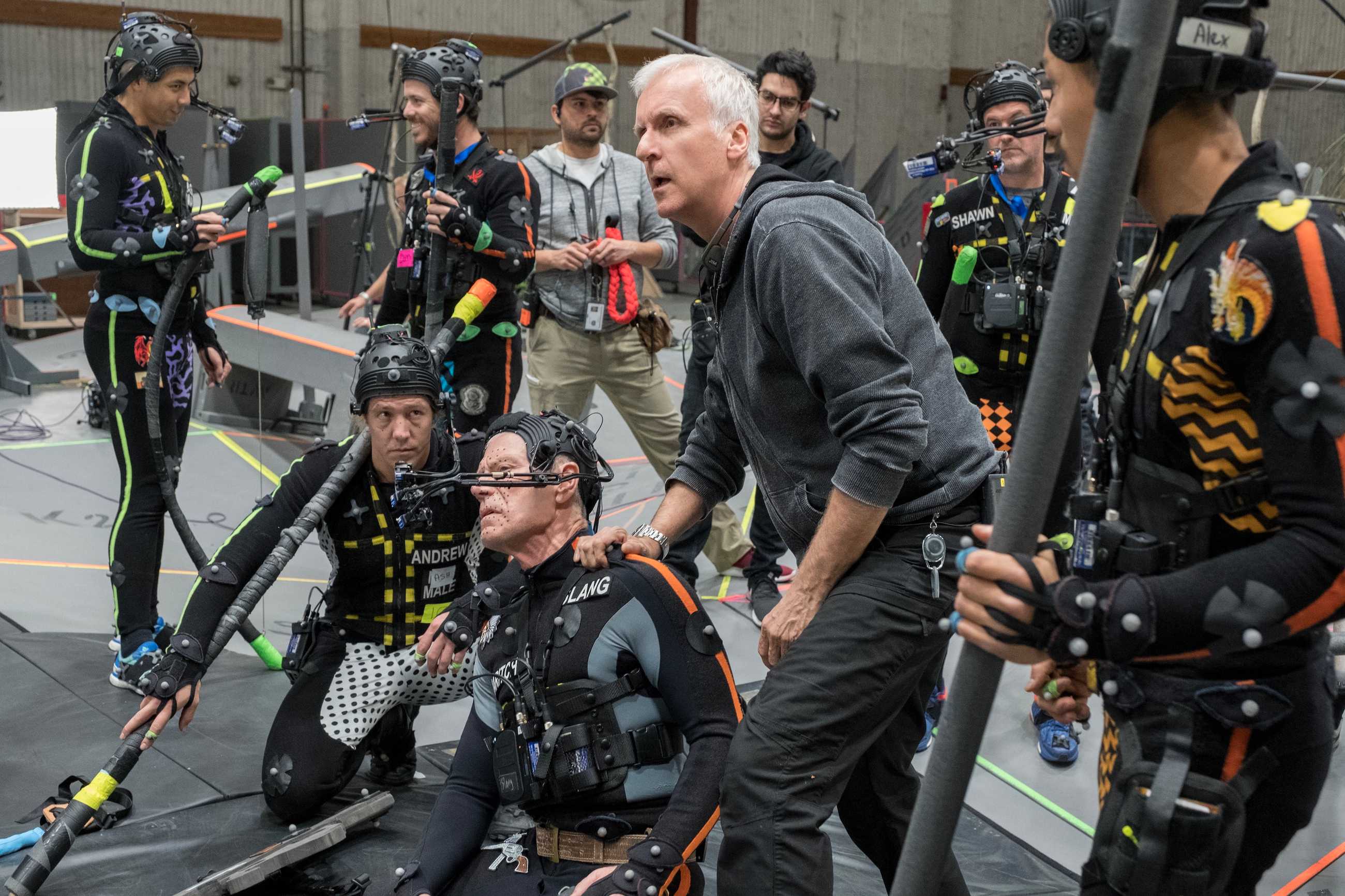 Photo: Mark Fellman/20th Century Studios
While Cameron remains committed to the franchise—with Avatar 4 currently slated for late 2029—he has begun to acknowledge that his career has room for more than just the Sully family saga. Speaking to The Hollywood Reporter, he expressed a desire for more collaboration and a slightly less “hands-on” approach to every infinitesimal detail.
“What won’t happen is, I won’t go down the rabbit hole of exclusively making only Avatar for multiple years,” he said. “I’m going to figure out another way that involves more collaboration. I’m not saying I’m going to step away as a director, but I’m going to pull back from being as hands-on with every tiny aspect of the process.”
Stepping into Cameron’s shoes is a daunting prospect, particularly as Disney pivots toward generative AI while the Avatar films require a level of artisanal dedication that feels increasingly rare. However, Chloé Zhao possesses the necessary range. If you found the family dynamics of Fire and Ash compelling but yearned for even deeper emotional resonance, Hamnet is essential viewing.
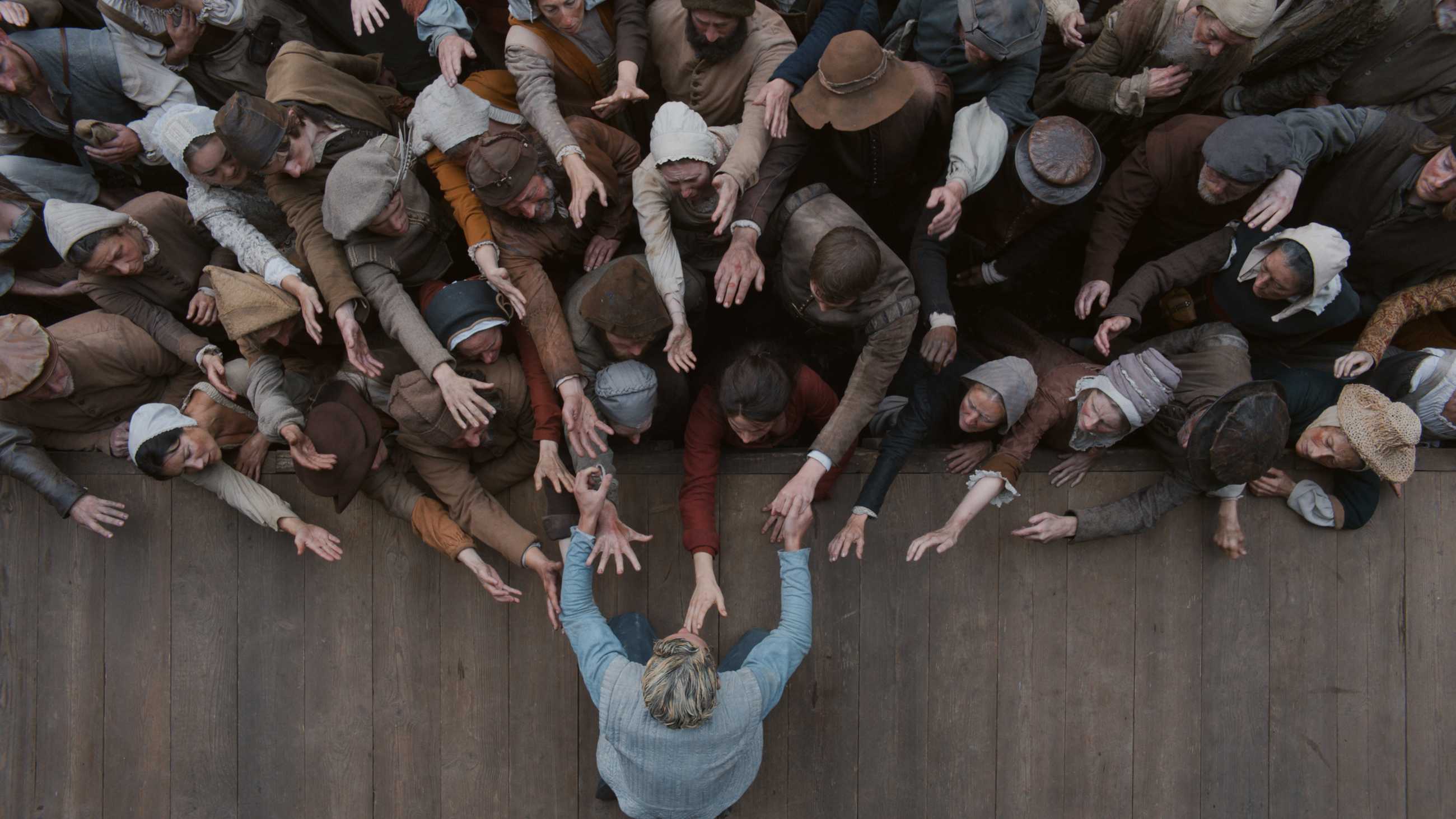
In Hamnet, Zhao pushes her actors to their limits. We witness the burgeoning romance between William Shakespeare (Paul Mescal) and Agnes (Jessie Buckley), followed by the soul-crushing grief of losing a child to the bubonic plague. The sequence is as harrowing and visceral as anything in The Way of Water. Buckley’s performance, captured in unflinching close-ups, is raw and transformative. The final act, set within the Globe theater, achieves a level of cinematic exhilaration that rivals Cameron’s most ambitious 3D sequences.
Zhao has built her career on balancing contradictions. She emerged from the world of naturalistic indie cinema—exemplified by The Rider and her Oscar-winning Nomadland—only to pivot into the cosmic scale of Marvel’s Eternals. While some might have expected her to remain a “prestige” filmmaker, her roots are firmly planted in genre, anime, and video games. This refusal to adhere to a cultural hierarchy—where high-brow empathy and pop-culture obsession coexist—makes her an ideal spiritual match for Avatar.
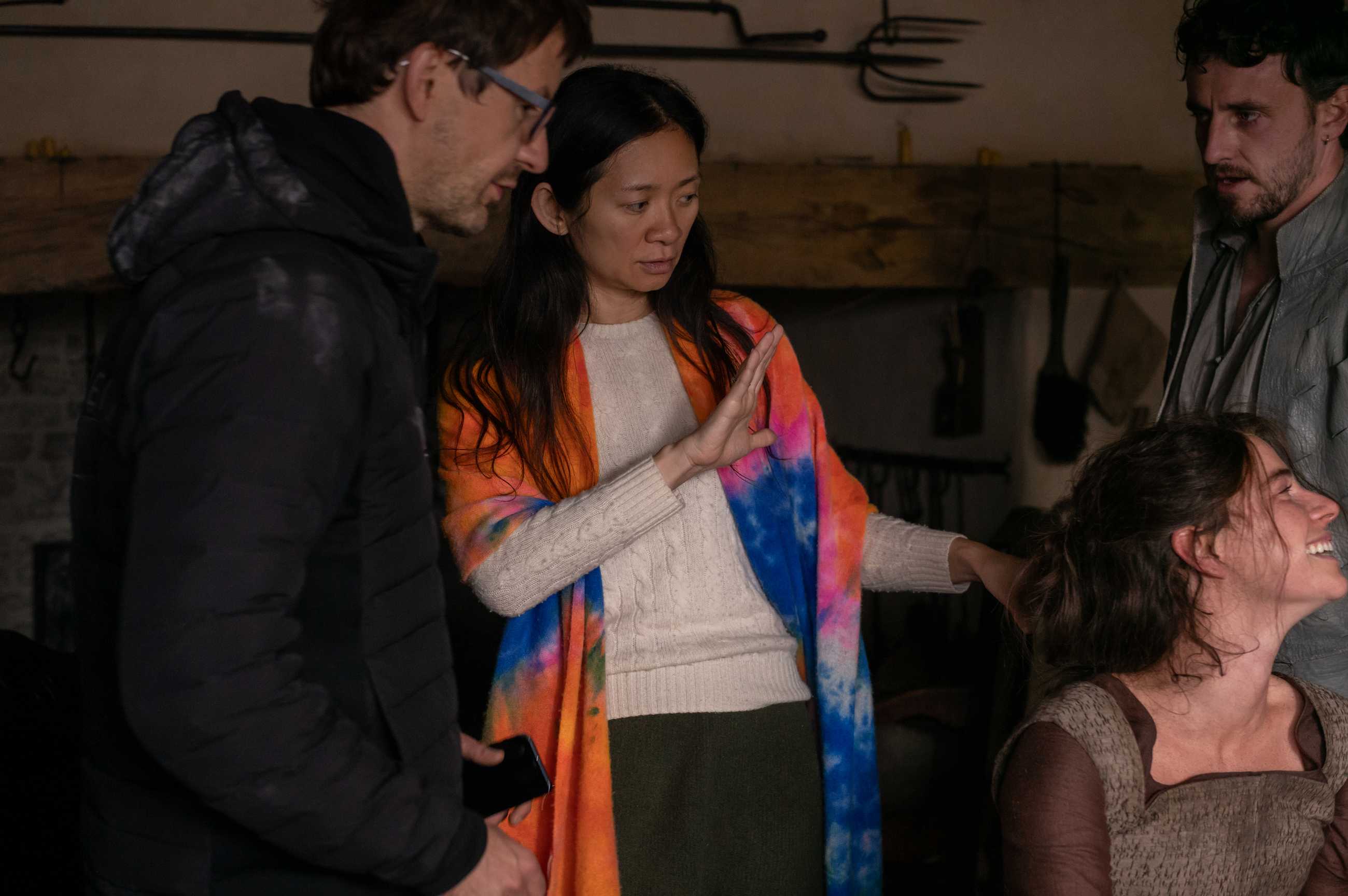
The shared DNA between Zhao and Cameron might lie in their mutual appreciation for Eastern storytelling tropes. Just as Cameron and Guillermo del Toro bonded over Japanese classics, Zhao’s work is deeply informed by manga and the concept of finding spiritual metaphor within the mundane. She recently explained how this background shapes her approach to morality, celebrating the “shadows as much as the light”—a perspective that adds necessary complexity to any hero’s journey.
Technically, their methodologies also mirror one another. In her earlier films, Zhao placed professional actors alongside non-performers to achieve a documentary-like authenticity. Even within the CGI landscapes of Eternals, she fought to retain a grounded, realistic camera language. Cameron, meanwhile, has developed a “sequential” process where performance capture is treated as a separate, sacred entity from the digital cinematography. He prioritizes “human truth” first, allowing the actors to focus entirely on emotion before he ever worries about lighting or camera angles.
The Avatar franchise doesn’t just need a director who can manage a massive budget; it needs a storyteller who can handle immense technical complexity without losing the emotional core. Whether it’s through the blue-skinned Na’vi or the plague-stricken streets of 16th-century England, both Cameron and Zhao are hunting for that same spark of humanity. If Hamnet is any indication, Zhao is more than ready for the voyage to Pandora.
Source: Polygon
Related articles
 Marvel Tōkon: Fighting Souls to Add Four New Characters and Arena
 Braid and The Witness developer returns after 10 years with Order of the Sinking Star
 Dozens of New Games Scheduled for Release on Xbox This Week
 Microsoft to Release Physical Edition of Forza Horizon 6 for PS5 with a Catch
 Modder Enables PS5 to Run PS2 Disc Games
 Dungeon Crawler Carl Author Settles Audiobook Debate
 Gears of War: E-Day Suffers DDoS Attacks Amid Backlash From Activists
 Johnny Flynn Discusses His Approach to Lucius Malfoy in Upcoming Harry Potter Series