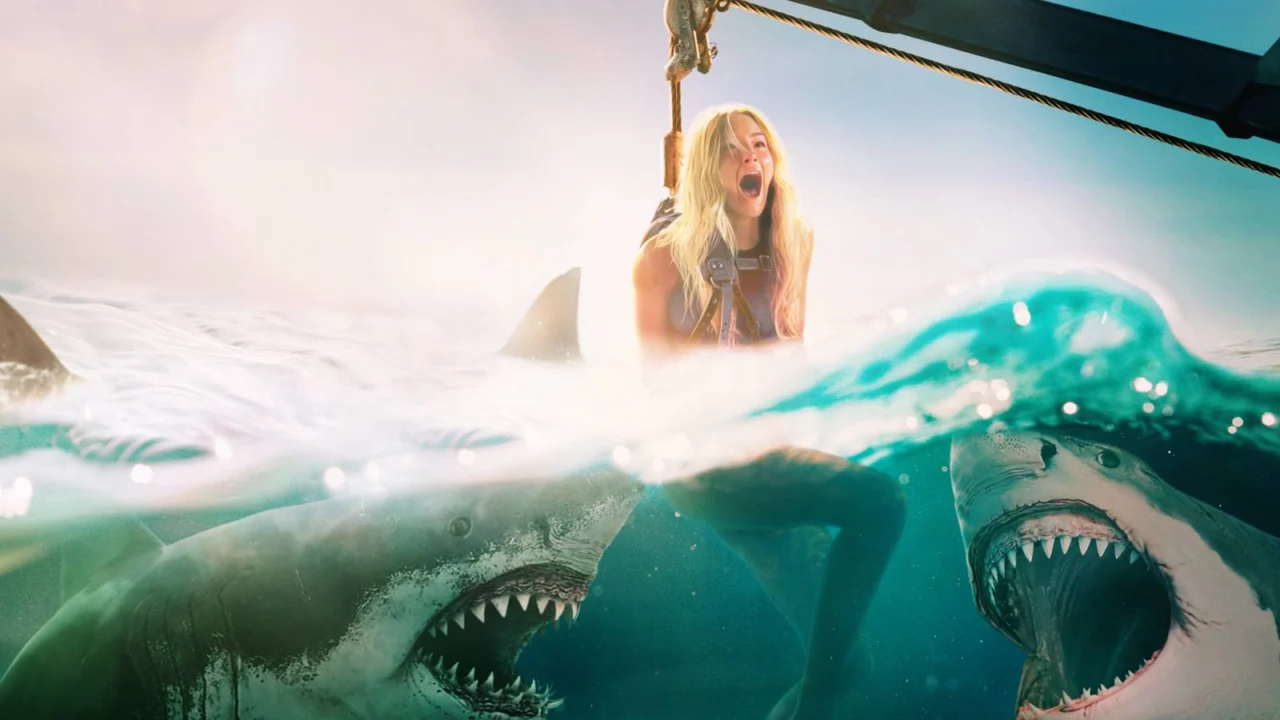
The most terrifying shark movie in 50 years is finally available to stream
Back in 1975, Steven Spielberg effectively defined and dominated the shark cinema subgenre in one stroke. Jaws didn’t just arrive; it invented the modern “blockbuster,” altering the DNA of the film industry and turning the summer season into a high-stakes arena for cinematic spectacles. Despite decades of imitators and endless shark-themed thrillers, no project has managed to replicate the specific lightning-in-a-bottle mastery of Spielberg’s original vision.
However, nearly fifty years later, director Sean Byrne (The Devil’s Candy) and writer Nick Lepard (Keeper) have finally navigated a new path through these predator-filled waters. Dangerous Animals subverts the entire genre by posing a chilling premise: What if the real monster isn’t the creature lurking below, but the man standing on deck? The result is visceral and deeply unsettling.
Dangerous Animals begins on the open sea. A vacationing couple enlists Tucker (Suicide Squad‘s Courtney Jai) to guide them on a shark-cage excursion off the Australian coast. At first, the experience is awe-inspiring as they observe the majestic killers in their natural habitat. But the serenity is short-lived.
Once back on the vessel, Tucker abruptly murders the husband and discards his body as shark bait with terrifying detachment. As the woman’s screams fill the air, the true horror of Dangerous Animals takes hold.
Hassie Harrison stars as Zephyr, an American traveler who crosses paths with the deadly skipper. Though she might appear to be a typical horror protagonist, Zephyr is remarkably resilient. Tucker soon realizes he has met his match, describing her as “tough as nails” even as he subjects her to his sadistic games.
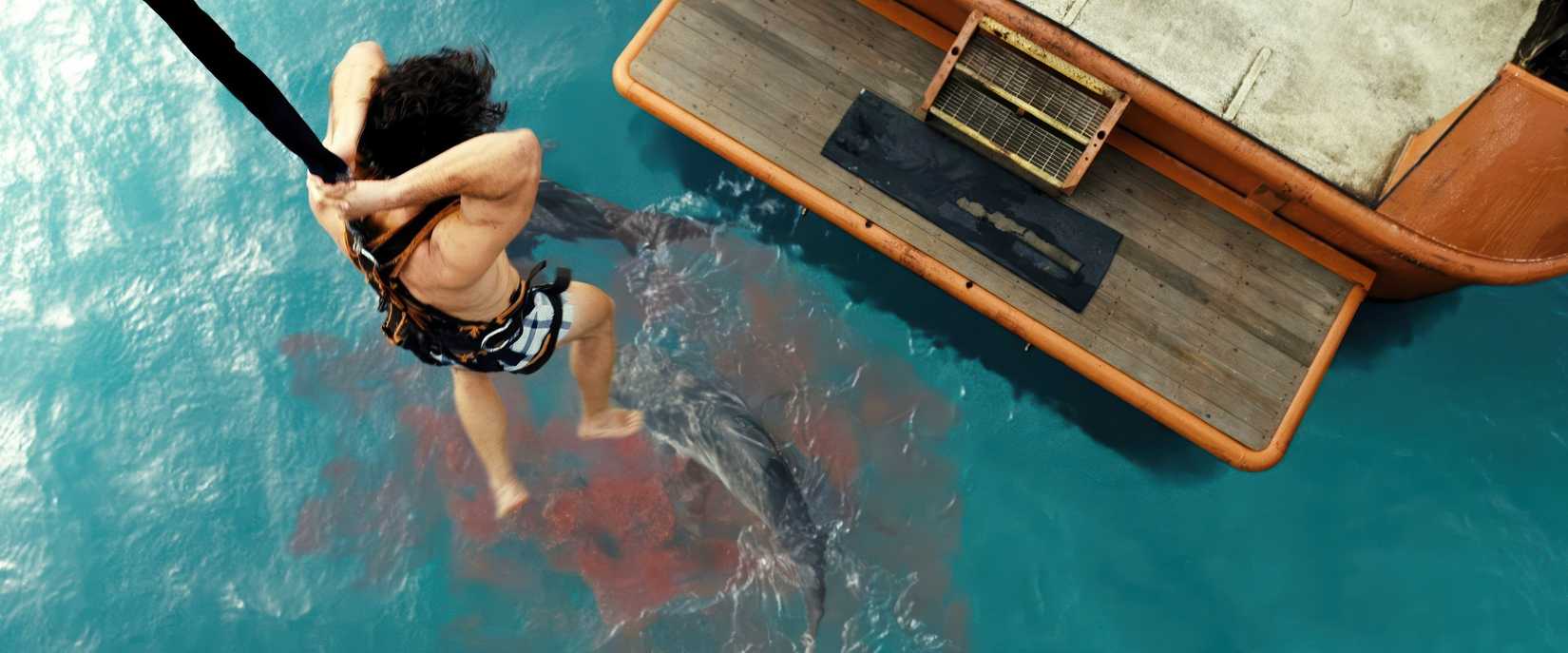
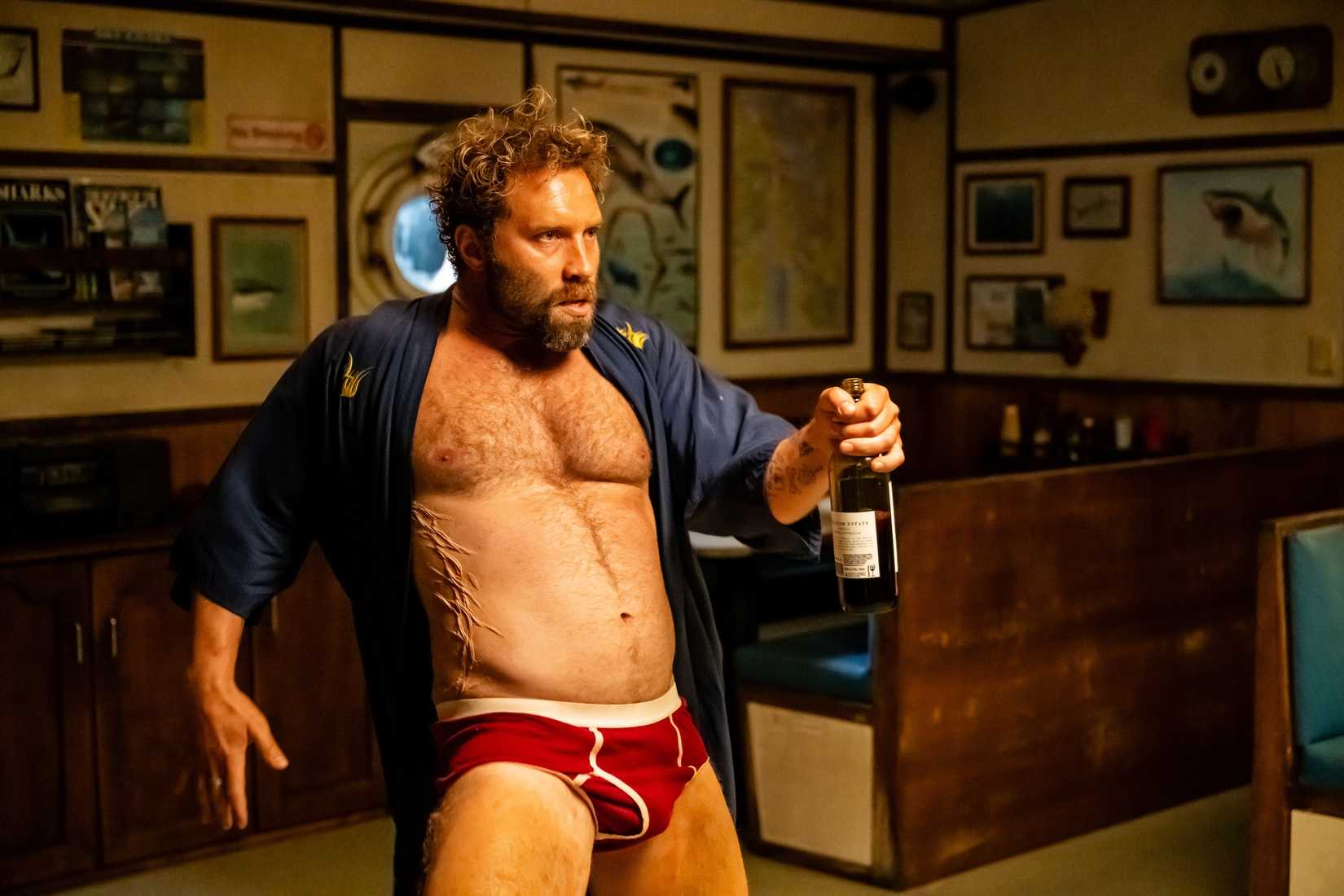
Jai delivers a disturbing performance as Tucker, oscillating between toxic, internet-inflected monologues and erratic, primal outbursts. In one particularly haunting scene, he barks back at a dog, a moment that would feel farcical in a lesser film but here serves to underscore his absolute instability. He is a truly unpredictable antagonist.
Harrison’s performance is equally fierce. From the moment she is trapped, Zephyr becomes a force of nature, employing every possible tactic to survive. The film eventually dips into intense body horror as she attempts a gruesome escape from her restraints. She isn’t just a victim; she is a formidable survivor fighting a sociopath with a significant physical advantage.
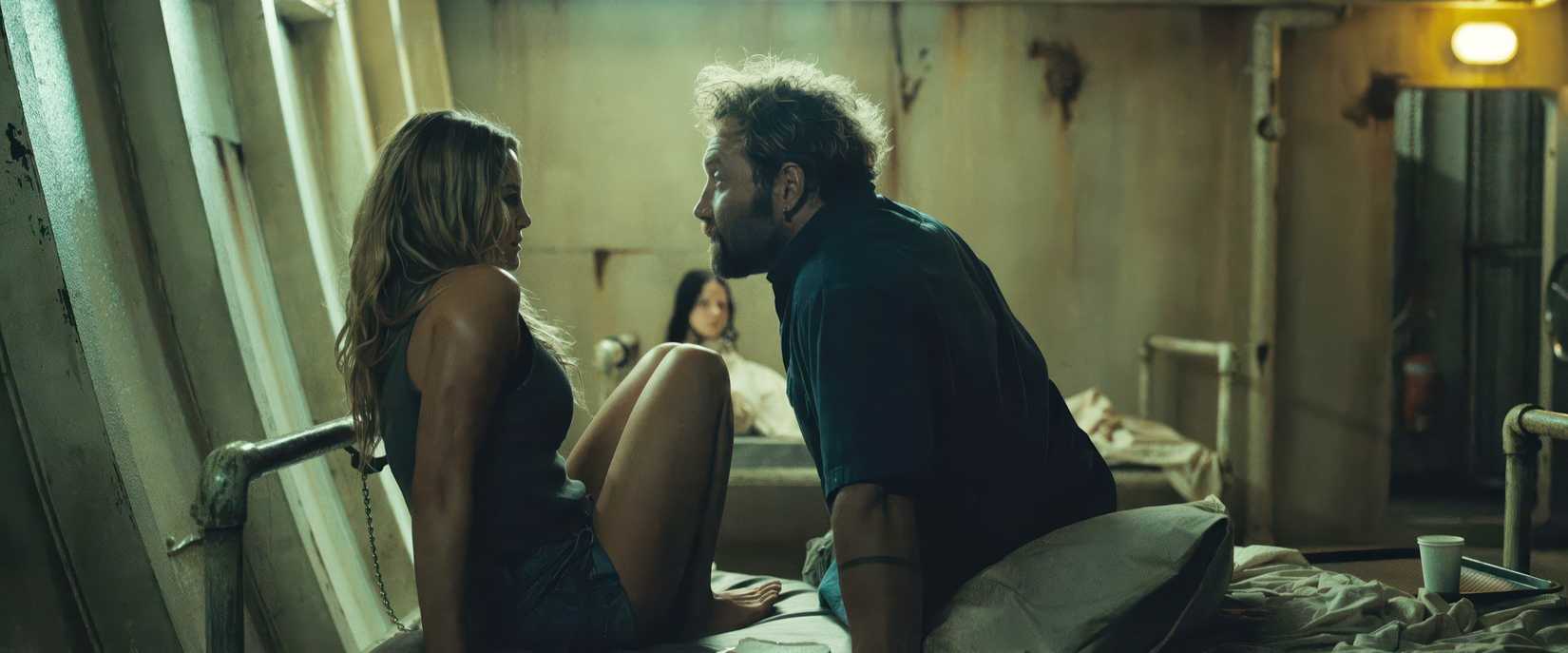
Byrne’s direction is lean and muscular, utilizing the cramped, claustrophobic settings of the boat to heighten the impact of the film’s brutal encounters. This intimacy is contrasted with the daunting emptiness of the surrounding ocean—a reminder that in the middle of the sea, help is non-existent. It’s a setting that breeds pure isolation and dread.
Tucker’s ultimate goal is to record his victims’ final moments as they are lowered into the water, using an old camcorder to document the sharks’ efficiency. By switching to this grainy, low-fi perspective for the kills, Byrne adds a voyeuristic, documentary-like grit that makes the violence feel alarmingly real.
Reflecting on the production during an interview regarding the 50th anniversary of Jaws, Byrne recalled how the script immediately grabbed him as something truly unique.
“It felt like the first genuine evolution of the shark film since 1975,” Byrne remarked. “In this story, the shark isn’t the antagonist. Human beings are. We are the true predators.”
While film history is littered with shark movies—from the serious to the absurd like Sharknado—it’s rare to see one that successfully steps out from under Spielberg’s massive shadow. By rejecting the fundamental “creature feature” trope, Dangerous Animals carves out its own terrifying territory.
Dangerous Animals is currently available to stream on Hulu.
Source: Polygon
Related articles
 Capcom Shows Gameplay of Resident Evil 3 Remake on Nintendo Switch 2
 World of Warcraft Ported to Android and Runs at 60 FPS
 Ubisoft Plans to Downsize Trials Developer and Ubisoft Singapore
 How to Reach the Top of the Prison Tower in Castlevania: Dracula’s Curse
 Epic Games Claims Its Launcher Starts Faster Than Steam
 Marvel Star Confirms Absence in Doctor Doom Movie
 Blizzard Explains World of Warcraft Forever Development Approach and Community Relations
 ‘Garry’s Mod’ Creator Delivers Grim Update on Spiritual Successor: ‘It Hasn’t Been Going Well’