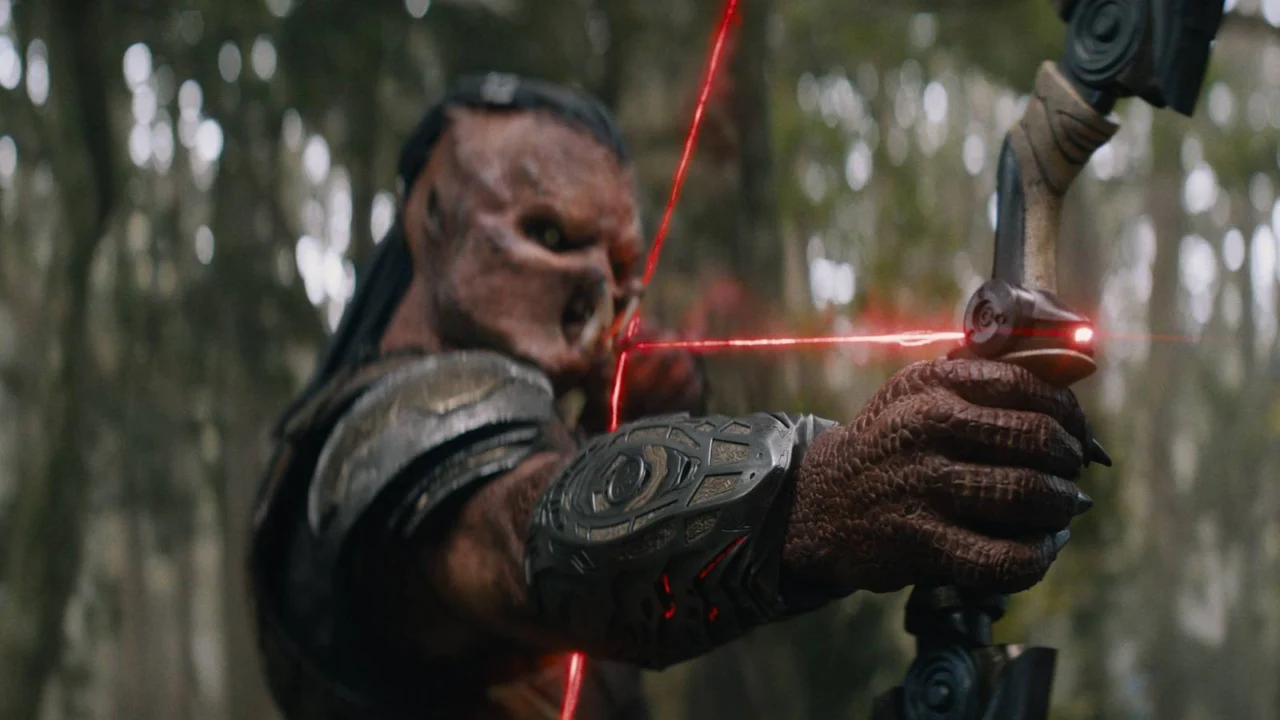
Predator: Badlands Marks the Disneyfication of a Legendary Sci-Fi Horror Franchise
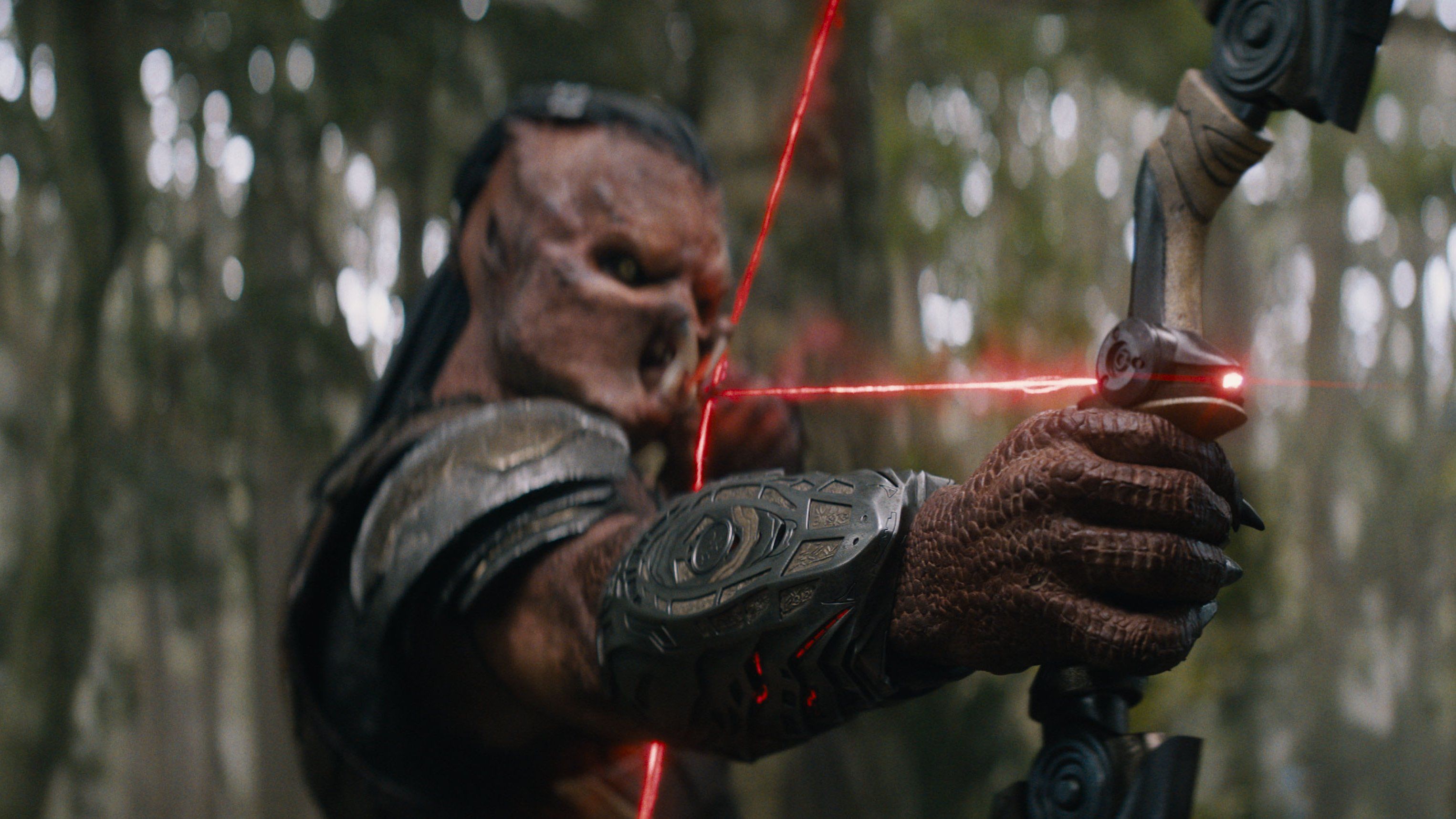
Following Disney’s 2019 acquisition of 21st Century Fox, much of the public discourse centered on the inevitable integration of the X-Men and the Fantastic Four into the Marvel Cinematic Universe. However, the House of Mouse inherited a far broader catalog, and it is now refashioning one of Fox’s most visceral sci-fi properties to fit a more palatable, teen-centric mold. Predator: Badlands effectively trades the franchise’s gritty horror roots for the sensibilities of a Star Wars adventure, complete with its own calculated attempt at a “Baby Yoda” cultural phenomenon.
Director Dan Trachtenberg, who previously revitalized the series with the stripped-back brutality of Prey and the kinetic style of Predator: Killer of Killers, takes a decidedly softer approach here. Moving from streaming to a theatrical release, Badlands embraces a PG-13 rating, sanitizing the violence by replacing gore with splashes of neon-green Yautja blood and synthetic fluids. While the film is a masterclass in CGI-driven spectacle, it conspicuously lacks the primal suspense that once defined the series.
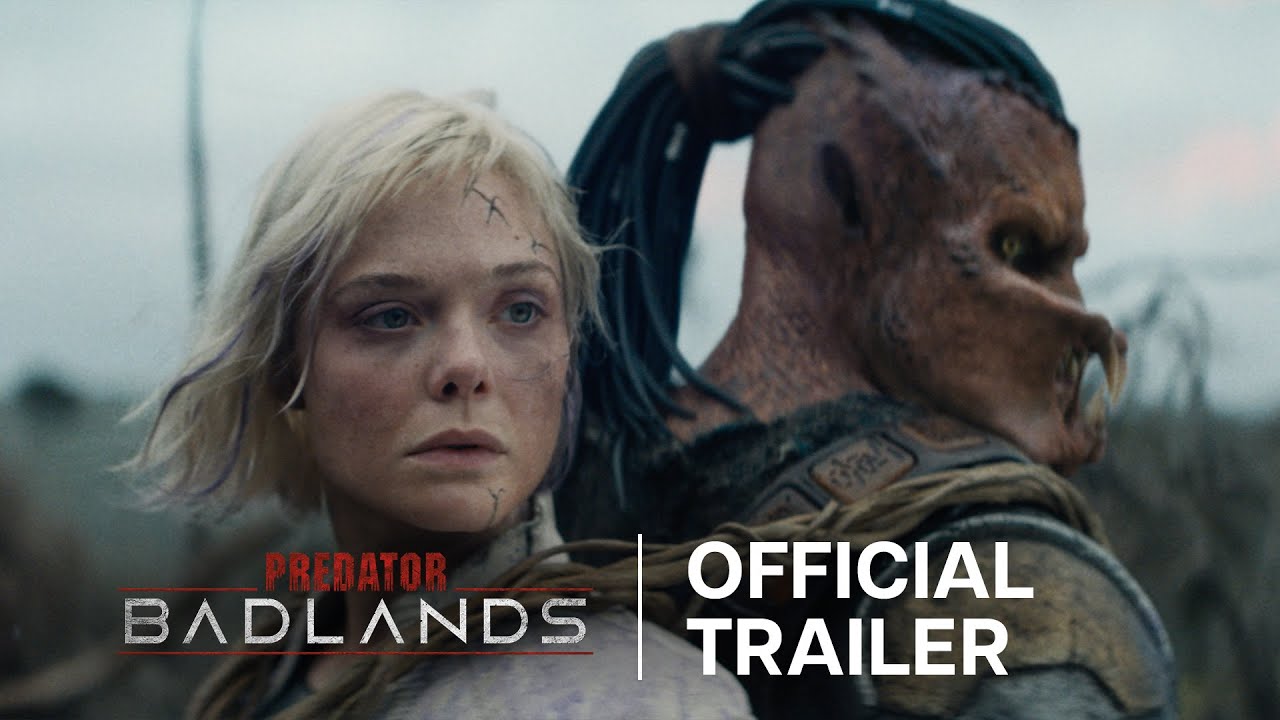
The shift in tone is largely driven by a narrative pivot: Badlands subverts tradition by positioning a sympathetic Yautja as the protagonist rather than the antagonist. The story follows Dek (Dimitrius Schuster-Koloamatangi), a diminutive outcast from his tribe. To prove his worth and escape a death sentence for his perceived weakness, he is exiled to the lethal planet Genna with the impossible task of slaying a mythical predator known as the Kalisk.
Upon his arrival, Dek forms an unlikely alliance with Thia (Elle Fanning), a talkative Weyland-Yutani synthetic who has lost her lower limbs, and Bud, a diminutive armadillo-monkey hybrid designed for maximum adorability. The film leans heavily into “odd-couple” comedy, finding humor in the stoic hunter’s growing annoyance with his chatterbox companions. In one particularly whimsical sequence, Bud mimics Dek’s ritualistic pre-hunt preparations. Thia serves as the moral compass, teaching the solitary hunter that true strength lies in protecting the “pack”—a heartwarming sentiment that feels light-years away from the franchise’s cold-blooded beginnings.
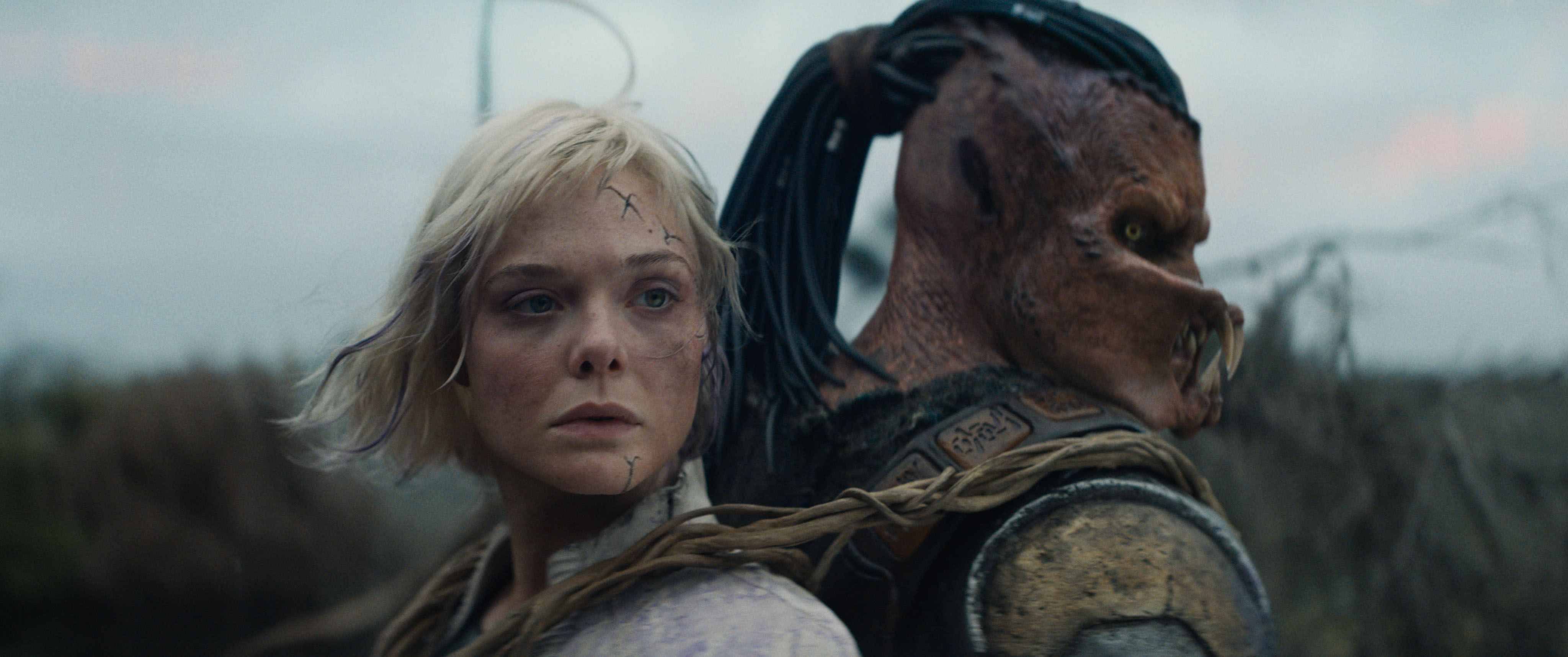
Structurally and thematically, Badlands shares more DNA with James Cameron’s Avatar than with the original 1987 classic. It explores familiar Disney motifs: the sanctity of the “found family,” the exploitation of the environment, and the rewards of harmonizing with nature. Much like the citizens of Pandora, the heroes here are defined by their respect for the ecosystem, while the villains are portrayed with cartoonish malice. While Avatar occasionally touches on profound grief, Badlands stays in the shallow end, occasionally veering into slapstick, such as a combat sequence involving Thia’s detached mechanical legs.
Visually, the film is a triumph of digital artistry. The biodiversity of Genna is richly imagined, populated by an array of expressive and terrifying creatures that make the planet feel like a living, breathing deathtrap. The creature designs for Bud and the Kalisk are standouts, even if the world they inhabit feels strangely sterilized.
While some of the monster designs echo the aesthetic of Alien: Earth, the stakes in Badlands feel significantly lower. The film is far from a failure, but it represents a fundamental “Disney-fication” of a legacy brand. It is a polished, vibrant action-adventure that retains the Predator’s iconic silhouette but has been carefully filed down to ensure it no longer has a bite.
Source: Polygon
Related articles
 Valve Leaks Left 4 Dead 2 Trailer After 17 Years Due to Censorship Deadlocks
 Amnesia and SOMA Developers Release 10-Minute Footage of Sci-Fi Horror Ontos
 Sony Introduces New Policy Following Harassment of PlayStation Employees
 Why Susie Derkins Is Calvin and Hobbes’ Most Underrated Character
 11 Best Anime Series Produced by Studio MAPPA
 GTA 6 Reportedly Features System to Break Morality Mechanic Through Chaos
 Netflix Renews Guy Ritchie Crime Series The Gentlemen for Season 2
 Cyberpunk 2077 Phantom Liberty Sells 15 Million Copies