Pokémon Winds and Waves: A First Look at the 2027 Title Leaving Switch Tech Behind
To commemorate the monumental 30th anniversary of the Pokémon franchise, The Pokémon Company and Game Freak have officially pulled back the curtain on the series’ next grand chapter. During a recent Pokémon Presents broadcast, the developers unveiled Pokémon Wind and Pokémon Waves, representing the tenth generation and the next major leap for the long-running RPG series. These dual titles promise a journey through an uncharted region teeming with never-before-seen creatures, placing a significant thematic focus on the vastness of the skies and the depths of the ocean.
Significantly, these entries are poised to break free from the hardware constraints that defined the original Nintendo Switch era. Pokémon Wind and Waves are being developed as exclusives for the Nintendo Switch 2, leveraging modern architecture to deliver a more seamless experience when they arrive in 2027.
The debut footage offered a glimpse into diverse new biomes, hinting at a level of environmental interaction previously unseen in the series. While “Surfing” has been a staple since the beginning, Wind and Waves appear to introduce genuine underwater exploration, allowing players to dive beneath the surface to discover aquatic ecosystems. The region’s geography spans sun-drenched tropical resorts and pristine beaches to more treacherous locales, such as volcanic caverns. The reveal also introduced the new starter trio: Pombon, a Fire-type lion; Gecqua, a Water-type lizard; and Browt, a Grass-type avian Pokémon.

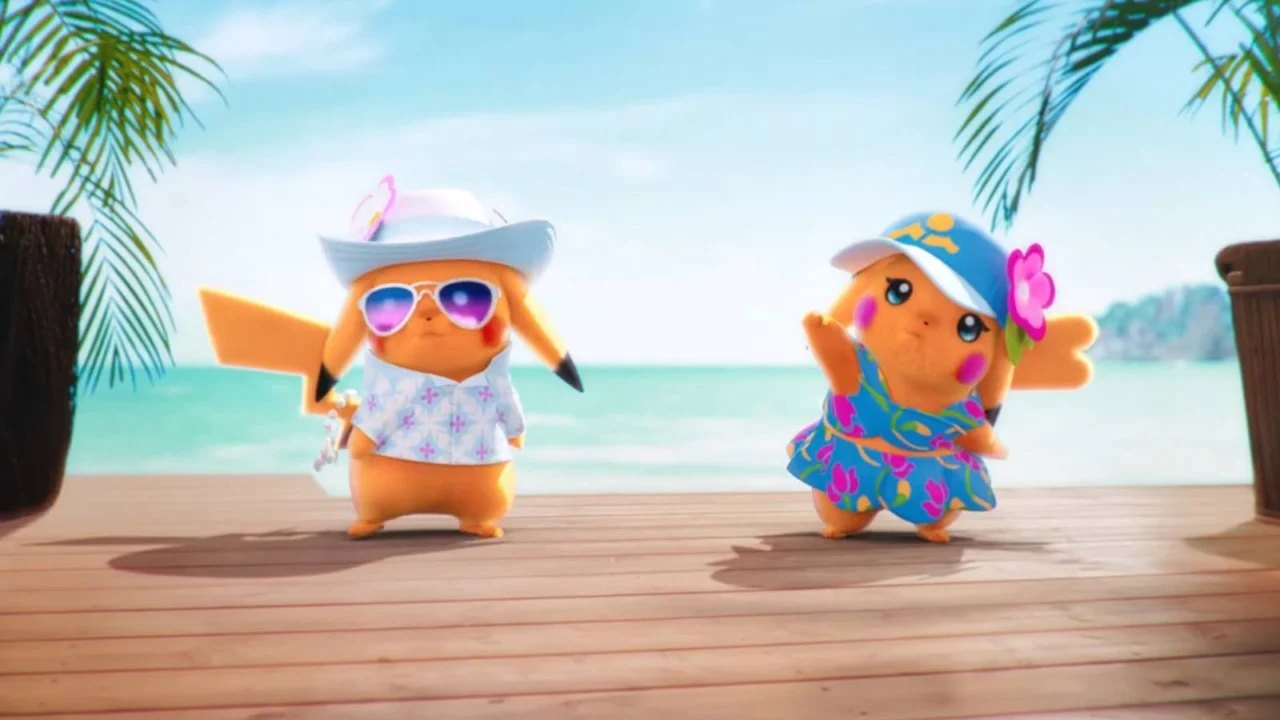
According to official documentation, players will assume the role of a customizable protagonist whose starting attire shifts depending on which version they choose. The trailer also showcased two peculiar Pikachu variants—dubbed Mr. Windychu and Ms. Wavychu—who are expected to play pivotal roles in the narrative, potentially serving as version-specific companions.
The shift to more powerful hardware comes as a relief to many following the technical turbulence of Pokémon Scarlet and Violet. The ninth generation was widely criticized for performance bottlenecks, including unstable frame rates, aggressive asset pop-in, and occasional system crashes—issues that were only partially mitigated by later patches and the eventual transition to the Switch 2’s backward compatibility mode.
Despite those optimization struggles, the ambition of Scarlet and Violet’s open-world design resonated with the masses. The games became a commercial juggernaut, climbing the ranks to become the second-highest-selling entries in the franchise’s history, trailing only the legendary Pokémon Red and Blue.
While the series has traditionally favored a stylized, illustrative aesthetic over hyper-realism, Game Freak has faced persistent scrutiny regarding visual fidelity and the decision to omit certain Pokémon from the regional Pokédex. Despite calls for the studio to expand its workforce to match the scale of the brand, leadership has historically preferred maintaining a leaner development team. Leaked internal data has previously corroborated this conservative approach, highlighting a philosophy that prioritizes creative agility over the sprawling scale of typical AAA “prestige” productions.
Interestingly, many details regarding this tenth generation were hinted at in a massive data breach long before the official announcement. Those leaks correctly identified the titles and conceptual themes, while also suggesting that the new games might incorporate survival mechanics and procedurally generated environments. While Game Freak often juggles multiple experimental prototypes simultaneously, Wind and Waves appear to be the definitive fulfillment of those long-rumored plans.
Source: Polygon
Related articles
 Hellraiser: Revival Developers Wanted the Game Banned in at Least One Country, but It’s Now Available Even in Australia
 Control Resonant Includes an Alan Wake Reference Unrelated to Remedy’s Next Game
 Rumor: Xbox Plans Three More Rounds of Layoffs
 Devilman Crybaby Is a Horror Anime Tragedy About Human Nature
 CD Projekt Red Reveals Cyberpunk 2077 Update 2.5 Patch Notes With New Edgerunners 2 Quest, Dual-Wielding and Mod Support
 Phantom Blade Zero Will Get a Physical Release, But There’s a Catch
 Helldivers 2 Receives Thousands of Negative Reviews After Update Breaks Popular Mod
 The Rings of Power Season 3 Gets a New Trailer