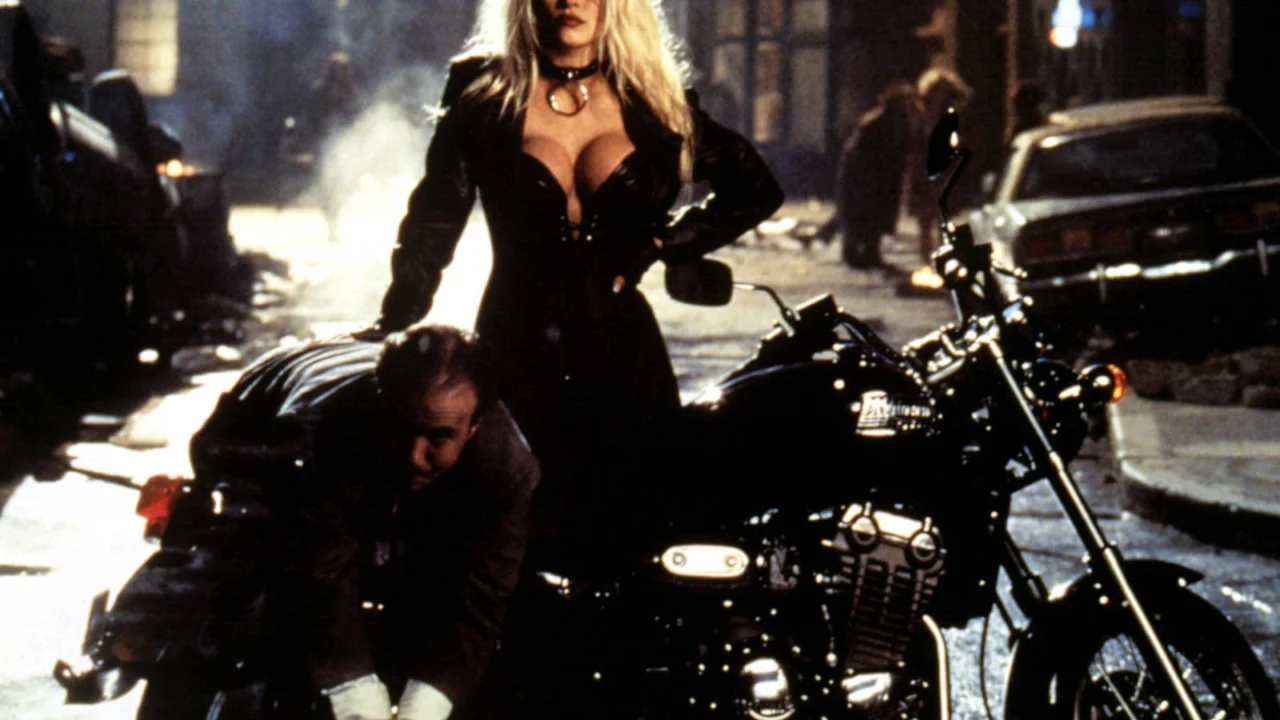
Pamela Anderson’s 30-Year-Old Sci-Fi Flop Was Darkly Ahead of Its Time

“Blade got there first.”
This is the familiar refrain voiced by die-hard fans whenever casual viewers credit the modern superhero blockbuster boom solely to the success of 2000’s X-Men and 2002’s Spider-Man. While Wesley Snipes’ vampire-hunting vehicle was indeed a profitable comic adaptation—garnering $131 million globally—it operates in a different league than the massive $300 million and $800 million hauls achieved by the X-Men and Spidey respectively.
Beyond the box office discrepancy, such claims conveniently overlook the long history of cinematic comic adaptations, including definitive Batman and Superman films, alongside cult hits like The Mask and Men in Black. Then there is 1996’s Barb Wire, a production that has aged poorly in nearly every conceivable respect, save for one surprising quality.
Released on May 3, 1996, Barb Wire was helmed by music video director David Hogan, who previously lent his talents to the second units of Alien 3 and Batman Forever. The screenplay, penned by Darkman writer Chuck Pfarrer and The L Word’s Ilene Chaiken, features Pamela Anderson as the titular bounty hunter running the “Hammerhead” bar.
In the original 1993 Dark Horse Comics run, the character existed in an alternate history shaped by 1930s alien experimentation and a 1947 nuclear incident that granted various individuals superpowers. The film adaptation largely stripped away these sci-fi elements, instead situating the narrative in a dystopian 2017. Here, the United States is locked in a second civil war, with Steel Harbor serving as the final outpost of liberty, where a reluctant Barb transforms from an indifferent ex-freedom fighter into an ally of the resistance against a fascist regime.
Image: Dark Horse ComicsIn truth, Barb Wire struggles with wooden performances, forced one-liners, and a narrative that leans far too heavily on thinly veiled tropes borrowed from Casablanca, ultimately serving as little more than a showcase for Anderson’s public persona.
While that approach may have been the goal, the film was a colossal failure. It plummeted at the box office, failing to recoup its $9 million budget. Viewing it through the lens of 2026, the film is essentially a relic of 1990s exploitation cinema. Despite centering on a female lead, the script is relentlessly regressive; the dialogue is saturated with a toxic objectification of the title character that still leaves a sour taste.
Image: Gramercy PicturesAnd yet, certain thematic elements feel hauntingly prescient in 2026. The film’s vision of a fractured America, patrolled by military forces clad in uniforms reminiscent of Nazi aesthetics, hits differently today. These fictional officers aggressively target dissenters in spaces like the Hammerhead, while Canada is depicted as the stable, reliable sanctuary—a place where the currency is more trustworthy and the political climate actually sane.
In 1996, this dystopian setting felt like pure, exaggerated fiction, likely just another aesthetic choice lifted from Casablanca. However, in 2026, with political polarization reaching historic peaks and authoritarian rhetoric increasingly gaining mainstream traction, the bleak, oppressive landscape of Barb Wire feels less like a B-movie fantasy and more like a warning sign we were ignoring all along.
Source: Polygon
Related articles
 Gran Turismo 7 Developers Express Surprise That the Game Remains Popular
 Cosplayer Shares Zelda Costume from The Legend of Zelda: Tears of the Kingdom
 Street Fighter Movie Adaptation to Feature Anime Flashbacks Inspired by Akira and Ghost in the Shell
 Resident Evil Requiem Producer Explains Inclusion of Grace Ashcroft
 Ace Combat 8 Developers Confirm Success With New Trailer Despite PC Issues
 In a Violent Nature 2 Sets 2026 Release Date
 Tekken 8 Character Reina Coming to Fatal Fury: City of the Wolves in December
 The Equalizer Begins Streaming on Netflix