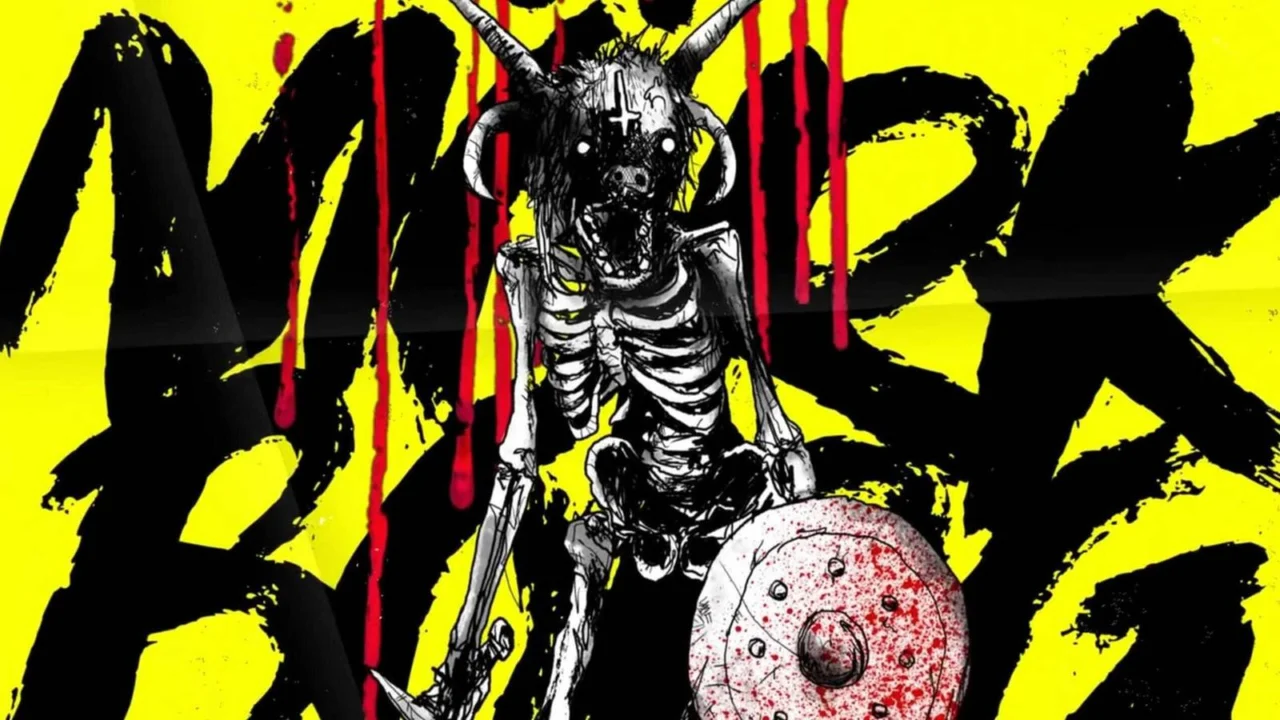
D&D’s heavy metal alternative taught me that killing characters is okay
If you have ever played Dungeons & Dragons and felt the urge to inject some raw, nihilistic black metal energy into your sessions, you owe it to yourself to investigate Mörk Borg. Created by Pelle Nilsson and Johan Nohr in 2018, this apocalyptic fantasy RPG rapidly cemented itself as a seminal work in the indie scene. While I have kept the core rulebook on my shelf for some time, I only recently had the pleasure of experiencing it firsthand at a local TTRPG gathering. The group was running Dukk Börg, a delightfully twisted spin-off that transplants the game’s bleak sensibilities into a grotesque parody of the DuckTales universe. Yes, Mörk Borg is exactly that bizarre.
Thanks to the game’s open Third Party License, creators are encouraged to build upon the Mörk Borg chassis—a term I use loosely, as the system is aggressively streamlined. The team at Gem Room Games masterfully leveraged this freedom, catering to a surprisingly expansive demographic: those who revel in doom metal aesthetics while simultaneously harboring a nostalgic fondness for the chaotic, slapstick misadventures of Scrooge McDuck and his kin.
Despite leaning into the inherent silliness of its source material, Dukk Börg remains faithful to its unforgiving ancestry. Much like the base game, characters are fundamentally transient. The allure of Mörk Borg and its various iterations lies in a rapid, cutthroat gameplay loop: you aren’t playing as legendary champions blessed with divine protection, but rather as desperate wretches clawing for survival in a crumbling, dying world. The practical application of this design is clear—avoid forming emotional attachments to your character, as the likelihood of needing to roll up a replacement is exceptionally high. Living this reality during my session significantly shifted my perspective on character mortality in D&D. Put simply, this game does not pull its punches.
 Image: Gem Room Games/Nerdy Paper Games
Our group tackled “The Aeonian Citadel,” a starter adventure requiring our squad of humanoid-duck hybrids to infiltrate the labyrinthine fortress of Skruj, this setting’s rapacious take on the iconic miser. The narrative serves as a biting satire of unchecked corporate greed, where Skruj converts cold, hard cash into dark magical energy, surrounded by a legion of exploited, drone-like employees. To dismantle Skruj, we had to systematically target his financial assets, including the liberation of a captive, public-domain-era Steamboat Willie. Our party managed quite well—aided by my tactical decision to kidnap one of Skruj’s nephews as a human shield—at least until we overlooked some vital clues in the lower depths. Upon reaching the summit and staring into the abyss of his massive gold vault, I foolishly attempted to use stolen “golden parachutes” to glide to safety. Despite having favorable stats, a desperate Omen reroll resulted in a critical failure.
In Mörk Borg, Omen points act as a precious resource, allowing players to reroll dice, mitigate incoming damage, or reduce the difficulty of a challenge.
Moments later, three duck-hybrids lay pulverized atop a mountain of gold, and three players were busy rolling up new characters. Remarkably, this sudden catastrophe did not derail the momentum. We quickly fabricated some absurd backstories for our replacements and resumed the carnage immediately. This highlights the core design philosophy: the objective is not just surviving the adventure, but witnessing the ultimate, inevitable conclusion of the world. A central mechanic is the “doomsday clock,” which advances periodically; when the seventh misery occurs, the world meets a gruesome and permanent end.
 Image: Gem Room Games/Nerdy Paper Games
This sense of finality provides a sharp contrast to the typical Dungeons & Dragons experience, where characters are meticulously crafted over long periods, focused on synergistic builds and elaborate backstories. In D&D, you naturally cultivate a deep bond with your hero through collaborative storytelling. Consequently, character death—or at least the fear of it—carries significant emotional weight. As a Dungeon Master who prioritizes narrative depth and organic character growth, I admit to historically fudging dice rolls to shield my players from premature ends. Yet, reflecting on the Mörk Borg experience, I’ve begun questioning if that protective impulse is truly beneficial.
The broader “Old School Renaissance” movement has ignited a vital debate regarding these clashing philosophies. Titles like Mörk Borg, Dungeon Crawl Classics, and Shadowdark treat mortality as an ever-present reality. Conversely, modern iterations like D&D 5e and its expansion significantly soften the blow of death, offering numerous death-saving throws and easy access to recovery options.
In D&D 5.5, returning from the brink of death is remarkably accessible. Low-cost spells like Revivify and Raise Dead significantly reduce the existential threat of permanent character loss.
So, where does the balance lie? Ultimately, it comes down to stakes. The looming threat of death forces players to invest more profoundly in the survival of their characters, elevating both the tension and the narrative payoff. Modern D&D mechanics often work against this, necessitating additional legwork from the DM to maintain stakes. However, the OSR approach also has its limitations; when characters are treated as disposable commodities, immersion can suffer, as it’s difficult to care about a protagonist that lacks depth.
 Image: Wizards of the Coast
I find myself adopting a syncretic philosophy toward tabletop gaming, synthesizing the elements that resonate with me and adapting them to suit the specific needs of my table. Playing Dukk Börg was a cathartic, albeit detached, exercise in absurdity. However, as I return to my main D&D campaign, I’ve resolved to embrace a more ruthless approach as a DM. I will no longer treat character death as a tragedy to be avoided at any cost, but rather as a natural, dramatic outcome of the world. Now, I just need a plausible lore-based reason to explain the sudden scarcity of diamonds in my setting—perhaps a greedy, duck-like monster has been hoarding them all in a vault somewhere.
Source: Polygon
Related articles
 Gran Turismo 7 Developers Express Surprise That the Game Remains Popular
 Cosplayer Shares Zelda Costume from The Legend of Zelda: Tears of the Kingdom
 Street Fighter Movie Adaptation to Feature Anime Flashbacks Inspired by Akira and Ghost in the Shell
 Resident Evil Requiem Producer Explains Inclusion of Grace Ashcroft
 Ace Combat 8 Developers Confirm Success With New Trailer Despite PC Issues
 In a Violent Nature 2 Sets 2026 Release Date
 Tekken 8 Character Reina Coming to Fatal Fury: City of the Wolves in December
 The Equalizer Begins Streaming on Netflix