One of the best fight scenes in anime history proves Kagurabachi will be a masterpiece

Good news for Kagurabachi devotees: one of Shonen Jump’s most breakout modern hits is officially receiving an anime adaptation next year. Even more promising is the roster of talent behind the curtain. The project is being spearheaded by the masterful animator Tetsuya Takeuchi, a veteran whose illustrious career includes heavy-hitting titles such as Devilman: Crybaby, Lycoris Recoil, Heavenly Delusion, Star Blazers 2199, Bleach, and the iconic Naruto.
Takeuchi is widely considered one of the most brilliant minds in action choreography today. He refined his craft during the late 90s and early 2000s—a “boot camp” era for the industry that prioritized expert timing, spatial awareness, and visceral impact over mere visual polish.
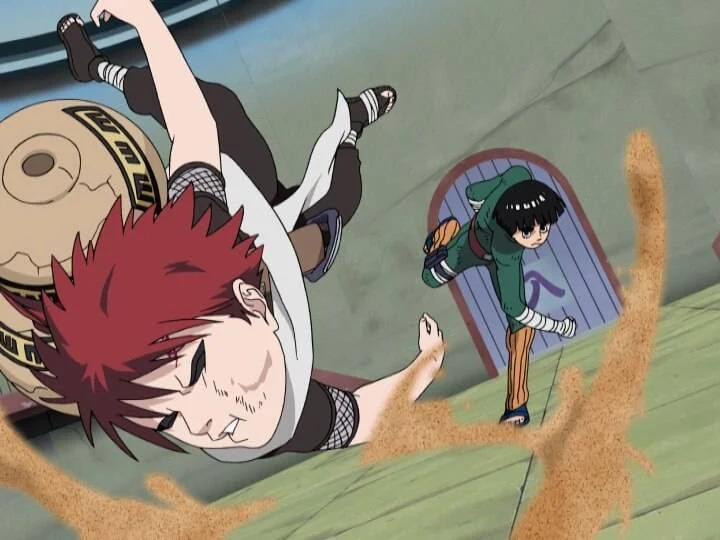
Like many who flourished within Studio Pierrot’s ranks, Takeuchi mastered the art of conveying momentum through limited frames, emphasizing character-driven motion. This philosophy is precisely why so many sequences in Naruto remain touchstones for the medium. The legendary showdown between Rock Lee and Gaara stands as a primary example; even in an age dominated by the spectacle of Jujutsu Kaisen and Chainsaw Man, that fight is still revered for its cinematic tension.
Kagurabachi creator Takeru Hokazono holds the director in high esteem, citing that very battle as a north star for the new series: “The manga version is fantastic, of course, but the anime adaptation of Rock Lee vs. Gaara was something else. Well, the artist who brought that magic to life is our director!”

The Rock Lee versus Gaara encounter is a masterclass in pacing, building intensity like a spring coiled to its breaking point. It transforms a desperate struggle into a gut-wrenching, unforgettable display of effort and defeat. While Hokazono might be slightly oversimplifying—Takeuchi served as a vital key animator across seven Naruto episodes rather than acting as the sole creator of that singular scene—his fingerprints are undeniably all over the show’s aesthetic identity.
Kagurabachi is in capable hands. Takeuchi’s directorial style prioritizes a “weight-first” approach over flashy, superficial effects. He focuses on the tactile reality of combat: the physical strain, the way debris reacts to a strike, and the subtle character beats that ground the action. It is a precise, deliberate style that perfectly complements the dangerous, high-stakes swordplay of Kagurabachi.
By blending controlled, cinematic slow-motion with expressive micro-movements, Takeuchi injects genuine emotion into every clash. Whether it’s the slight hesitation before a killing blow or the staggered exhaustion of a fighter nearing their limit, these nuanced details are what make an animation truly resonate. The pressure to deliver is significant, but if Takeuchi’s track record is any indication, audiences have every reason to be excited for next year.
Source: Polygon
Related articles
 Grant Gustin Expresses Interest in Returning to the Flash Role
 10 Years Later, Naruto Mobile Fighting Game to Launch Outside China
 Fan-Made Command & Conquer Mod Generals Evolution to Receive Story Campaign
 Avengers Doomsday to Feature Exclusive Magic: The Gathering Doctor Doom Card
 ‘GTA 6’ Leaker Threatens to Release Full Game Early by Posting Nude Lucia Video
 GTA 6 Leaker Threatens To Release Full Game Build Before November Launch
 Rockstar Sends Gift to GTA VI Buyer Following Polite Request, Facing Criticism From Other Players
 Modder Restores Cut Assassin’s Creed Black Flag Resynced Scene Connecting Franchise Games