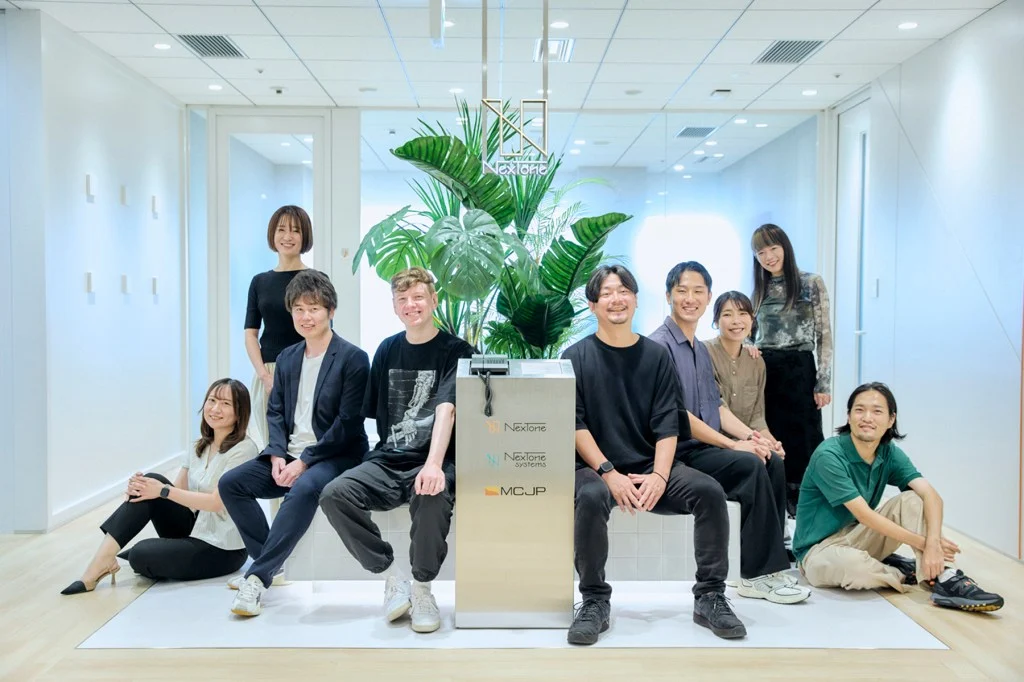
NexTone’s “Game Music Academy” Aims to Broaden Game Music’s Reach and Impact
NexTone Launches Game Music Academy to Elevate Japanese Game Soundtracks Worldwide
How a focused metadata and rights strategy aims to turn game music into a global brand

Game music is escaping its niche role and taking center stage. NexTone’s distribution division has introduced Game Music Academy, a new program designed to present game soundtracks as a cohesive, marketable brand for listeners in Japan and around the world.
Rather than follow the conventional distributor playbook, NexTone is building tailored metadata and copyright solutions for each platform and audience. Billboard Japan spoke with Tomofumi Tani (Head of the Overseas Strategy Group, Distributor & Marketing Division), Kai Hasebe and Yuuho Akimoto (PR & Marketing Group), and artist/partner Submerse from the U.K. They discussed the Academy’s origins, international ambitions, and the opportunities this approach creates for game music.
What NexTone’s distribution covers
Tomofumi Tani: Our role is to place rights holders’ music — labels, game companies and similar partners — onto streaming and digital platforms, and to support those releases with promotion, PR and marketing. Our distribution roots go back to 2003 under a predecessor company; today we represent more than 800 contracted accounts and manage about 1.3 million tracks. As NexTone, the company is approaching its tenth anniversary.
Why game music is a strategic focus
Tomofumi Tani: Through our copyright business we’ve long worked closely with game developers, and recent streaming analysis made the global reach of game music impossible to ignore. A notable example came in mid-2024, when music from Persona 3 Reload began gaining traction overseas — even appearing on international charts and earning a nomination at MUSIC AWARDS JAPAN 2025. Moments like that underscore the worldwide appetite for game soundtracks.
Assessing the overseas market
Tomofumi Tani: Government data indicates Japan’s content market is roughly 13.1 trillion yen, while the global content market is estimated at about 135.6 trillion yen. Japan’s content exports total near 4.7 trillion yen, and games contribute roughly 60% of that export value — exceeding even anime in that regard. With Japan’s domestic market shrinking, expanding overseas is essential for long-term growth across the creative industries.
How NexTone handles metadata
Kai Hasebe: A common challenge with game and anime releases is inconsistent artist attribution: tracks are sometimes listed under game titles, characters, or the composer, which fragments an artist’s presence across services. We address this by consolidating releases under a single primary artist or artist identity so listeners can find all related material in one place. That clarity improves discoverability, concentrates streams, and yields cleaner performance metrics.
Yuuho Akimoto: Metadata standards vary widely between streaming platforms — some allow per-track artist assignments, others do not. We adapt submissions to each service’s rules while keeping the listener’s perspective in mind. That platform-by-platform customization is one of our practical strengths.
Why create Game Music Academy?
Tomofumi Tani: Looking at global movements like K-pop, we can see the power of presenting artists and content within a unified brand. Japanese music has always inspired creators overseas, but often individual successes don’t coalesce into a broader movement. By organizing game music under a structured initiative, we aim to amplify its impact and introduce Japanese game soundtracks as a recognized cultural export.
Perspective from abroad: Submerse
Submerse: I’m fascinated by Japanese music from the ’90s and earlier. You can hear Western influences, but Japanese artists consistently filtered those inspirations through a distinct sensibility, giving the music a unique character. That quality is part of what makes Japanese game music compelling globally.
Today’s game development environment — particularly in the indie scene — allows for more creative freedom as budgets and timelines become more manageable. That has led to an influx of original titles, and I expect the music that accompanies those projects to continue evolving in interesting ways.
Interview by Yuki Tatsuta. Originally published on Billboard Japan.
Related articles
 Hayley Williams Responds to DHS After ‘F–k ICE’ Concert Remark
 Blake Shelton Celebrates Wife Gwen Stefani’s Birthday With Tribute
 ‘American Idol’ Contestant Caleb Flynn Receives Maximum Sentence for Wife’s Murder
 Lola Young Announces 2027 Everything Begins North American Tour
 Ciara Walks the Paris Runway Three Times While Pregnant With Fifth Child
 RAYE Responds After Social Media User Calls Her a One-Hit Wonder
 Olivia Rodrigo Responds to Fraternity Rape Lawsuit Involving Cornell University
 Chrissie Hynde Praises Taylor Swift’s New Song Cleveland