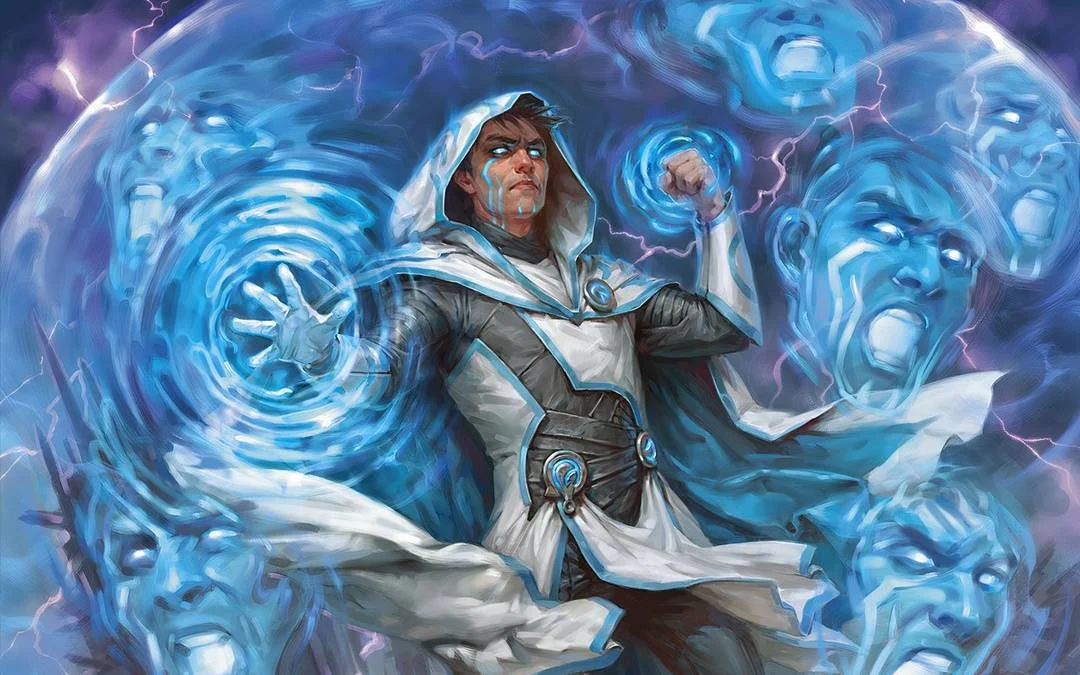
Magic: The Gathering Designer Reveals Details of Unique New Commander Deck
According to the official Magic: The Gathering card database, only two cards in the game’s extensive history feature the white-blue-black-red color identity. While most combinations boast recognizable monikers—like those hailing from Ravnica, Tarkir, or Strixhaven—this exceptionally rare quartet lacks a tidy shorthand. Gavin Verhey, Magic’s principal designer, simply labels it “WUBR” (pronounced “woober”), a phonetic take on the color initials that mirrors the classic five-color “WUBRG” (or “wooburg”) vernacular.
Despite its scarcity, WUBR is poised for the spotlight as the centerpiece of the preconstructed Commander deck launching alongside the Reality Fracture set.
During an exclusive conversation at MagicCon: Las Vegas 2026, Verhey confirmed to Polygon that he spearheaded the design for this deck, which debuted during the convention’s opening preview panel. Dubbed Multiverse Reforged, the deck’s packaging outlines its core mechanics with two succinct goals: “make tokens” and “warp reality to power up.”
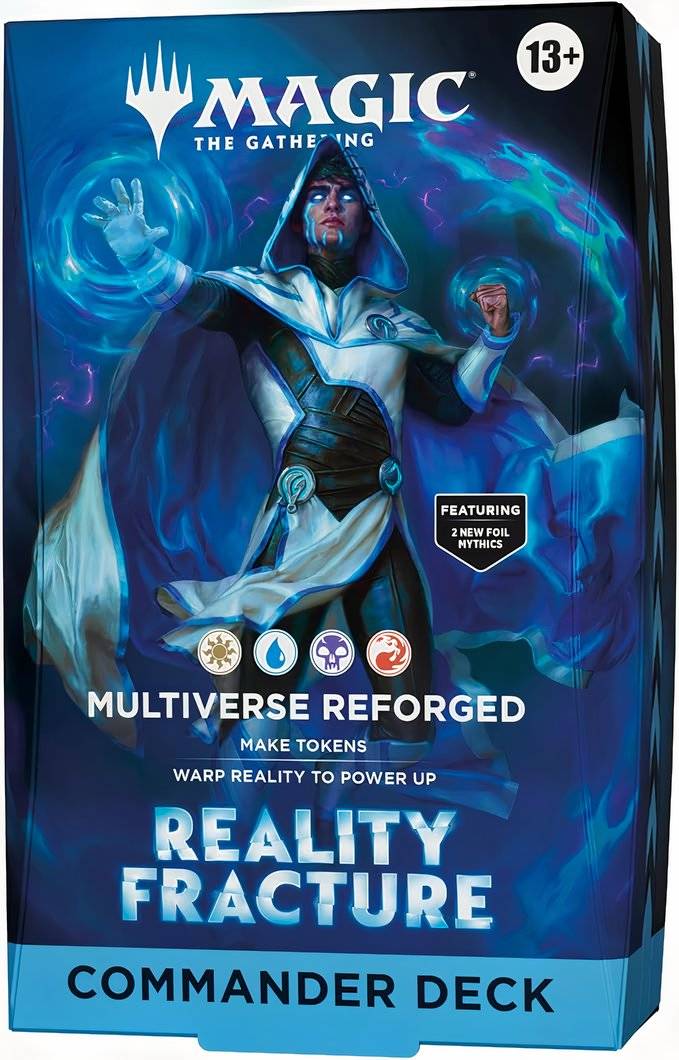 Image: Wizards of the Coast
“Reality Fracture is really a love letter to Magic fans,” Verhey remarked. “It was a blast to conceptualize and bring to life.” The set’s narrative backdrop centers on Jace Beleren, the Planeswalker and Mind Mage, who has cast a cataclysmic spell attempting to reshape existence. Reality Fracture serves as a “what if” chronicle, depicting a Multiverse reimagined to fit Jace’s vision of perfection—a shift that has inadvertently birthed an unsettling dystopia, warping established characters, mana identities, and the fabric of the planes themselves.
Wizards of the Coast describes the Commander experience thusly: “Reimagine a new Multiverse with Jace at the helm, featuring a deck stocked with alternate-reality versions of beloved Magic creatures. Execute your master plan by replacing tokens with these twisted entities, imposing order according to Jace’s design.”
“This deck is unlike anything we’ve built for Commander before,” Verhey added. “It includes new cards that I believe players will find truly exciting.” According to the official Amazon listing, Multiverse Reforged will introduce 18 brand-new cards to the Commander format.
As for why Reality Fracture features only one Commander deck, Verhey noted that the team wanted to avoid the lopsided sales trends seen in previous releases. He pointed to Phyrexia: All Will Be One as an example, where the “villain-centric” Corrupting Influence deck drastically outsold the “heroic” Rebellion Rising, leading to a significant price disparity in the secondary market. By focusing on a single, uniquely positioned deck, the team aimed to avoid this market imbalance.
 Image: Wizards of the Coast
Throughout the main set, boosters will contain legendary characters alongside “Echoverse” variants. During a Q&A, head designer Mark Rosewater confirmed that the set will also include non-creature Echoverse spells. A notable example revealed at MagicCon is Ancestral Craving, a black-aligned twist on the classic Ancestral Recall. When asked if similar flavorful reworks would appear throughout the set and deck, Verhey confirmed we are on the right track.
Verhey suggested that the Commander deck serves as a space to reimagine characters who are currently dead in Magic canon—a limitation that prevents them from appearing in the main set’s Echoverse mechanic, which requires a pairing of “current” and “alternate” versions. This allows for intriguing iterations of iconic figures like Gideon Jura, Dack Fayden, or Urza, now seen through the lens of Jace’s fractured reality.
As for why green is absent from Multiverse Reforged, the reasoning runs deeper than mere rarity. As Mark Rosewater detailed in a recent blog post, green represents the philosophy of acceptance and the natural order—the antithesis of forcing change upon the world.
“Green isn’t here to fix the world; it’s here to accept it as it is,” Rosewater explained. “It is the height of elegance and natural beauty.” Given this, the color green is inherently opposed to a Mind Mage’s desperate, trauma-driven attempt to rewrite existence. In that context, perhaps the absence of green—and the specific inclusion of the WUBR identity—is the most thematic choice imaginable for a set defined by the distortion of nature.
Source: Polygon
Related articles
 Mike Colter Compares Returning to Luke Cage Role to Temporal Anomaly
 The Best Quote From It’s the Great Pumpkin, Charlie Brown Still Resonates After 60 Years
 Microsoft Admits It Is Too Difficult to Release Games on Xbox
 Space Marine 2 vs. Gears of War: E-Day Graphics and Performance Comparison
 Ghost of Yotei impresses reviewers as developers release new trailer
 CI Games CEO Announces Delay in Lords of the Fallen II Playtests
 Persona’s Horrifying Penis Monster Will Haunt My Nightmares Forever
 Valve Announces Dates for Upcoming Steam Sales and Festivals