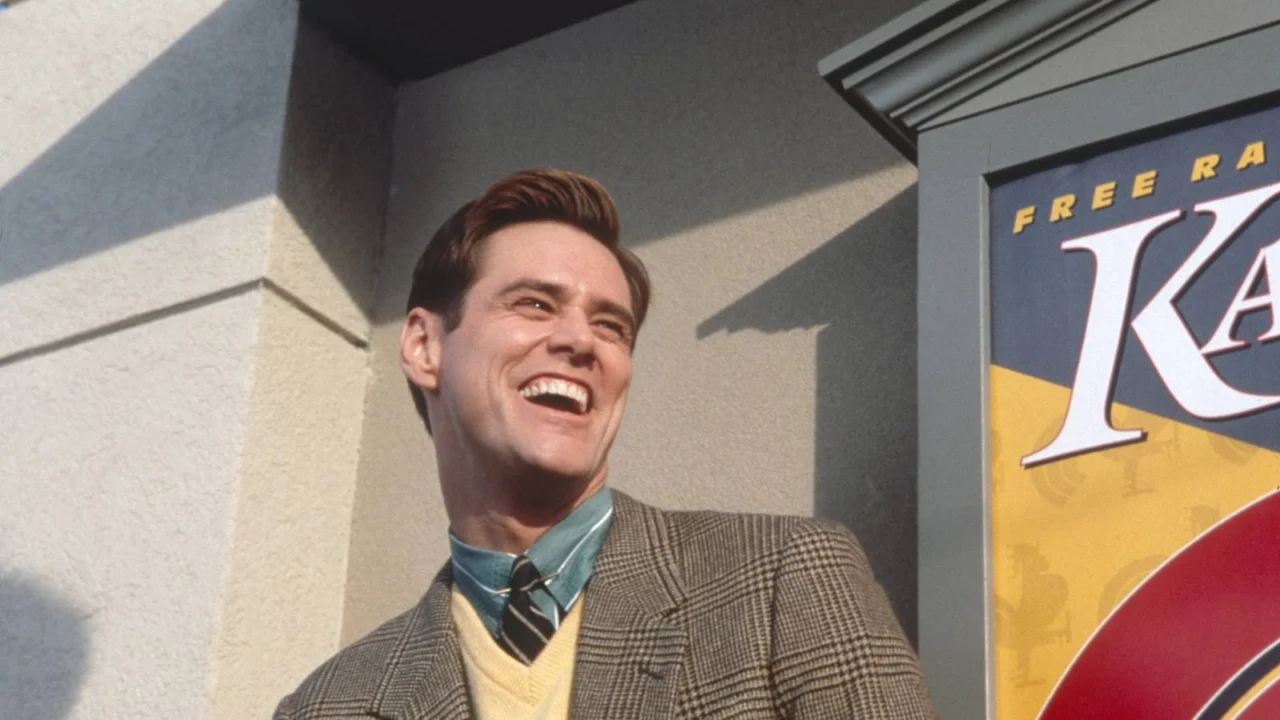
Jim Carrey’s Greatest Film Is Far More Than Just Prophetic

Peter Weir’s 1998 cinematic masterpiece, The Truman Show, was recently inducted into the National Film Registry—a fitting tribute to a work of science fiction that transcended satire to become eerily prescient. Rather than merely poking fun at the media landscape of the late nineties, the film offered an unnervingly accurate blueprint of the voyeuristic digital age that was just over the horizon.
Scripted by Andrew Niccol and brought to life by the visionary direction of Weir, the story follows Truman Burbank (portrayed with career-defining nuance by Jim Carrey). Truman is a man who, unbeknownst to him, has spent his entire life as the protagonist of a global television phenomenon. His world is a gargantuan soundstage; his family and friends are professional actors; and his every movement is captured by thousands of hidden cameras. From his first steps to his adult anxieties, he is the ultimate commodity. Behind the artificial moon of Seahaven Island sits Christof (Ed Harris), a demiurge-like producer who choreographs Truman’s reality with the cold precision of a god.
When the film debuted, the concept of “reality TV” was still in its infancy. MTV’s The Real World and the Dutch pioneer Nummer 28 had introduced the world to the drama of strangers in shared spaces, while the media circus surrounding the O.J. Simpson trial had already begun to blur the lines between judicial news and primetime entertainment.

However, the year following The Truman Show’s release saw the arrival of Big Brother, a show that essentially weaponized the film’s premise by placing real people under total, inescapable surveillance. By the early 2000s, hits like Survivor and American Idol had cemented reality TV as a dominant cultural force, transforming ordinary lives into high-stakes spectacles.
The film’s critique of the commercialization of the individual remains devastatingly sharp, but its legacy has only deepened in the era of social media. Today, the “Truman” experience is no longer a localized experiment; it is a universal lifestyle. We inhabit a world where life is sanitized and curated for digital consumption, acting not just as surrogates for real interaction but as a permanent veneer over reality. In the age of Instagram and TikTok, we are both the star and the producer, willingly participating in our own surveillance. We have become Truman, but we have also become the actors hired to populate his world.
Despite these heavy philosophical undertones, the film remains remarkably accessible, characterized by warmth and wit. While Andrew Niccol’s initial screenplay was a grim, dystopian thriller set in a gritty New York, Weir pivoted toward a bright, “preppy” aesthetic. Seahaven is a technicolor dream of 1960s optimism, a choice that makes the underlying exploitation feel even more insidious. The film’s inviting visuals draw the audience in, subtly implicating us in the voyeurism we are watching on screen.

The casting of Jim Carrey was perhaps Weir’s most inspired masterstroke. The director actually delayed production for a full year just to accommodate the actor’s schedule. While Carrey’s trademark physicality is present, he anchors the film with a profound, understated vulnerability. It was his first foray into dramatic territory, and he brilliantly captures the slow-burn existential crisis of a man realizing his reality is a fraud. Carrey doesn’t just play for laughs; he brings an unsettling, razor-sharp edge to Truman’s eventual rebellion.

As the narrative unfolds, the three-decade-old illusion begins to fracture. A studio light plummets from the sky; Truman’s “deceased” father reappears as an extra; a radio glitch reveals the behind-the-scenes orchestration of his commute. While the film handles these anomalies with clever humor, Carrey ensures the emotional stakes are high. We watch Truman’s sunny disposition dissolve into a desperate, sardonic resolve as he attempts to reclaim his agency and escape the island of his birth.
In a brilliant directorial move, Weir keeps the “real” world a mystery. We see the control room and the viewers at home, but the world outside the dome is never truly defined. When Truman finally reaches the horizon and discovers the literal edge of his world, he isn’t met with a paradise, but with the pitch-black void of the unknown. His final exit is a moment of immense spiritual power—a choice to embrace the darkness of true freedom over the brightly lit comfort of a lie.
Ultimately, The Truman Show is about the courage required to be authentic when the world demands a performance. It asks us if we have the strength to step away from the cameras—and the screens—to find out who we are when no one is watching. In a world that is more “Seahaven” than ever, that question is more vital than it was thirty years ago.
The Truman Show is currently streaming on MGM+ and is available for purchase or rental via Apple TV, Prime Video, and other major VOD platforms.
Source: Polygon
Related articles
 Payday 2 H3H3 DLC Review-Bombed on Steam After Ethan Klein Affair Disclosure
 Valve Launches Personal Release Calendar in Steam
 Classic Resident Evil Outbreak Now Playable for Free in Web Browsers
 Flying Hopper Enemies From the Film Added to Starship Troopers: Extermination
 Hockey roguelike with referee bribes and special abilities gets full release on Steam and consoles after 3 years
 No More Room in Hell 2 Gets New Map and Progression System in Camp Blood Update
 Owlcat Shows Lady Inquisitor and Massive Power Armor in New Warhammer 40,000: Dark Heresy Teasers
 Legend of Zelda Movie Cast List: Who Plays Link, Zelda and Ganondorf So Far