Netflix Quietly Debuts Full Season of Landmark Pulp Sci-Fi Series

When Roland Emmerich unleashed the high-concept sci-fi adventure Stargate in 1994, it was originally envisioned as the opening chapter of a cinematic trilogy. Co-written with Dean Devlin, the film aimed to fuse blockbuster spectacle with ancient mythology. While the movie shattered box office expectations, critics were initially dismissive, citing its reliance on genre tropes and sentimentalist leanings. Plans for big-screen sequels eventually evaporated, largely because MGM pivoted toward expanding the universe on television. This shift birthed 1997’s Stargate SG-1, a series that masterfully utilized an episodic, action-driven format across ten acclaimed seasons—all of which have found a home on Netflix.
The enduring appeal of SG-1 stems from its ability to occupy a specific niche in the early 2000s science fiction landscape. During this era, titans like Star Trek were showing signs of creative exhaustion, and the gritty, prestigious reimagining of Battlestar Galactica hadn’t yet arrived to redefine the genre in 2004. SG-1 flourished in this transitionary period, fostering a vibrant digital fandom while riding the coattails of the original film’s popcorn-flick legacy.
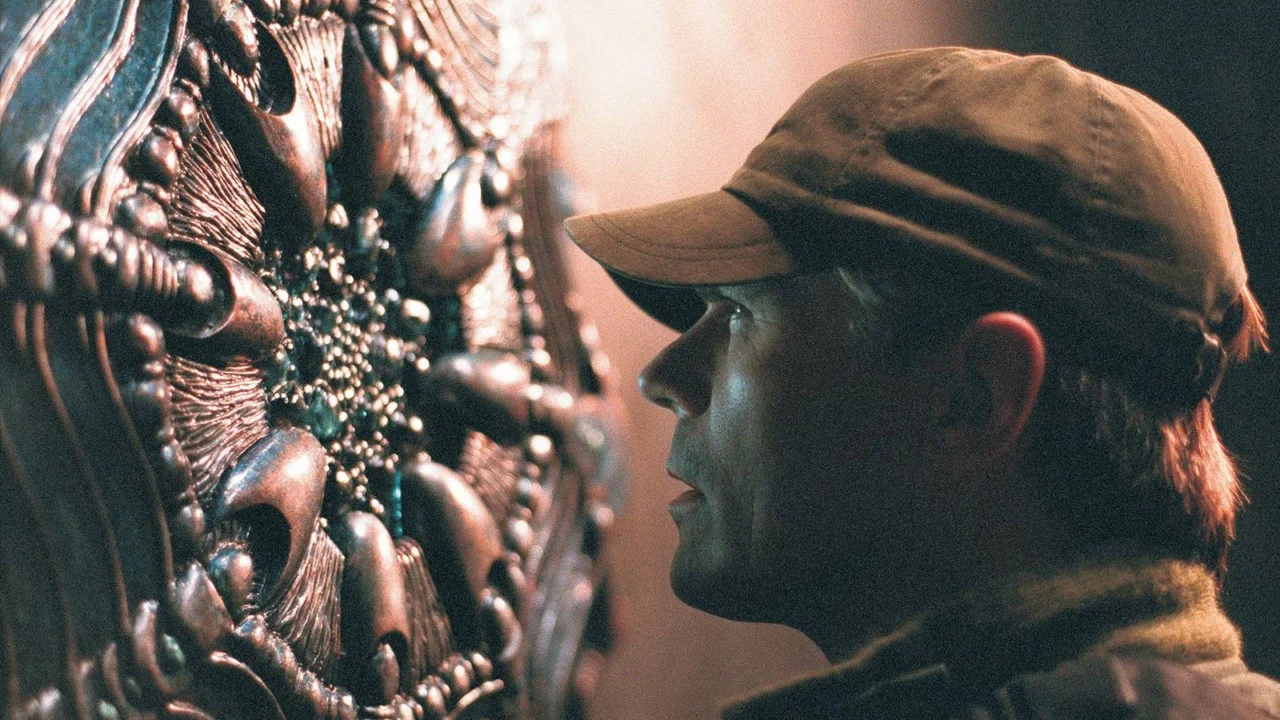
Emmerich’s foundation begins in Giza with the excavation of an enigmatic, ring-shaped artifact—a celestial gateway etched with cryptic symbols. Once the military deciphers the Stargate’s true purpose as a conduit for instantaneous interstellar travel, linguist Daniel Jackson (James Spader) and Colonel Jack O’Neil (Kurt Russell) lead a high-stakes expedition to uncover the secrets waiting on the other side.
 Image: Amazon MGM/Syfy
That initial voyage to the arid deserts of Abydos pitted our heroes against a malevolent alien deity, whose downfall marked a turning point for the human race. Stargate SG-1 launches one year later, introducing new portrayals of O’Neill (now with two ‘L’s, played by Richard Dean Anderson) and Jackson (Michael Shanks). Operating out of the Cheyenne Mountain complex known as Stargate Command, the team explores the vastness of the cosmos.
The series significantly deepens the character arcs of its protagonists. Creators Brad Wright and Jonathan Glassner strike a fine balance, honoring the original film’s essence while injecting fresh personality. While Kurt Russell’s O’Neil was characterized by a stern, haunted cynicism, Anderson’s O’Neill navigates peril with a signature dry wit and an approachable, team-oriented leadership style. The ensemble is rounded out by the brilliant astrophysicist Samantha Carter (Amanda Tapping) and the stoic, formidable Jaffa warrior Teal’c (Christopher Judge), providing a narrative anchor even when the show’s world-building ventures into the surreal.
 Image: Amazon MGM/Syfy
The lore of SG-1 is as delightfully eclectic as soft sci-fi gets. The narrative consistently evolves as the crew encounters hostile parasitic entities like the Goa’uld or pieces together the legacy of their mysterious predecessors, the Ancients. The Stargate itself evolved beyond a mere plot device; it became a gateway to temporal anomalies and parallel dimensions, allowing for bold “what-if” scenarios and alternate realities. While this kitchen-sink approach occasionally dipped into campy territory, the show maintained a level of earnest sincerity that makes it incredibly rewatchable, especially through a lens of nostalgia.
The success of SG-1 paved the way for a robust expanded universe. Stargate Atlantis debuted in 2004, leaning into a more lighthearted, trope-heavy tone that felt like a love letter to sci-fi tropes. Conversely, 2009’s Stargate Universe attempted a grittier, more philosophical direction, exploring the psychological toll of deep-space isolation. Both series benefited from the unwavering loyalty of the “Gater” community, flourishing on the Syfy Channel as a premier destination for imaginative storytelling.
With Amazon MGM recently greenlighting a Stargate revival, there is fresh optimism that the franchise will be reimagined for a new generation. Regardless of what the future holds, modern science fiction television remains indebted to Stargate SG-1, a series that proved pulp adventures could provide the foundation for complex worlds and iconic characters.
Every season of Stargate SG-1 is available for streaming on Netflix.
Source: Polygon
Related articles
 Payday 2 H3H3 DLC Review-Bombed on Steam After Ethan Klein Affair Disclosure
 Valve Launches Personal Release Calendar in Steam
 Classic Resident Evil Outbreak Now Playable for Free in Web Browsers
 Flying Hopper Enemies From the Film Added to Starship Troopers: Extermination
 Hockey roguelike with referee bribes and special abilities gets full release on Steam and consoles after 3 years
 No More Room in Hell 2 Gets New Map and Progression System in Camp Blood Update
 Owlcat Shows Lady Inquisitor and Massive Power Armor in New Warhammer 40,000: Dark Heresy Teasers
 Legend of Zelda Movie Cast List: Who Plays Link, Zelda and Ganondorf So Far