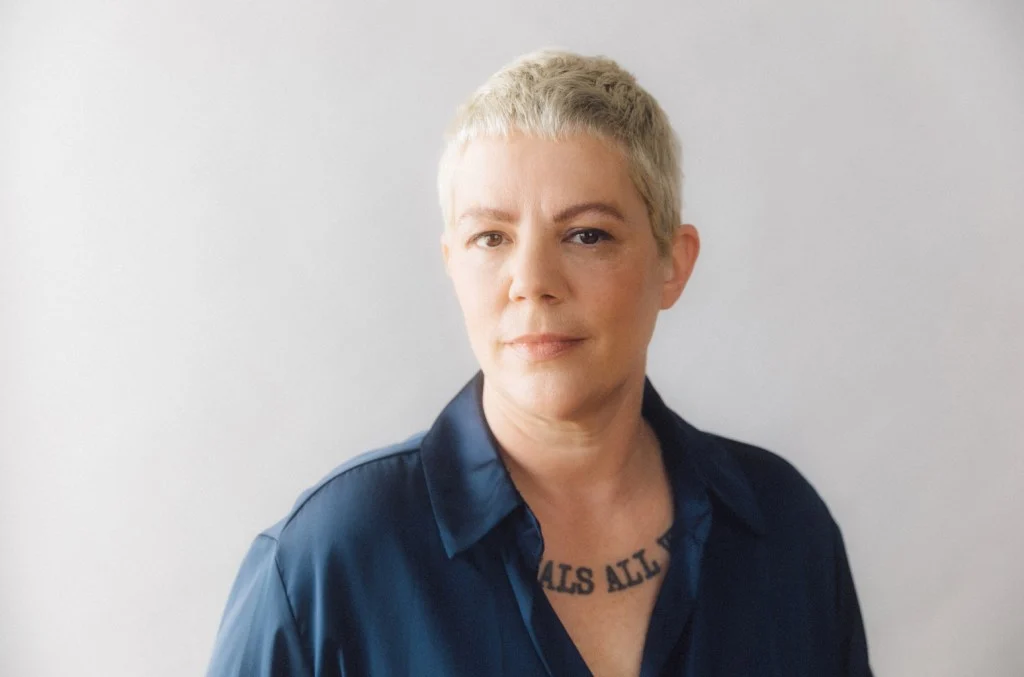
Jenny Eliscu Reaches Milestone of 100 Episodes with her ‘LSQ’ Podcast
Jenny Eliscu Elizabeth Weinberg
Last month, well-known reporter, manufacturer and radio host Jenny Eliscu introduced the 100th version of her LSQ podcast including a meeting with Samuel T. Herring, frontman for the band Future Islands. Then she launched episode 101 with Brittany Howard. And after that episode 102 with Idles frontman Joe Talbot.
“For what it’s worth, episode 103, with Dhani Harrison, comes out next week on March 5,” she keeps in mind. “And I’ve got upcoming episodes with Rodrigo y Gabriela, Ty Segall and Gossip’s Beth Ditto, among other awesome ones this spring.”
Trending on Billboard
For a bargain of songs followers, that the program has actually lasted this lengthy without any indicators of slowing down, it’s worth a whole lot.
SiriusXM host given that 2006 and previous Rolling Stone staffer and factor for over a years, Eliscu has actually constructed a respected track record for herself as a thoroughly knowledgable reporter enthusiastic regarding songs and promoting musicians. Launched in 2017, LSQ‘s landmark — and the episodes given that — is a task of durability each time when songs journalism is undertaking scaling down and traffic-driven celeb chasing. Independently generated, these long-form meetings are a rarity nowadays in any type of tool, along with a solution to musicians and target markets looking for even more understanding behind the songs.
Looking back at the listing of names Eliscu has actually spoken with on the podcast, it’s a that’s-that of songs’s most significant musicians around indie rock: Conor Oberst, Jack Antonoff, Courtney Barnett, Steven Van Zandt, Angel Olsen, Kevin Parker of Tame Impala, Johnny Marr, Tegan and Sara, Caroline Polachek, Leon Bridges, Sharon Van Etten and a lot more. But for LSQ, what’s made it such a crucial location for musicians is her financial investment in each meeting, supplying prolonged, thorough discussions with the sort of laid-back tone that’s even more like friends obtaining deep than reporter and topic. It’s no coincidence. Many of her topics either are pals or come to be so later on.
“Talking to Jenny Eliscu makes you feel like the most intriguing person in the room thinks you’re the most interesting person in the world,” states Tegan Quin of Tegan and Sara. “With her years of experience, Jenny isn’t afraid to go deep, but you trust the process because along with great questions and exceptional listening, she peppers in memorable insights from her vast knowledge and love for music. Jenny knows more about the music that influenced most of us to become artists in the first place than we do, and so no interview is ever typical. Somehow you learn something about yourself in the process.”
“I first met Jenny well over a decade ago, and honestly, she made me feel so at ease instantly that it didn’t feel like the first meeting at all,” includes Beach House’s Victoria Legrand. “Felt like we had always known each other. Interviews with her have always felt like natural conversations, and as simple as that may sound, it is a true skill. Her deep love of art, of music, of love – and her deep care and support for the relationships forged is incredibly beautiful. She is a pillar of strength and peace and I am lucky as an artist to call her a friend.”
“Jenny has a remarkable way of disarming an artist in an interview,” states Christian Stavros, owner of Little Operation Management, whose musicians Angel Olsen, Devendra Banhart, King Tuff and Bethany Cosentino have actually all been included on LSQ. “I think it’s because she too is an artist in the way she approaches interviews. She has a way of connecting and relating, but also has a directness to her questions that bring real insight to the process. I’m a huge fan and have the utmost respect for her talent. And I know, for the artists I work with who she has had on her podcast … all would agree that it never felt like work but more like a great hang.”
Outside of LSQ and her SiriusXM holding, Eliscu exec generated the 2021 Netflix docudrama Britney Vs. Spears and is presently in manufacturing on an additional significant songs docudrama due later on this year.
She consulted with Billboard regarding passing 100 episodes with LSQ, and the more comprehensive songs media landscape.
If you pay attention back to old episodes of the podcast, what do you discover most? How has the program transformed?
When I began the collection back in 2017, the objective was to develop a room for longer sound meetings with musicians. I’ve been lucky to have incredible electrical outlets for various other kinds of meetings for many years – cover tales for Rolling Stone, event talks for Sirius XM, and every little thing in between – however I still desired to record even more thoughtful, comprehensive discussions where the musicians can speak about their earlier life and the minutes that created their method to their craft. I would like to know regarding youth songs lessons and initial shows and very early efforts at songwriting and all that transformative things. And getting the answer to those inquiries remains to be my favored component of this podcast.
I frequently think about a tale the National’s Aaron Dessner cooperated his meeting for episode 2, around when he and his bro Bryce were 6 years of ages, just how they uncovered a messy old drum embeded in the furnace of the cellar, and it was this 1959 blue glimmer Slingerland that their father had actually obtained for his bar mitzvah. He had actually been an effective jazz drummer prior to the doubles were birthed, and this was just how they learnt about that item of household background. Aaron began playing drums instantly after that. Or the tale Michelle Branch informed in episode 50 regarding just how she was so solid as an anonymous teen singer-songwriter that she drove a next-door neighbor’s golf cart to a Sedona dining establishment to hand-off her trial tape to some document director she listened to was eating there. Or Sam Herring from Future Islands in episode 100, bearing in mind the very first time he ever before attempted to freestyle, at age 14, together with among his favored KRS-One tracks. “You just have to start and don’t stop,” his older bro had actually informed him. He freestyled for around 20 secs and afterwards raised and down on his bed, gladdened by having actually done it. I enjoy those type of tales!
All of which is to state that the program itself actually hasn’t transformed a lot given that it began, due to the fact that I still actually appreciate doing this certain sort of meeting, and there are a lot of various other musicians I’d like to inquire about those points. I have, nevertheless, picked up from experience that it’s far better to adhere to one meeting per episode (some earlier episodes had 2). I likewise invested a great deal of time in the initial couple of periods attempting to consist of vintage sound from my pre-podcast archive, however as a one-person procedure, that verified also tough to do often.
How do you choose musicians for your meetings? What produces a great meeting topic?
The option procedure is actually nearly absorbing the musician’s job and learning more about their backstory and afterwards following my reactions from there. Sometimes I’ve currently spoken with the individual in the past, therefore I’ve had a possibility to see just how wise or amusing or delicate or charming they are, and I can visualize a longer meeting being fascinating. But I assume all musicians are possibly excellent meeting topics, if you can place them comfortable sufficient to open.
You’ve functioned throughout songs media and journalism. What do you like many regarding the podcast style?
I enjoy that podcasting itself has a lot of various layouts, whether it’s immersive, high-production narration or even more casual conversation programs or a simple meeting collection like LSQ. I enjoy that podcasting still really feels a little bit much more do it yourself and vaudevillian, because you can kind of produced episodes of whatever size you desire, nevertheless frequently or hardly ever you desire, which’s penalty. And podcast audiences are the sort of dedicated target market that sustain even more nuanced, specific niche programs, and I’m constantly stired to be component of that exchange.
What do you assume is vital to your success as a job interviewer? We have quotes from musicians and their monitoring commending you. How do you develop this sort of comfy setup?
I assume the trick is visibility and genuine inquisitiveness. It can be appealing to review or pay attention to every meeting the individual has actually done, however I like to err on the side of much less prep work, to ensure that I am truly asking inquiries without assumptions regarding the solutions. And I attempt to share a feeling of convenience regarding the meeting procedure, to make the experience really feel even more like a discussion over coffee with a buddy that cares sufficient to pay attention very closely and ask thoughtful follow-up inquiries.
You’ve been covering songs for nearly 3 years currently. The songs sector has transformed dramatically because time from CDs to piracy to streaming to social media sites… What regarding your task — besides where you’ve done it — has transformed? Why do you assume it’s important to organize a place for these type of long-form meetings?
Yeah, the songs sector and the media landscape around it have actually experienced a lot given that I drew back in the ’90s. It was incredible to operate at Rolling Stone in the very early to mid-aughts, prior to the print organization actually began wilting, due to the fact that you can obtain a substantive quantity of time set aside with the musician you were blogging about, and have a number of concentrated, long meetings. But as the internet and social media sites took control of, points changed and musicians didn’t need to rely upon that sort of press. Don’t obtain me incorrect, I assume it’s inevitably far better for musicians to be able to interact to target markets without media control, however it’s certainly transformed points in significant methods. For a while it seemed like there would certainly be less possibilities for longer journalistic endeavors, however I’ve located that both podcasting and documentary have actually opened interesting opportunities to share musicians’ tales in better deepness. That’s the following frontier for me: Collaborating with musicians to aid inform the tales they respect, in manner ins which enable them to maintain authorship.
Would you share some names still on your LSQ musician shopping list?
Erykah Badu, PJ Harvey, Mac DeMarco, Mitski, Thundercat, Jarvis Cocker, Jonathan Richman, Run The Jewels, Fiona Apple therefore a lot more.
Related articles
 Sass Jordan, Rock Singer and Canadian Idol Judge, Dies at 65
 Zach Bryan Breaks Gillette Stadium Attendance Record While Wearing Free Palestine Shirt Again
 Ed Sheeran Taps Former Fray Singer Isaac Slade as Atlanta Opener After Macklemore Dropped and Support Acts Quit
 Taylor Swift Shares Making of Patient Zero in Expanded Video
 Doobie Brothers Member Michael McDonald Reconnects With Son Put Up for Adoption Nearly Six Decades Later
 PLAVE Enters HYPERDRIVE
 Lzzy Hale Criticizes Defendants in Cornell 7 Rape Case
 Victoria Monét, Drake, and Noah Kahan Featured in New Music Release Poll for the Week