
Islamic History Becomes a Gaming Wonder in This Beautiful New Puzzle Platformer
With each passing year, my appreciation for concise, purpose-driven video games has only deepened. While massive, sprawling titles are undoubtedly technical marvels, I find myself increasingly drawn to compact experiences that execute their vision with absolute precision. If you are looking for a masterclass in this kind of focused design, look no further than The House of Hikmah, available now on Steam.
As the inaugural project from Lunacy Studios, this puzzle-platformer hits every mark with impressive fluidity. Across a focused three-hour journey, it delivers a poignant narrative regarding grief, presents an ingenious, ever-evolving set of puzzles, and immerses the player in the vibrant legacy of the Islamic Golden Age—all accompanied by a hauntingly beautiful soundtrack that would be the envy of any AAA production. The House of Hikmah may be small in scope, but its dedication to artistry makes it every bit as resonant as its larger industry counterparts.
At its core, The House of Hikmah explores the delicate intersection of personal loss and historical heritage. The protagonist, Maya, is navigating the profound absence of her father, Abdullah. This search for closure leads her to the House of Wisdom, a fantastical reimagining of the legendary intellectual hub in medieval Baghdad. It serves as a tribute to the pioneers of the Islamic Golden Age—visionaries like Ismail al-Jazari and Fatima al-Fihriya—whose scientific and literary contributions remain immortalized through their interactions with Maya in a way that feels reminiscent of the storytelling found in the Assassin’s Creed franchise.
Many contemporary indie games tackle the theme of mourning, yet The House of Hikmah carves out its own space by grounding individual sorrow within a rich cultural tapestry. Rather than succumbing to pure melancholy, the narrative feels celebratory. The scholars are rendered as legendary, larger-than-life figures, and Lunacy Studios encourages players to marvel at their brilliance in fields like astronomy and ethics. The game posits that those we lose remain present as long as we carry their memory forward. For Maya, this realization comes as she uncovers how her father helped shape the world and the lives of those around him.
Image: Lunacy StudiosTransformation serves as the central mechanic of the game’s clever puzzle design. Upon entering the House of Wisdom, Maya wields a device gifted by her father known as the Key, which allows her to transmute the physical properties of objects. Each chapter is a fresh, 30-minute exploration of these mechanics, moving from simple environmental manipulation to complex physics-based riddles. Whether converting glass into metal or manipulating magnetism to interact with massive gears, the game presents logic puzzles that feel like satisfying, miniature physics experiments.
It is a rare achievement for a game to transport you to a world beyond your imagination, only to return you to reality with a renewed curiosity for the history of our shared human experience.
While there are minor rough patches typical of a debut indie title, the production value is remarkably high. The voice acting is emotive and respectful, with the option to play in Arabic further grounding the experience in its authentic setting. Furthermore, composer Austin Wintory delivers a masterful, evocative score that perfectly captures the wonder of the era. The House of Hikmah is an elegant, heartfelt achievement that lingers in the mind, serving as a reminder that the best games often act as gateways to the wider world.
The House of Hikmah is available now on Windows PC. This review was conducted on Windows PC. You can find additional information about our editorial ethics policy here.
Source: Polygon
Related articles
 Kenshi Yonezu Sets New Record as Chainsaw Man Jane Doe Music Video Hits 100 Million Views
 ARC Raiders Sees Surge in Steam Popularity
 Games Workshop Unveils New Skeleton Horsemen Miniature Set for Warhammer: The Old World
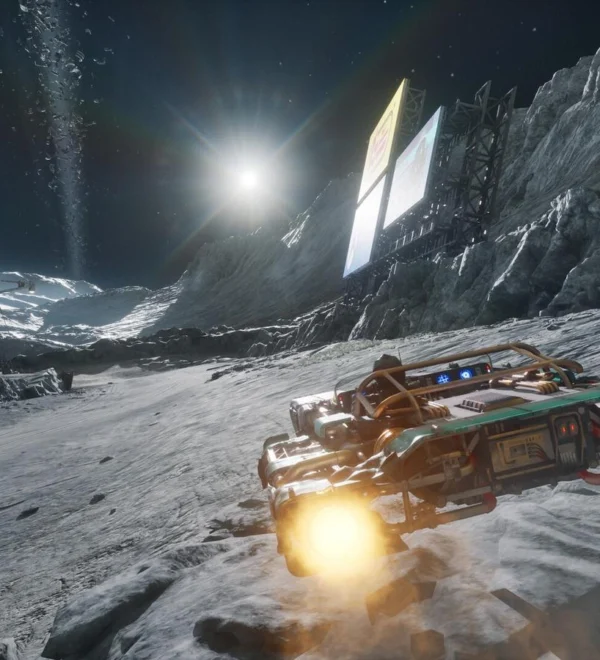 Star Wars: Galactic Racer Developer Criticizes Constant Racing Rewards
 Street Fighter 6 Producer Warns Series Faces Decline Due to Aging Audience
 Max Factory Opens Preorders for Berserk Guts and Griffith Figures
 X-Files Creator Chris Carter to Release New Time-Travel Movie
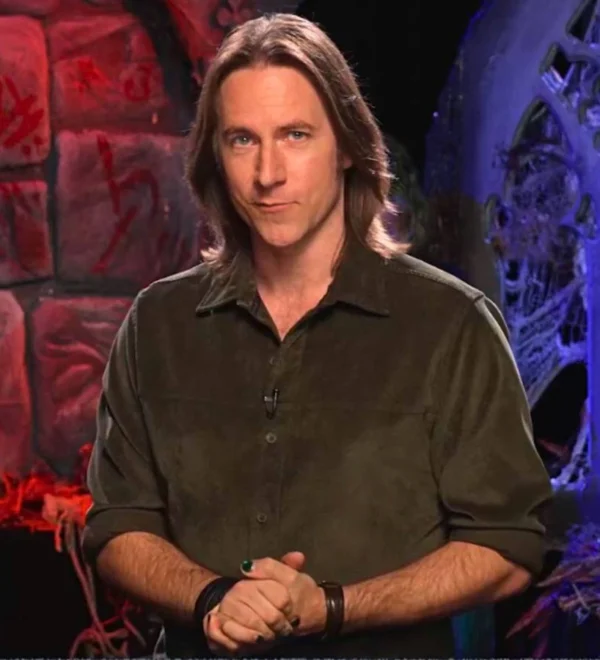 Critical Role’s New Campaign to Feature VTuber Stars