This past summer, I found myself engaged in what my social circle calls “parallel play”—that modern form of bonding where friends share a space while pursuing separate hobbies. While my friend was focused on her canvas, I was preoccupied with Umamusume: Pretty Derby. Despite the apparent disparity in our artistic pursuits, it only took a few digital sprints before everyone in the room—her partner and roommate included—was huddled around my screen, shouting encouragement as if they were watching a photo finish at a high-stakes derby. It is an undeniable truth of 2025: Umamusume has a strange way of turning even the most casual observer into a fervent equestrian enthusiast.
If you somehow avoided the horse-girl hysteria that dominated the digital landscape this year, the premise might sound surreal. Umamusume: Pretty Derby is a deep management simulator where players train anthropomorphic horse girls—characterized by their equine ears, tails, and a singular obsession with carrots—through an arduous racing season. Success requires a delicate balance of statistical optimization, fatigue management, and fan base cultivation. Though it has been a staple of the Japanese gaming scene since 2021, its 2025 global debut on PC and mobile finally brought the fever to a worldwide audience.
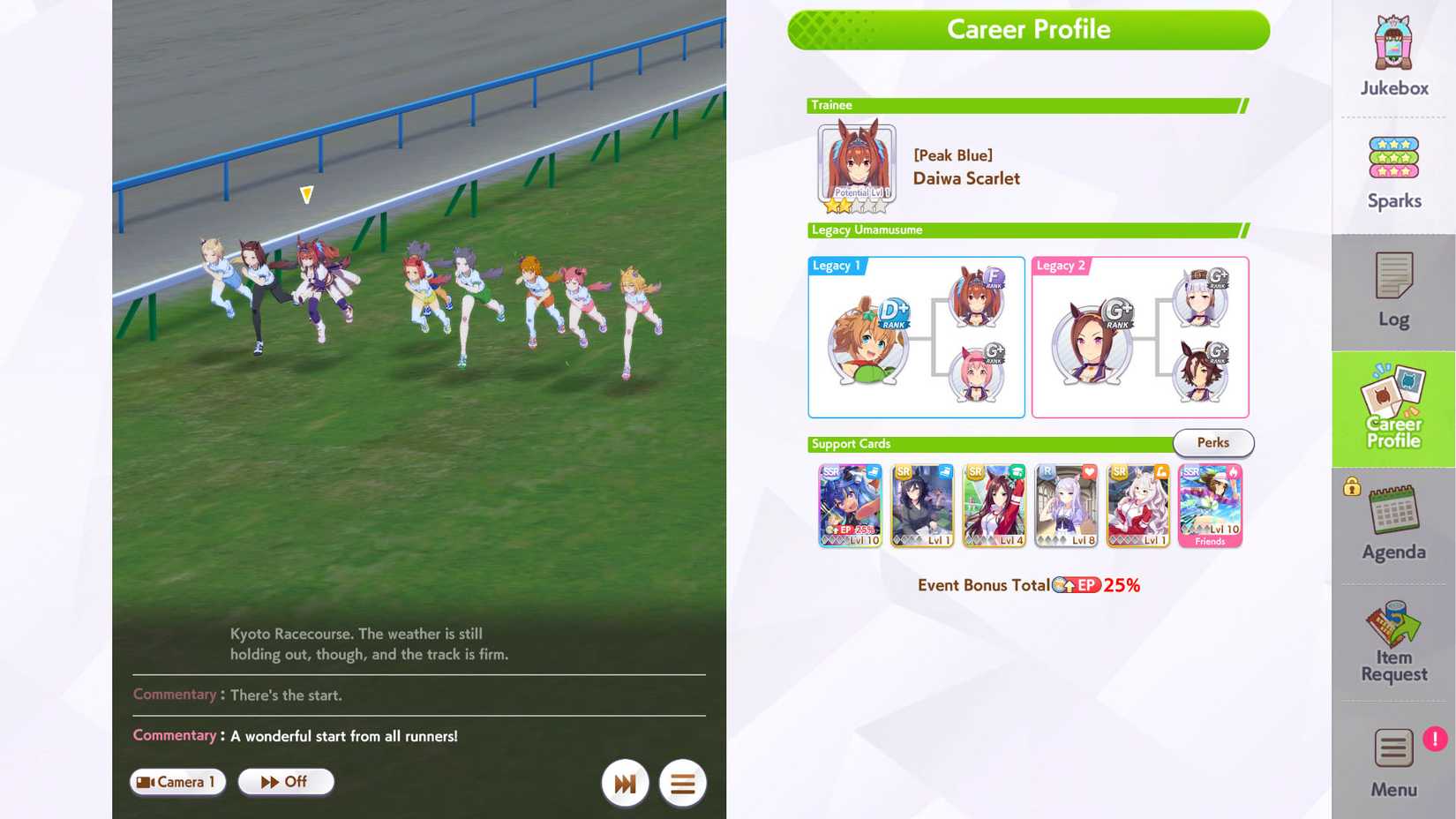
Mechanically, the game functions as a roguelike; players select a racer for a “run,” aiming to surpass their previous records. Successful alumni can then be utilized to establish a lineage, passing on superior traits to the next generation of athletes. However, the visceral heart of the experience lies in the races themselves. Watching a full event unfold provides an emotional rollercoaster, from dominant wire-to-wire victories to miraculous last-second surges by the underdog. It is shockingly easy to find yourself screaming at your phone, desperately urging an anime girl to activate her ultimate skill as she rounds the final turn.
These adrenaline-fueled moments translated perfectly to live streaming, turning the game into a juggernaut on Twitch. Data from TwitchTracker highlights a staggering 1.1K% increase in viewership alongside a 944% surge in active streamers. The craze even swept up major internet personalities like Ludwig and Northernlion, who found themselves unexpectedly captivated by the competitive depth of the “horse girl” meta.
The cultural impact extended far beyond the confines of gaming communities. Personally, I had never identified with the “horse girl” archetype—I harbored a quiet respect for the kids in elementary school who spent their recesses galloping, but it wasn’t my world. Umamusume changed that narrative, not just for me, but for a global audience that suddenly found itself obsessed with both virtual racers and their real-world counterparts.
The game’s brilliance is rooted in its authenticity; every character is based on a legendary Japanese racehorse, with developers meticulously incorporating real-world lineages and rivalries. While icons like Silence Suzuka have long since passed, others, such as the eccentric Gold Ship, have gained a massive new following. This adoration recently manifested in a touching tribute to Haru Urara; before the mare passed away this September, fans donated 2.5 tons of grass to her—the equivalent weight of two cars. She was cherished not for a trophy case, but for her tenacity, having famously endured a career of 113 losses without a single victory.
This obsession became a viral phenomenon across social media. Despite having no prior interest in equestrian sports, my algorithms were suddenly flooded with stylized fan cams of the real Gold Ship and avant-garde edits of the character Agnes Tachyon set to Death Grips. The sheer creativity of the fandom was relentless.
The game’s influence bled into real life in ways that were truly heartening. Fans have organized massive meet-ups at horse tracks, attending races in full costume to cheer on real animals. I’ve even seen groups of fans dressed as horse girls at Denver Broncos games. Perhaps most impressively, the International Museum of the Horse in Kentucky curated a dedicated exhibit exploring the connection between the virtual characters and their historical inspirations.
It is important to recognize that the Umamusume ecosystem extends far beyond the core mobile title. While the franchise includes multiple anime series and manga, these struggled to gain traction in the West until the game’s release provided the necessary context. Now, fans are diving deep into the lore, and the recent addition of a second career scenario in November has only served to reignite the community’s passion.
The cultural footprint of Umamusume: Pretty Derby in 2025 was immense—a primary factor in its placement within the top 20 of Polygon’s 50 best games of the year. Whether they were learning about thoroughbred history, sending floral tributes to retired racers, or finding a new community through cosplay, players found a genuine connection in the most unlikely of places: a shared love for anime horse girls.
Source: Polygon