

Eternity, an afterlife romantic comedy with fantastical trimmings, poses a deceptively straightforward question: which of the two husbands matters more to a nonagenarian Joan — the lifelong partner she lived with for 65 years, or the youthful first love who died long ago? The film complicates that choice with its own afterlife rules, and the answers the story offers are as much about identity and timing as they are about romantic loyalty.
Polygon sat down with writer-director David Freyne to dig into the film’s origins and its imagined rules of the hereafter — who built those systems, and who maintains them in Eternity? We also discussed the film’s ending in detail and unpacked some of its trickier moments. Freyne explains an earlier version of the finale and how Joan’s ultimate decision about where and with whom to spend eternity was shaped.
Ed. note: Spoilers ahead for Eternity.
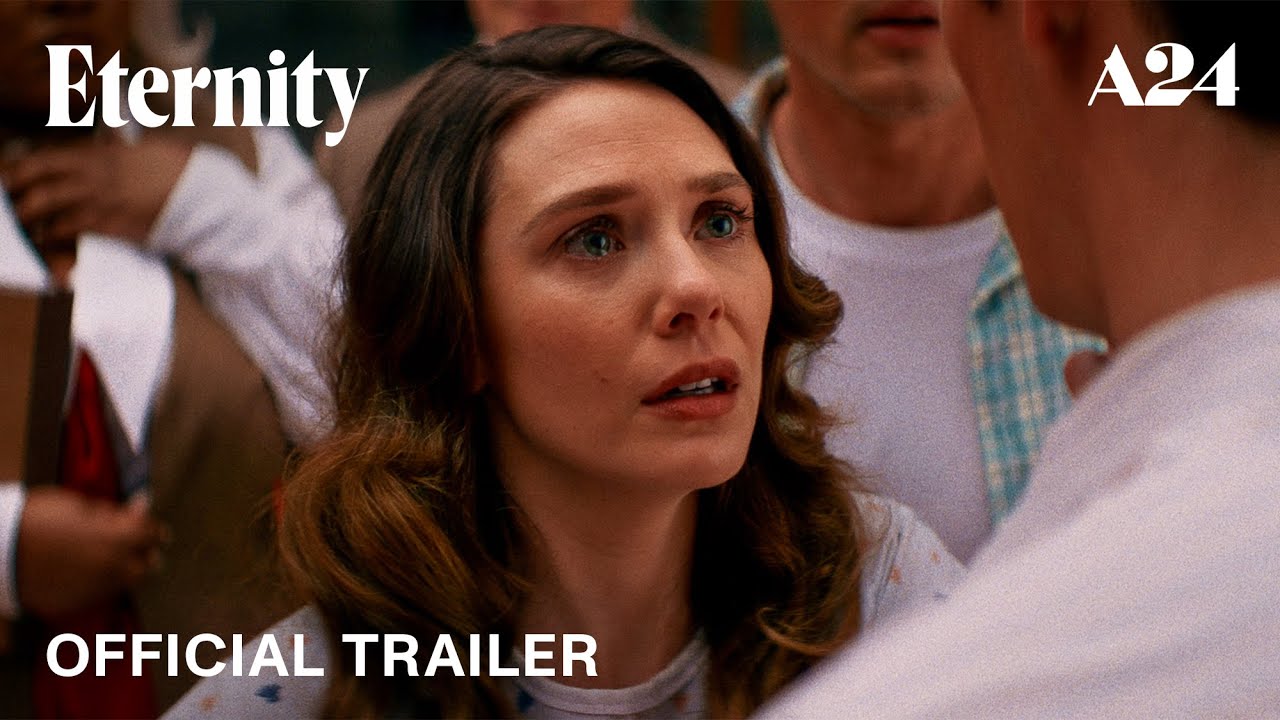
In act two, Joan initially rejects choosing between her past husbands and plans to run away with her friend Karen to recreate France in the afterlife. At the last moment she instead goes to Mountain Eternity with Luke — a pristine alpine existence filled with hikes, chalet meals and a lakeside cabin. But Joan soon realizes she misses the life she shared with Larry and slips away to find him.
The afterlife police — the Eternity Cops — pursue anyone who abandons their chosen eternity, threatening exile to a place called The Void. Joan nevertheless finds Larry in the Junction, the liminal space where the newly deceased pick their eternities, and together they evade the authorities and take refuge in a simple, suburban-feeling eternity that looks like their old neighborhood.
Why that particular world? Why wasn’t it shown during Joan’s extensive “shopping” tour of available eternities, and why don’t the afterlife enforcers seem to know where they’ve hidden? Freyne explains that he planned these details deliberately.
This interview has been edited for clarity and length.

Polygon: One frame briefly shows a poster advertising a “decommissioned” afterlife, Simple Eternity. Is that the place where Joan and Larry hide?
David Freyne: That’s exactly the intention — it’s meant to mirror the simple suburban world we open the film in, the life they shared. We tucked the poster in as a small clue. I wanted viewers to notice and maybe debate it; some people catch it right away, others only on a second viewing. Either way, the emotional core of the ending is that Joan and Larry end up together — the specific locale is secondary to their being united.
I enjoy layering small rewards for repeat viewings: subtle jokes on the trade floor, background announcements, visual gags. Those details deepen the film without changing the ending’s emotional truth, so I kept them understated.

Polygon: I expected Joan and Larry to be banished to the Void as punishment — we never actually see the Void on screen. Was that always the plan, or did the ending evolve?
Freyne: From the start the writers knew who Joan would choose, but the path to that choice shifted a lot during rewrites. The final act was reworked extensively. We considered darker options — sequences in the archive tunnel, even passing through the Void — but budget and storytelling reasons led us to reuse and refine the archive as a mirror-like passage through Joan’s buried memories. That proved powerful and dramatically satisfying.
It was also important to shift the final act so that the decision truly belongs to Joan. Initially Luke was flatter and the story risked becoming about Larry rescuing her; I pushed to make the climax Joan’s moment. Both men are fully realized characters and both could be valid choices for her. The film is about which relationship suits Joan at this point in her life, not a test of who’s morally superior. I actually like that audiences will argue — Team Luke, Team Larry, maybe even Team Karen — as long as they’re ultimately on Joan’s side.

Polygon: When Joan escapes Mountain Eternity, the authorities track her quickly. Why aren’t she and Larry discovered in Simple Eternity?
Freyne: The idea is that some eternities are taken out of circulation — effectively decommissioned — and become places where fugitives can hide. Characters like Ryan and Anna help them find one of these disused worlds where surveillance is minimal. There’s always a risk they’ll be pursued or have to remain on the run, but their togetherness is the story’s refuge.
Polygon: The film’s afterlife feels very bureaucratic — it recalls movies like A Matter of Life and Death, Defending Your Life, and After Life. Why is that red-tape afterlife so appealing to filmmakers?
Freyne: I’m not sure why it recurs, but I love it — my favorite is A Matter of Life and Death. Bureaucracy gives the unknown a familiar shape; when you set the afterlife against an office-like system of rules, it creates immediate dramatic and comic possibilities. For our version, the afterlife’s commerce and regulations mirror the world the characters left behind, which makes it both relatable and unsettling.

Polygon: The mechanics — one week to choose an eternity that never changes, permanent separation into single-themed afterlives — feel bleak and even dystopian. Was that an intentional tension in the film?
Freyne: Definitely. We imagined the Junction as a pressure point: people are always dying, and if too many remain undecided the system clogs and becomes unsustainable. That underlying chaos gives the film its urgency and forces Joan into a meaningful choice. It’s fertile dramatic ground, even if it’s not idyllic.
Polygon: Did you and the cast discuss what personal eternity you’d each choose?
Freyne: We talked about it a lot in rehearsals — what is love, and what is lasting happiness? Those conversations helped shape the performances. For me, the question of who I’d spend an afterlife with felt more compelling than the specifics of the world itself. Fantasies about alternate eras — a Weimar Germany without fascism, or a sanitized version of another historical time — are fun to imagine, but what endures is the company you keep.

Source: Polygon
 Netflix and Alfonso Cuarón Developing Dungeons & Dragons Horror Series
 “Gangsterland” starring Tom Hardy renewed for a third season
 Martin McDonagh Presents “Wild Horse” Starring Malkovich and Rockwell in Venice
 Werner Herzog dedicates the film “Bad Lieutenant” to David Lynch
 First still from the film “The Luckiest Girl Alive” featuring Kate and Rooney Mara
 First still from the film “The Luckiest Girl Alive” featuring Kate and Rooney Mara released
 Friday the 13th Screenwriter Victor Miller Dies
 “Borat” screening cancelled due to racist jokes