
Drop Review: A Compelling High-Concept Thriller Featuring an Outstanding Performance by Meghann Fahy
Drop
Release Date: April 11, 2025
Directed By: Christopher Landon
Written By: Jillian Jacobs & Christopher Roach
Starring: Meghann Fahy, Brandon Sklenar, Violett Beane, Reed Diamond, Jacob Robinson, and Jeffery Self
Rating: PG-13 for strong violent content, suicide, some strong language and sexual references
Runtime: 100 minutes
While not exceedingly complex or post-modern in nature, Drop embraces its role as a slick, Hitchcockian thriller. It establishes its stakes, introduces relatable characters, and builds well, resulting in a captivating and enjoyable 100-minute experience.
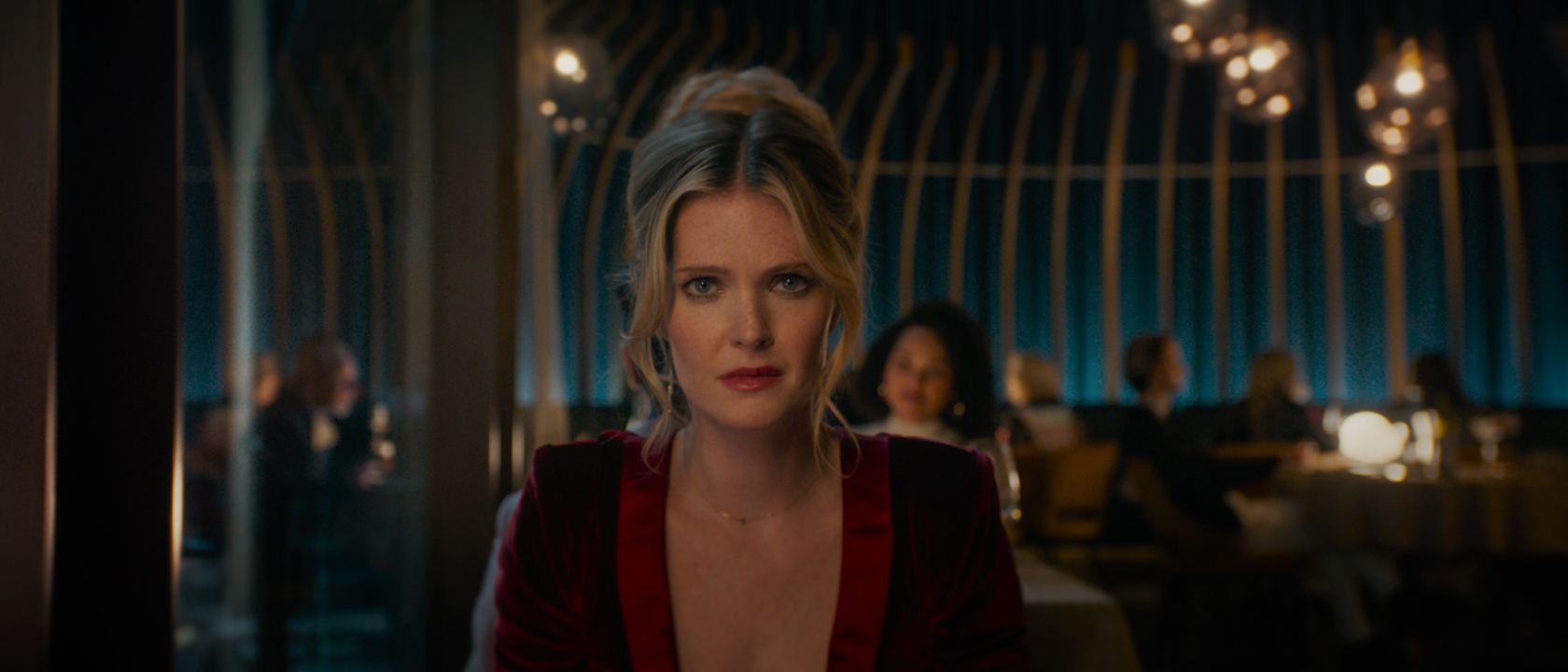
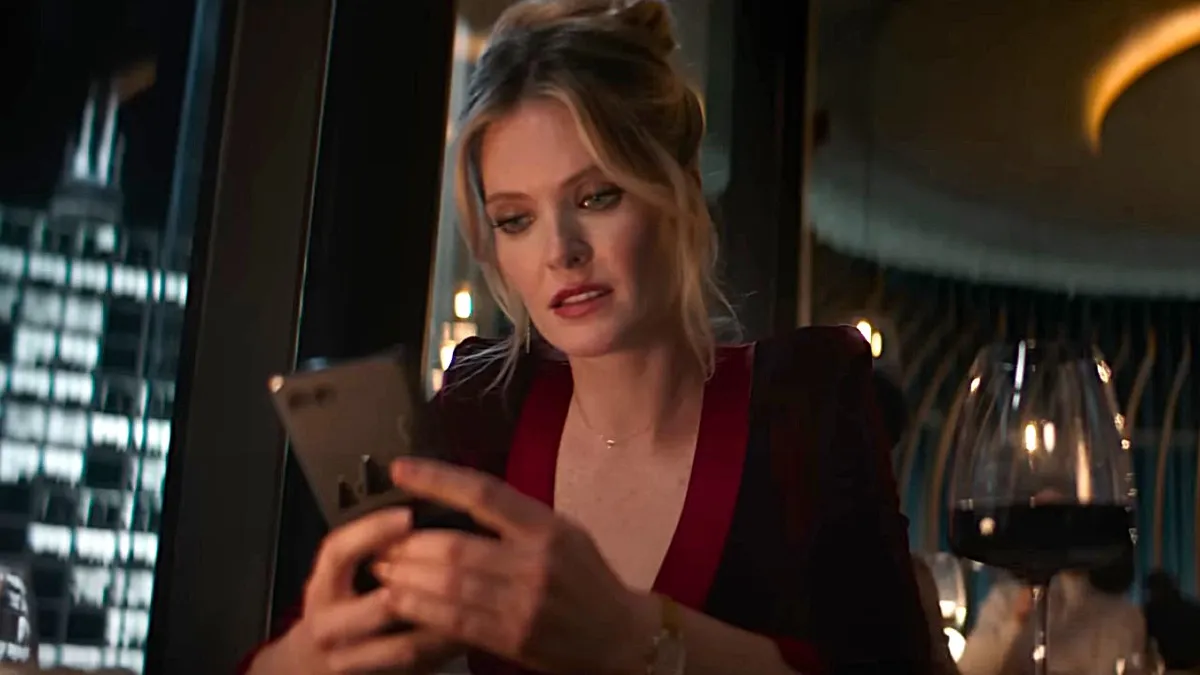
Meghann Fahy plays Violet, a widowed woman who has survived domestic abuse. After spending years in solitude, she takes a brave step to break free from her life as a single mother for a night out. Meeting Henry (Brandon Sklenar), a photographer she’s been chatting with for months, at a restaurant with a view of Chicago, things begin awkwardly due to Violet’s lack of dating experience, but they soon take a turn for the worse.
The screenplay by Jillian Jacobs and Christopher Roach effectively balances exposition and obstacles that enrich the mystery and offer engaging challenges for Violet. Notably, it avoids the cliché of depicting the villain as all-seeing with a supernatural hacking ability. Instead, Violet responds logically under pressure, devising realistic solutions for assistance and discreetly attempting to uncover the mysterious sender in her vicinity—her efforts yield disheartening results.
As a result of the unusual circumstances, Violet’s behavior risks making her a challenging companion for her first date with Henry, requiring him to remain oblivious to her predicament. However, the film adeptly addresses this aspect.
Meghann Fahy is truly the lynchpin of Drop.
A strong connection to the protagonist is vital for the film’s success, and Meghann Fahy excels at this through Violet’s emotional backstory and her riveting performance. The character demands a delicate balance of vulnerability and strength, which Fahy delivers skillfully. From the outset, she embodies a jittery energy as she grapples with leaving her son alone for the first time. This emotional investment amplifies the stakes, raising questions about what she will sacrifice to keep him safe. Additionally, Fahy conveys a resilience shaped by her past with an abusive partner, fueling her determination to never be controlled again.
Henry’s role is less challenging, but Brandon Sklenar imbues the character with a charming “nice guy” demeanor, crucial to the plot. Similar to a family escaping a haunted house, a potential flaw in Drop lies in Henry not voicing his discomfort with Violet’s suspicious behavior. Nevertheless, Sklenar’s gentle charm makes his character’s continuation at the table believable and true to Henry’s nature.
Among the cast, Jeffery Self deserves special recognition for his role as an overly enthusiastic waiter. His character is thrilled to be serving a couple on their first date during his initial shift at the restaurant. Self emerges as the primary comedic relief, effectively stealing scenes with his relatable, humorous energy and providing a fresh perspective as an observer of Violet and Henry.
For being set in a limited space, Drop delivers splashes of thrilling style.
With no time loops or body swaps this time, Christopher Landon faces a unique creative challenge with Drop due to its confined setting, yet he leverages this constraint skillfully to impart a distinctive aesthetic. The cinematography maintains a clever spatial awareness that highlights the tension and closeness between the hero and villain, utilizing dynamic camera movements and tight angles to evoke feelings of anxiety, paranoia, and claustrophobia—Fahy’s performance regularly amplifying these sentiments. While the presence of sinister text on screen may not be elegantly resolved, it is masked by the actress’s compelling portrayal.
In conclusion, Drop isn’t destined to be a cinematic obsession or a film for endless viewings (too much analysis may reveal that the AirDrop serves more as a snappy title than as a coherent plot device), but it promises an engaging night of entertainment at the cinema. It cleverly stays within its limits and achieves satisfactory results—though it might not leave you feeling entirely fulfilled.
Related articles
 “The Bunker” starring Bardem and Cruz screened at Venice
 The Librarians: The Next Chapter Season 2 Has Concluded
 “The Mummy 4” filming has begun
 Urfin Jus Movie Announced
 Ellen Burstyn Receives Honorary Golden Lion
 Danny Boyle used artificial intelligence in his new film “Inks”
 Gary Oldman Reveals the Name of the New Bond
 Summer 2026 Becomes the Highest-Grossing Season in U.S. Box Office History