Developer Corner 2601002 – Thunder at our Gates
Attention, Commanders!
We are returning to the Dev Corner to provide a follow-up on our recent deep dive into Siam. Following our inaugural 2026 briefing, the community provided a wealth of insightful perspectives and constructive feedback. While these segments are typically intended for data gathering rather than direct Q&A, the recurring themes in your comments prompted us to share more regarding our design philosophy.
The Implementation of Limited Warfare
Unsurprisingly, the concept of “Limited Wars” emerged as a primary interest. Given Siam’s precarious position between major colonial powers, we recognized early on that localized conflict mechanics would be essential.
To manage expectations: Thunder at our Gates will not introduce a universal limited war system for every nation. Instead, we are developing specific scripted peace-out mechanics for theaters in Indochina, Burma, and portions of Malaya. This functions similarly to the existing border conflict outcomes in Paraguay or the ability to secure a truce with Japan after reclaiming mainland China. Our objective is to ensure players don’t have to march on Vichy just to resolve a regional dispute like the Franco-Thai War.
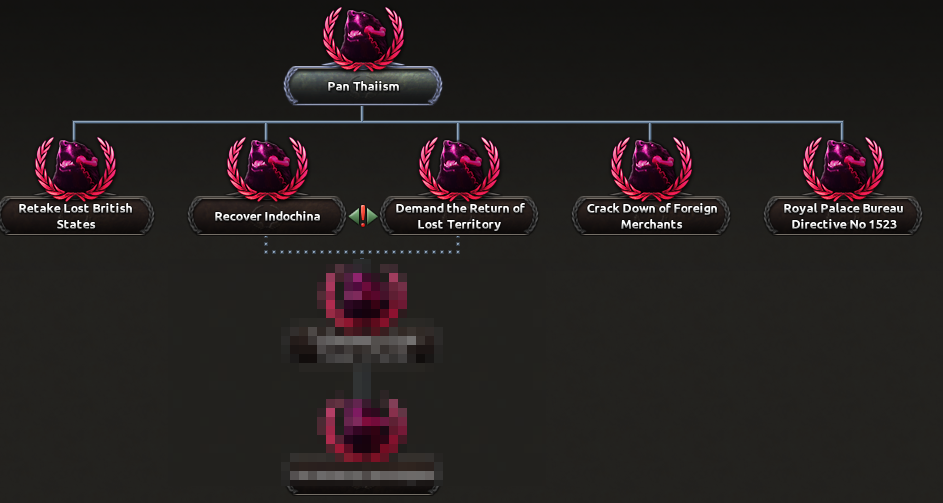
The current draft of the Pan-Thaiism subtree facilitates the reclamation of lost territories through these localized engagement mechanics.
A Grounded Regional Power Fantasy
A common sentiment was the desire for a “historically grounded” experience. We agree that Siam’s gameplay should focus on becoming a dominant regional influencer—comparable in scope and flavor to nations like Hungary, Romania, or Sweden—rather than pursuing far-fetched world conquest scenarios or the restoration of long-dead states.
Internal Factional Friction
The internal politics of the Khana Ratsadon, divided between its Military and Civilian wings, is a core pillar of the expansion. Many of you asked how this rivalry would be simulated. Here is a look at the mechanical framework currently in development.
Rather than utilizing a standard “Balance of Power” slider, we are representing these factions through two distinct national spirits. Your leadership style will influence your standing with each wing independently; you might find yourself bolstered by military loyalty while simultaneously facing civilian opposition.
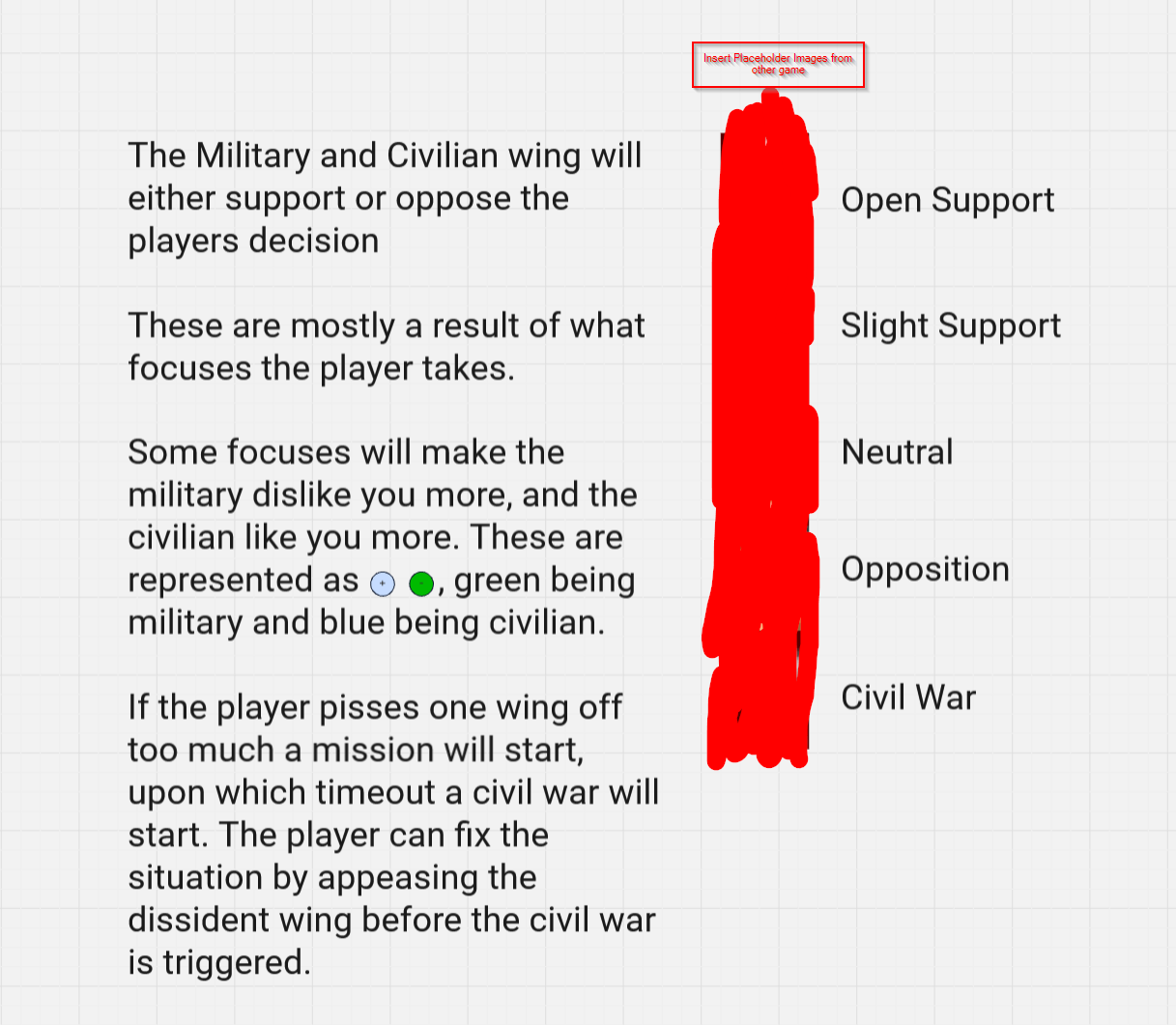
In-game indicators show how specific actions improve (+) or degrade (-) your standing with the military wing.
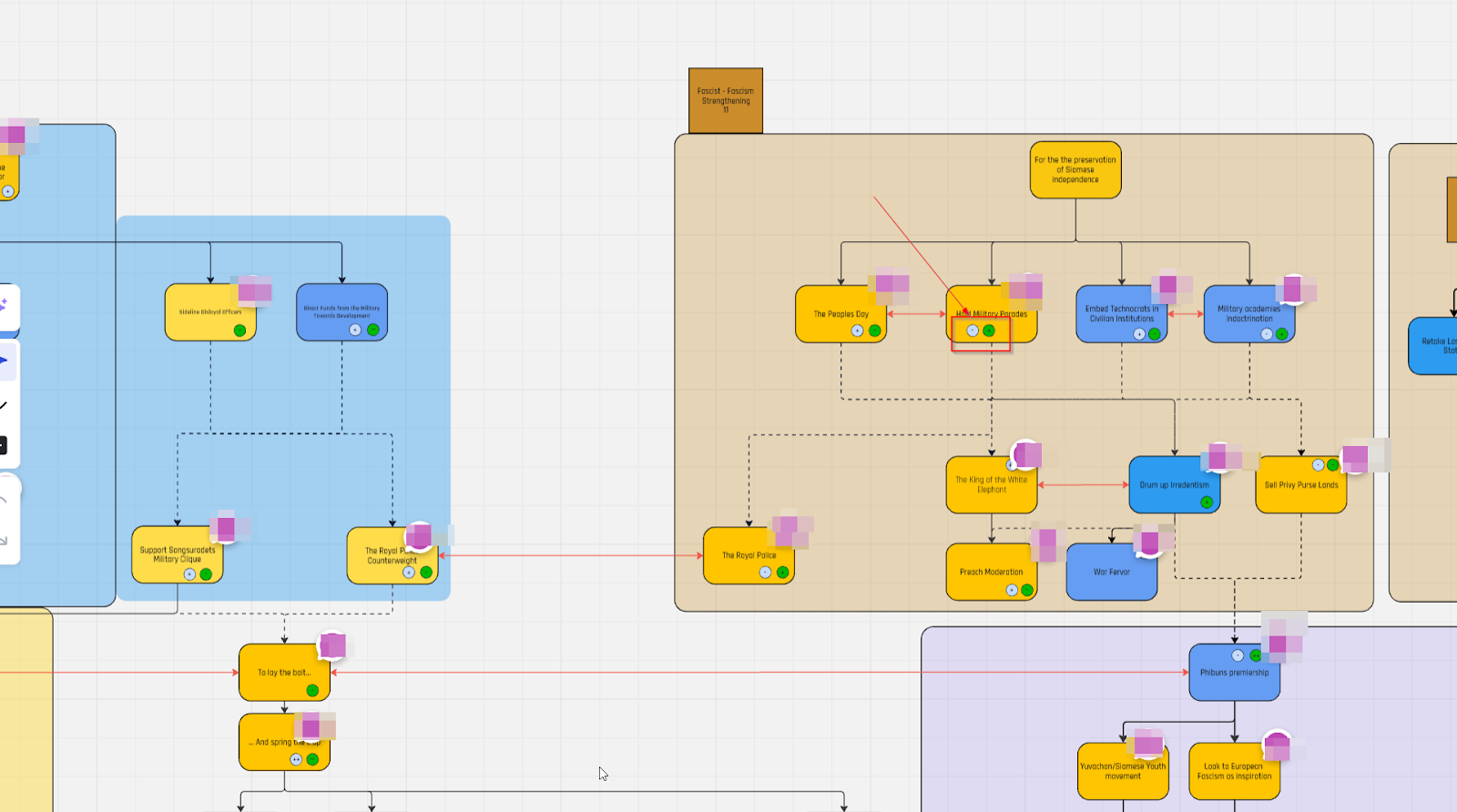
Early design mock-up: Hosting a military parade pleases the army but alienates the civilian administration. Conversely, liquidating royal assets may aggravate both. Appointing Phibun grants a significant boost to military favor.
The early game focuses heavily on navigating this internal friction. As the campaign progresses into the mid-game, players will work to cement their authority, allowing one wing to become dominant so the nation can pivot its full attention toward the impending global conflict.
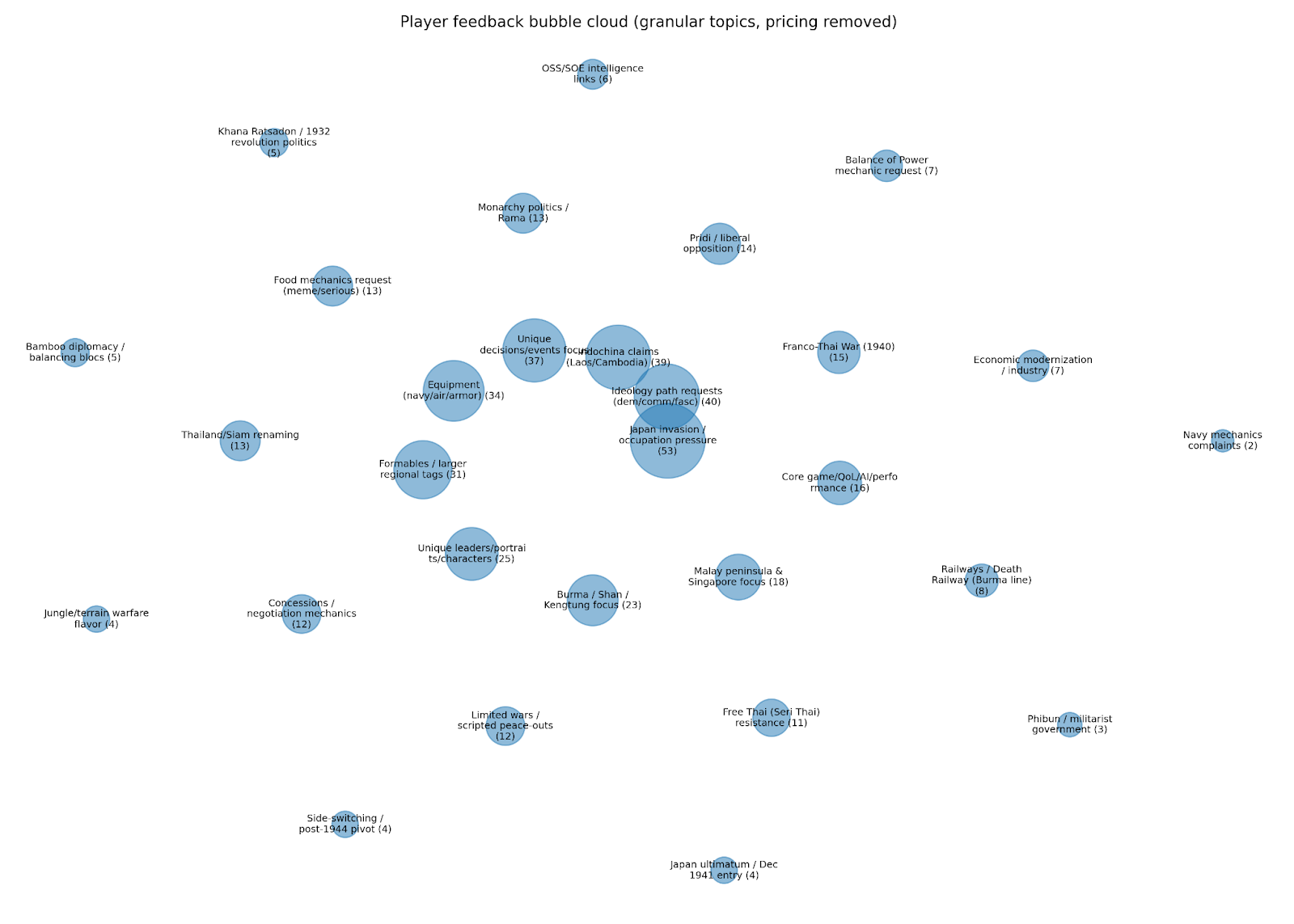
We have been meticulously tracking the discourse across Steam, Reddit, and our official forums to ensure we’re heading in the right direction.
What are your thoughts on these mechanical shifts? We look forward to hearing more from you!
Next: Dev Corner 2601003 – Thunder at our Gates
Related articles
 HOI IV Developer Diary | Romania: A Flawed Democracy
 Developer Corner & Open Beta: Energy #2
 Hearts of Iron IV Dev Corner | Strikes!
 Hearts of Iron IV Dev Corner: Old Canada Questions Before New Canada
 Hearts of Iron IV Dev Corner | Energy
 Steam Autumn Sale 2026
 HOI IV Dev Corner | The Great Depression
 Hearts of Iron IV | Patch 1.19.3