Catch Lost’s Unforgettable Christmas Episode Before It Leaves Netflix

Every Christmas night, once the children are fast asleep and my wife has found rest on the sofa, I silence the standard holiday fare and navigate to Netflix for a specific ritual: watching “The Constant.” This standout fifth episode of Lost season 4 has become my personal seasonal tradition.
While many spend their winter break revisiting cinematic staples or catching up on Stranger Things, I find myself returning to a 17-year-old hour of television for the countless time. This year feels particularly poignant, as Lost prepares to exit the Netflix library by the month’s end.
In the realm of holiday viewing, “The Constant” occupies the same space as Die Hard—its connection to Christmas is largely incidental to its timeline. Yet, annually, it serves as a profound reminder of the show’s initial brilliance. Beyond the labyrinthine sci-fi mysteries and temporal mechanics, the series is fundamentally a character-driven odyssey about the grueling process of personal evolution and the weight of one’s history.
Desmond Hume is the eye of that narrative storm. While much of the show explores the fractured psyches of protagonists like Jack, Kate, and Sawyer, Desmond’s journey is anchored by an unwavering devotion. He doesn’t endure the island’s trials by reinventing himself; he survives because he refuses to let go of his emotional lodestar: Penny.
At the time of its premiere, Lost was synonymous with the “mystery box” format. Following the seismic shift of the season 3 finale—where a disheveled Jack famously demanded they return to the island—the fourth season introduced “flash-forwards” to disorient the audience. This narrative experimentation reached its zenith in “The Constant.”
Desmond, initially introduced as the isolated guardian of the Swan station, transitioned from a tragic supporting figure to a cornerstone of the ensemble. By season 4, his character arc became the emotional heartbeat of the survivors’ struggle to escape.

In “The Constant,” a helicopter journey through a localized atmospheric anomaly causes Desmond’s consciousness to oscillate violently between the present day of 2004 and his military service in 1996. The beauty of the episode is that it functions effectively as a standalone story; the intricate lore of previous weeks fades into the background, leaving a crystalline focus on the characters. It utilizes a sophisticated sci-fi premise not to complicate the plot, but to amplify its core themes.
The majority of Lost is defined by transformation—often of the involuntary and painful variety. The island serves as a crucible, stripping away pretenses to reveal the true self. It’s a Shakespearean exploration of identity, contrasting who we pretend to be with our fundamental nature. Desmond, however, operates on a different frequency.
While his peers are driven or haunted by trauma, Desmond is tethered by love. Penny Widmore isn’t merely a romantic interest; she is the singular axis upon which his world turns. When he becomes “unstuck in time,” much like the protagonist of Vonnegut’s Slaughterhouse-Five, his survival depends entirely on his conviction that someone is waiting for him on the other side of the temporal divide.
The revelation that Penny has spent years searching for him elevates the episode from a clever genre piece to a masterpiece of emotional storytelling. While the audience knows of her devotion, Desmond lacks that certainty. The episode isn’t truly about the mechanics of time travel; it’s about the terror of existential displacement. Desmond is told he needs a “constant”—a fixed point of emotional significance—to prevent his mind from unraveling. Penny is his only choice.
Flash back to 1996: Penny is disillusioned and wounded, her relationship with Desmond fractured by his own insecurities and her father’s disdain. When Desmond appears at her home, he doesn’t seek immediate reconciliation. Instead, he admits his faults and asks for a single act of faith.

He asks for her new phone number, promising to call on Christmas Eve eight years in the future. He recites the digits like a prayer, desperate to commit them to memory before the next jump. There is no guarantee she will answer; at that moment, she is still consumed by resentment. The stakes are impossibly high, as failure to connect means a literal psychological collapse.
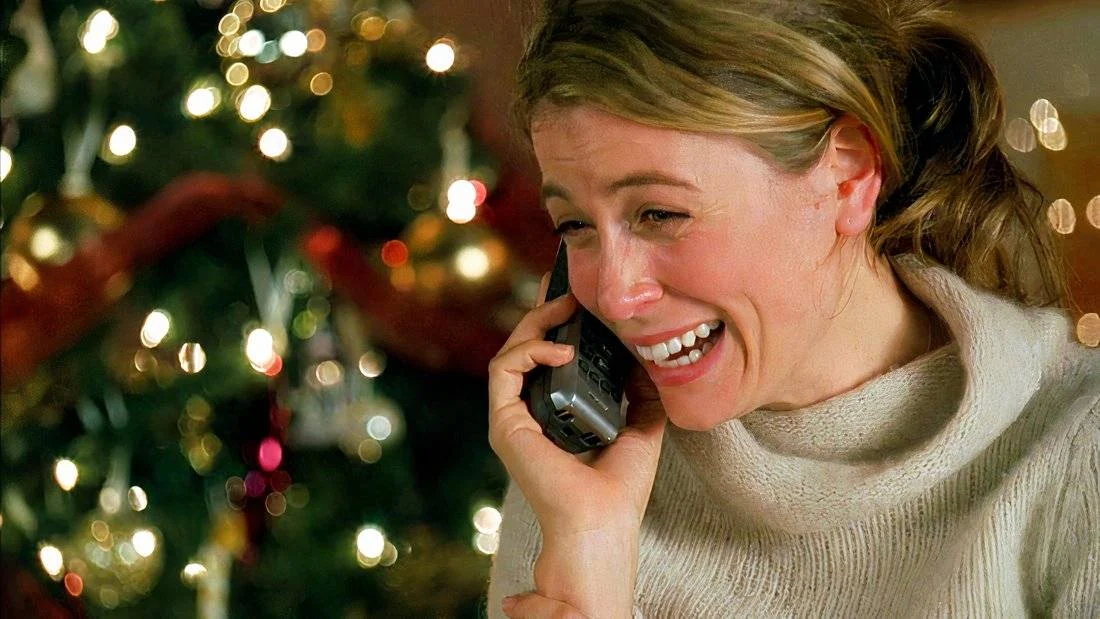
The tension of the 2004 timeline is palpable. As the phone rings, Desmond’s life hangs in the balance while a hostile freighter crew attempts to breach his location. The moment Penny answers remains one of the most cathartic instances in television history. The sci-fi elements vanish, replaced by the raw, tearful reaffirmation of their bond. It’s a scene that suggests love is not just a feeling, but a deliberate act of persistence and a leap into the unknown.

For me, revisiting “The Constant” annually has evolved into a meditative experience. It’s a quiet, reflective window that opens once the holiday noise has subsided. For 43 minutes, I am reminded that the true essence of the season lies in the connections we maintain and the vulnerability required to cherish them.
While the Netflix chapter of this tradition may be closing, the show’s availability on other platforms ensures the ritual will survive. Nevertheless, there is a certain melancholy in the end of this specific streaming era. I will watch it one last time on Netflix this Christmas, letting it serve as a reminder that holding onto those who matter is the most essential thing we can do—a message that rings true well beyond the holidays.
Source: Polygon
Related articles
 Devil May Cry Creator Reveals His Biggest Fear Beyond the Death of Physical Discs
 Journalists Praise Silent Hill: Townfall Demo
 Developers Say Tomb Raider Catalyst Retains 2013 Trilogy Lara Croft
 Ori Creator Evaluates Media Scores and Notes Discrepancies With Player Opinions
 Saros to Receive Free Expansion with New Modes and Secrets
 Bodycam 0.8 Locked & Loaded adds Trenches map and 400 weapon attachments
 Ghost of Yotei Reportedly Preparing Large DLC with New Story and Most Wanted Mode
 Square Enix Announces Final Fantasy VII Remake Collector’s Edition Including Three Games and Large Figure