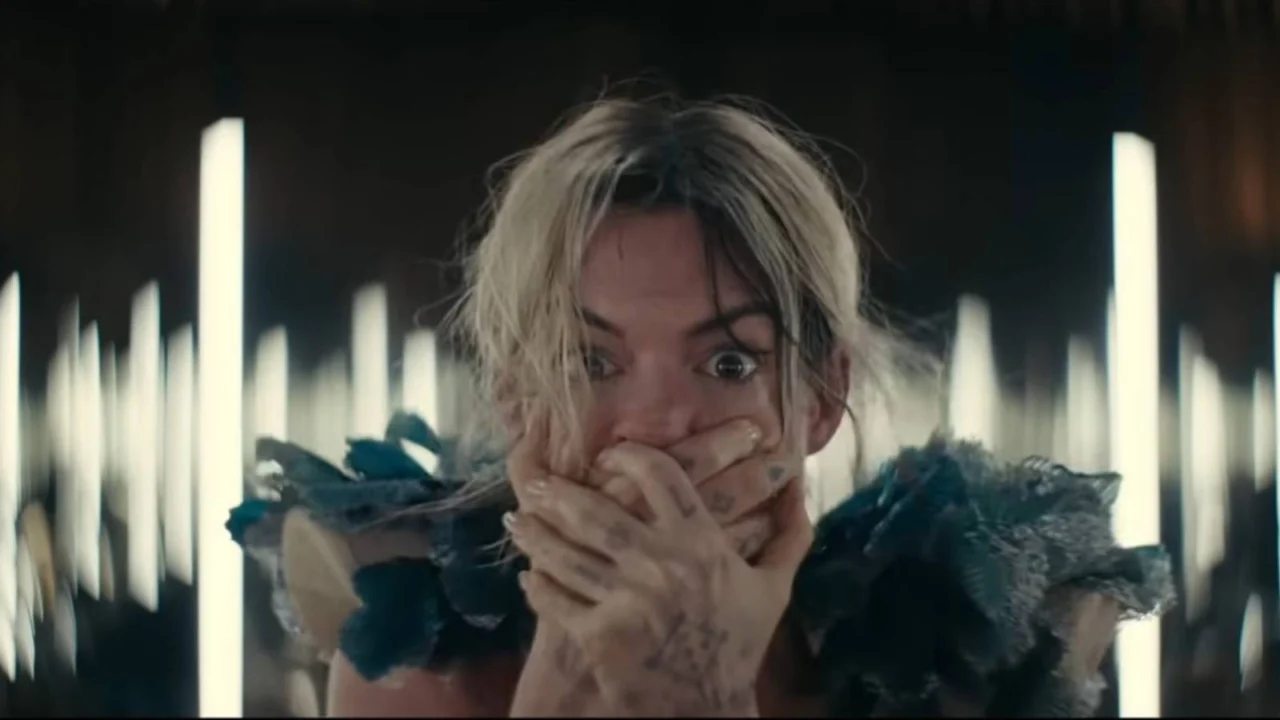
Anne Hathaway’s Trippy New Horror Thriller Is a Ghost Story Unlike Any Other

“This is not a ghost story,” a title card insists during the trailer for David Lowery’s surreal new feature, Mother Mary. It is a compelling hook, though perhaps a disingenuous one given the filmmaker’s resume—most notably his meditative exploration of mortality, A Ghost Story. While skeptical audiences might dismiss the disclaimer as clever marketing, the film reveals that Lowery isn’t lying so much as he is redefining the landscape. Throughout his career, he has obsessed over the spectral without succumbing to the tired tropes of the horror genre. He remains our most dedicated ghost-storyteller who staunchly refuses to craft a traditional horror flick.
Despite the protestations of its marketing, Mother Mary skirts closer to the macabre than any of Lowery’s previous ventures. The narrative unfolds with the intimacy of a stage play, centering on the rekindled connection between estranged confidantes: pop superstar Mother Mary (Anne Hathaway) and high-fashion visionary Sam Anselm (Michaela Coel). Their reunion in a sprawling, desolate farmhouse is fraught with the tension of their past creative fallout, as Mary arrives on Sam’s doorstep seeking a wardrobe for a high-stakes comeback performance.
The horror in the film is slow-burning. The reunion shifts from a psychological sparring match into something akin to a spiritual purging, as both women disclose their encounters with a malevolent presence manifested as a writhing, crimson-dyed fabric. This entity feels like an extension of their own trauma; for Mary, it represents the aftermath of a public breakdown that scarred her both physically and professionally. While the entity lacks a traditional monstrous form, Lowery uses this undulating spectral cloth to externalize the anxieties of artistic creation, the weight of buried memories, and the suffocating nature of their shared history.
Lowery’s interest in these “haunted” dynamics is well-documented. In The Green Knight, he challenged the boundaries between the living and the spirit world through Sir Gawain’s encounter with Saint Winifred. When asked if she is a spirit or a corporeal being, she simply replies, “What is the difference?” It’s a quintessential Lowery moment: the supernatural exists alongside the mundane, demanding our attention without requiring a label.
Ultimately, these films suggest that ghosts are neither purely malevolent nor strictly metaphorical. Whether it is the sheet-clad figure witnessing the slow churn of time in A Ghost Story or the shifting, fabric-based entity in Mother Mary, Lowery treats these occurrences as an inherent, if unsettling, fact of existence. His ghosts don’t just jump out from the shadows; they serve as a mirror for the grief and ambition that we, as living beings, find impossible to shake.
Mother Mary is currently in theaters. The Green Knight is available to stream on HBO Max, and A Ghost Story can be found on major VOD platforms.
Source: Polygon
Related articles
 Masashi Kishimoto Announces New Naruto Manga Continuation with Teaser
 Amazon Releases First Trailer for Blade Runner 2099 Series
 New Naruto Anime Does Not Meet Fan Expectations
 One-Punch Man Season 3 Trailer Criticized by Fans Over Animation Quality Ahead of 2027 Release
 Amazon Developing New Stargate Series with WandaVision Creator
 New Trailer Released for The Apothecary Diaries Anime Film
 Dr. Stone Creators Announce Continuation After Final Season
 Charlie Cox Mocked Mike Colter Over The Defenders Leak