
A Decade Ago, Dan Harmon Revived a Brilliant Director’s Career by Producing His Darkest Film
The most incisive jab ever leveled at visionary auteur Charlie Kaufman occurred precisely during a fallow period in his career. By 2010, Kaufman hadn’t released a feature since his directorial debut, Synecdoche, New York, failed to find an audience. It would be another half-decade before his next project surfaced. In the interim, Community creator Dan Harmon decided to pull Kaufman back into the cultural zeitgeist for a bit of affectionate mockery.
In the fifth season episode “Messianic Myths and Ancient Peoples,” Shirley (Yvette Nicole Brown) commissions her classmate Abed (Danny Pudi) to produce a viral faith-based video. However, the modest assignment quickly spirals into a convoluted meta-textual exploration of the nature of creation itself.
“In the filmmaker’s film, Jesus is a filmmaker trying to find God with his camera,” Abed observes. “But then the filmmaker realizes that he’s actually Jesus and he’s being filmed by God’s camera, and it goes like that forever in both directions like a mirror in a mirror, because all of the filmmakers are Jesus and all of their cameras are God.”
Shirley’s exhausted retort is legendary: “Come on, Charlie Kaufman, some of us have work in the morning, damn!”
While Kaufman’s name serves as a convenient shorthand for cerebral, self-reflexive cinema—typified by masterpieces like Eternal Sunshine of the Spotless Mind and Being John Malkovich—the parody was clearly rooted in admiration. Just a few years later, Harmon would play a pivotal role in revitalizing Kaufman’s career by producing what is arguably his most intimate and poignant work: Anomalisa.
Produced by Harmon’s Starburns Industries and debuted by Paramount on December 30, 2015, Anomalisa originated as a stage play. The narrative centers on Michael Stone (David Thewlis), a weary customer service expert on a mundane business trip to Cincinnati. Michael is afflicted by Fregoli delusion, a psychological condition where he perceives everyone else as the exact same person. While often linked to paranoia, here the condition serves as a metaphor for Michael’s profound existential boredom. He moves through a world where every face and voice (provided by Tom Noonan) is indistinguishable, rendering his reality a monochromatic blur of sameness.
His monotonous existence is disrupted when he encounters Lisa (Jennifer Jason Leigh), an unassuming woman who possesses a unique face and a distinct voice. Their brief, tender connection in a hotel room leads to a revelation that redefines Michael’s perspective—though the impact is best experienced firsthand.
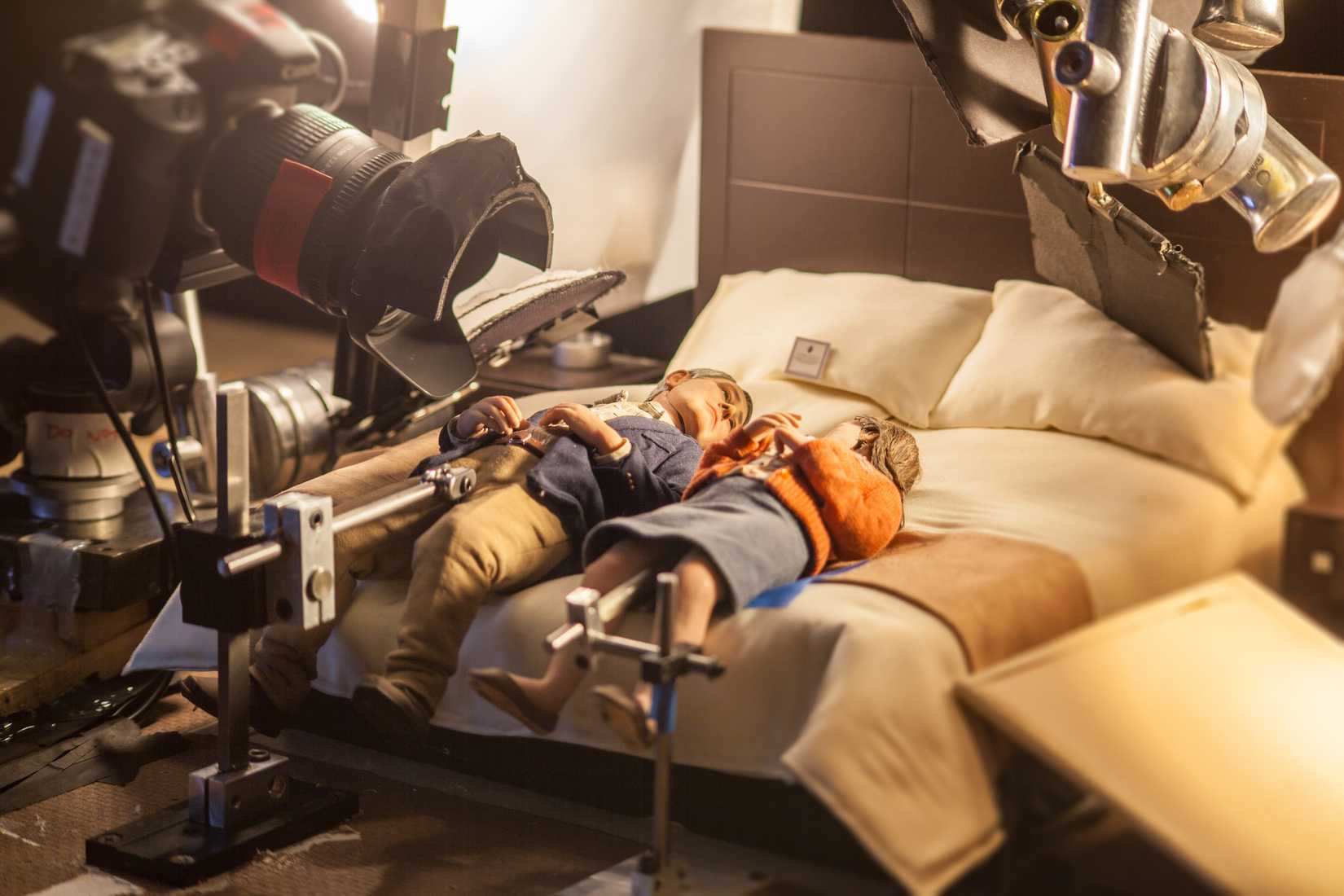
Initially performed as a “sound play” where actors read scripts live, Anomalisa derived much of its wit from the dissonance between the story’s gravity and the mechanics of the performance. Seeing Noonan voice every ancillary character added a layer of absurdist comedy, while the strikingly realistic sex scene felt entirely different when performed by actors seated feet apart on a stage. In a 2015 discussion with Den of Geek, Harmon praised the script as “the best thing I’d ever seen written in any medium, period.”
Translating this staged experience to cinema was a daunting prospect that Kaufman initially resisted. He eventually embraced the idea of using stop-motion animation, utilizing uncannily lifelike puppets. For Kaufman, this medium amplified the existential themes prevalent in his filmography.
“The fact that they’re puppets being manipulated becomes an existential issue as well,” Kaufman explained to The Guardian. “You know someone’s manipulating them—they don’t know it.”
(To echo that aforementioned sitcom: “Come on, Charlie Kaufman, some of us have work in the morning, damn!”)
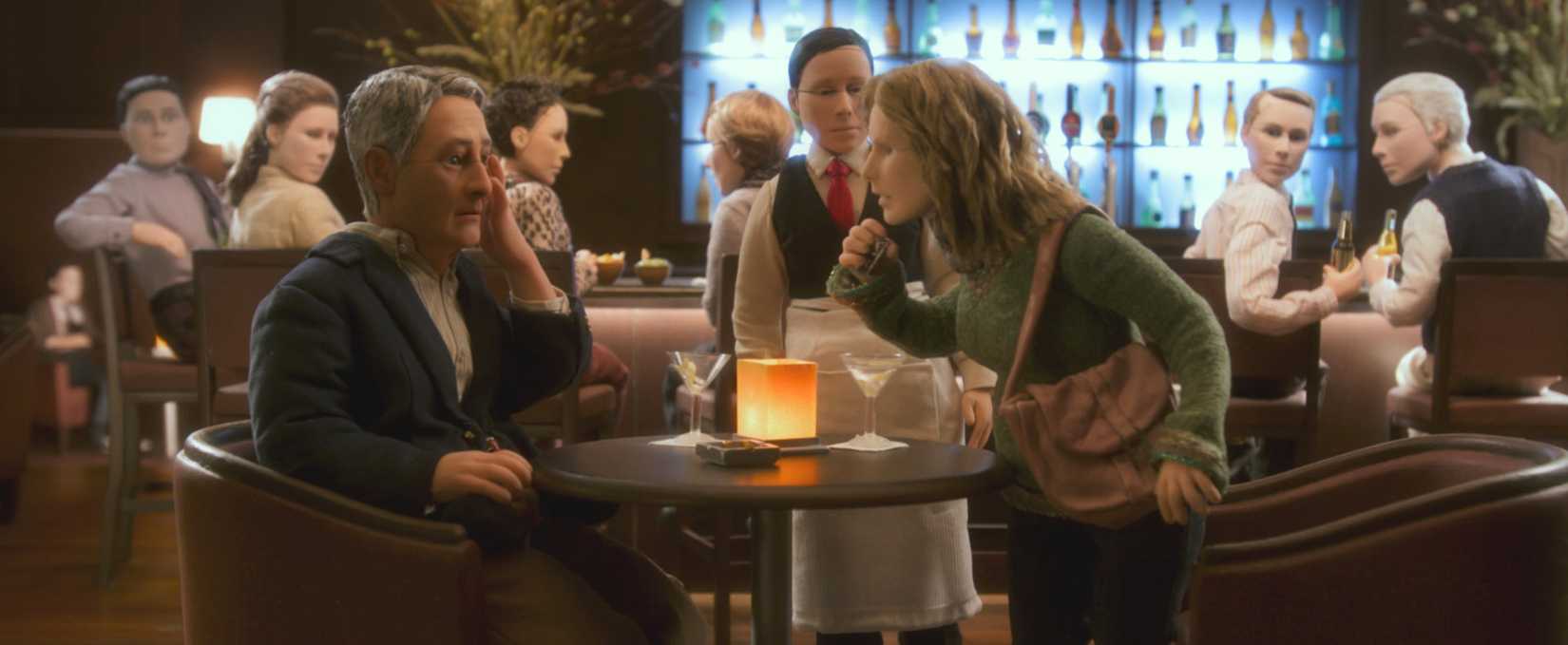
Anomalisa received glowing critical praise but struggled to turn a profit on its $6 million budget. Compared to his more famous works, it remains a somewhat hidden gem. Kaufman eventually returned to the live-action realm with 2020’s I’m Thinking of Ending Things. Though its streaming metrics remain opaque, one hopes the project provided Kaufman with the stability he deserved after the meticulous labor of stop-motion.
Reflecting in 2015, it was clear that the tepid commercial reception of Synecdoche, New York still weighed heavily on him.
“It would have been better if it had been a commercial success, because it would have made my professional life afterward easier,” he admitted. “I’ve been writing and struggling to get stuff made since then. It’s not like I’m just sitting here, but it’s been hard.”
In the decade since, one hopes the path has smoothed. As one of the most distinctive voices in modern cinema, the world needs more of Kaufman’s singular vision—even if his most profound reflections are born from his most challenging periods.
Source: Polygon
Related articles
 New Bodycam Version Shows High Level of Realism in Footage
 Acer Introduces Project DualPlay Mini Portable Console Concept That Converts into a Mini Laptop
 Hi-Fi Rush Developer Mocks DLSS 5
 Acer Announces Predator Atlas 7 Handheld PC with 7-Inch Display
 Xbox Clarifies Reason Behind Fable Protagonist Design
 Mana Ashida to Star as Maomao in Prime Video’s The Apothecary Diaries Series
 Witcher 3 Voice Actor Discusses Returning to Record for Expansion
 Xbox Announces Monthly Hour Limits To Cloud Gaming Are Coming In November