
50 Years Ago, Marvel’s Most Overlooked Superhero Team Debuted—And Changed Comics Forever

After co-architecting Marvel’s most iconic heroes—from Captain America and Thor to the Incredible Hulk and the X-Men—a creatively stifled Jack Kirby parted ways with the publisher in 1970 to join its primary competitor, DC Comics. There, he poured his ambition into The Fourth World, a sprawling saga involving hidden deities navigating human history. Following the conclusion of that venture, Kirby returned to the House of Ideas in 1976. Soon after, The Eternals emerged, with their debut issue arriving in April 1976—exactly 50 years ago.

The Eternals shared much of the thematic DNA found in The Fourth World. Both narratives possess a grand, epoch-spanning scale, focusing on ancient pantheons whose enduring rivalries threaten the modern world. These stories masterfully blend mythology with science fiction, featuring distinct symbolic archetypes—for instance, Sersi functions as a manifestation of the Greek Circe, while Orion parallels the martial nature of Ares.
Despite these parallels, the two series differ significantly in execution. The Eternals focused on an ageless race of super-powered beings engineered by the Celestials, cosmic entities who essentially act as the architects of the Marvel Universe. Regrettably, the original series suffered a short lifespan, concluding after only nineteen issues. Numerous attempts to revive the franchise have followed over the decades, yet none have maintained lasting momentum—a struggle perhaps mirrored by the lackluster reception of the 2021 Marvel Studios film adaptation.
While the Eternals may not currently hold a top-tier spot in the mainstream zeitgeist, Kirby’s original vision remains compelling. The team and its complex lineage are surprisingly essential to the broader narrative tapestry of Marvel Comics and the MCU.
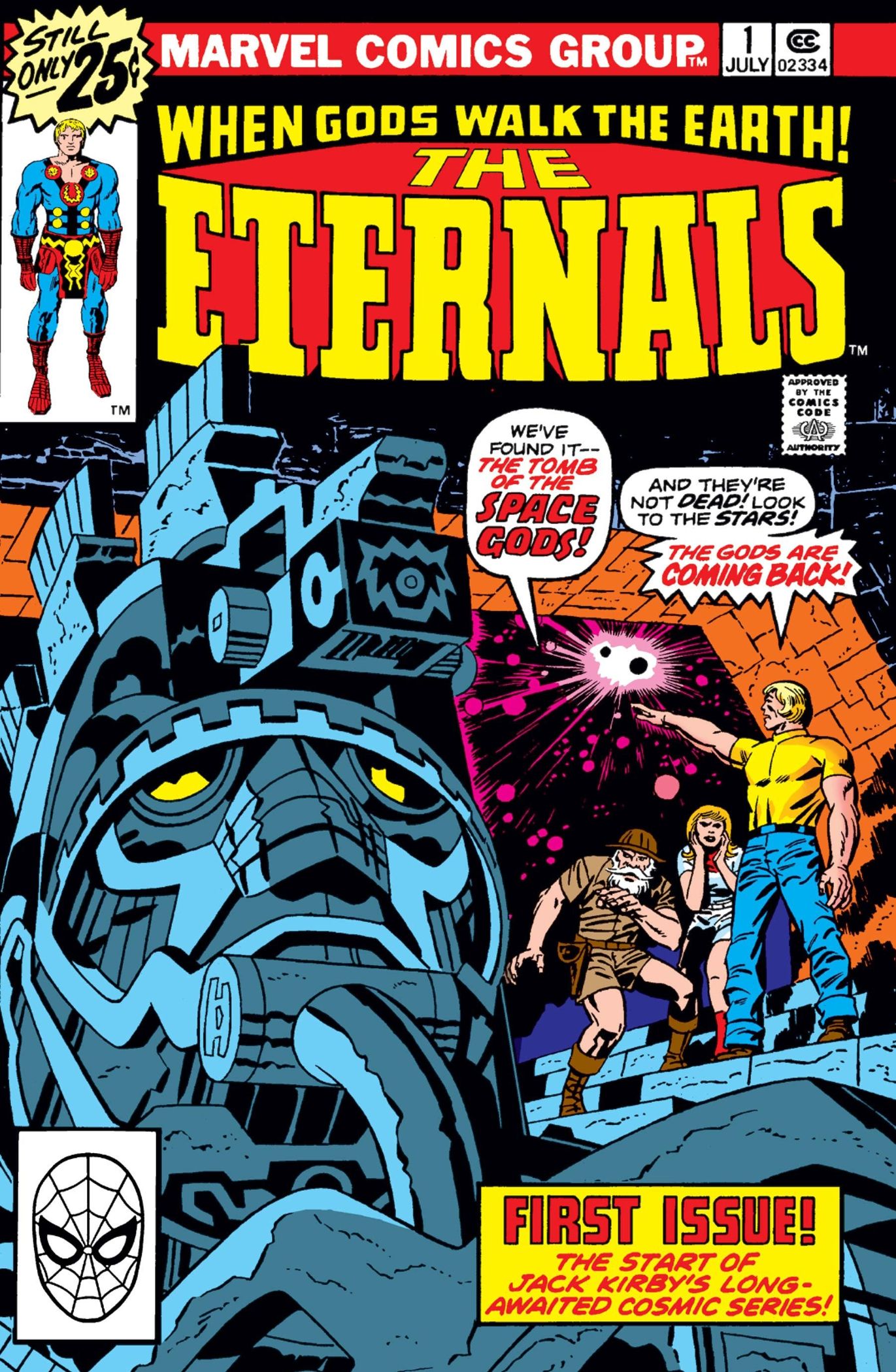
Image: Jack Kirby/Marvel
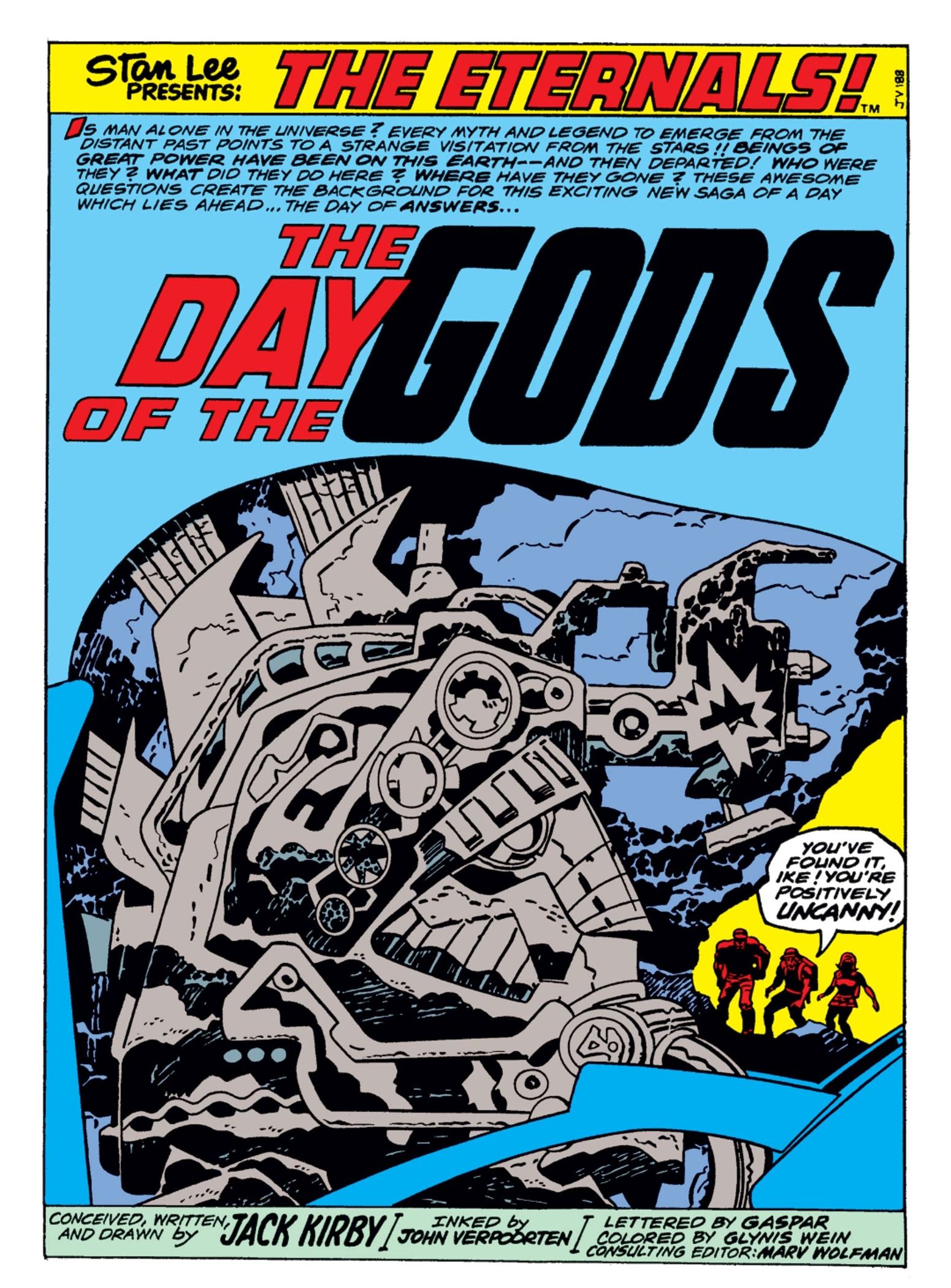
Image: Jack Kirby/Marvel
Kirby drew inspiration for this project from Erich von Däniken’s highly contentious but culturally impactful book, Chariots of the Gods?—a work that popularized the pseudoscientific theory that humanity’s greatest architectural achievements were the result of extraterrestrial guidance rather than ancient ingenuity. While these theories have been firmly debunked by historians, they provided a fertile foundation for Kirby’s comic.
The science may be shaky, but the narrative works beautifully in a serialized comic format. The debut issue introduces us to documentary filmmaker Ike Harris, whose earnest narrations echo Däniken’s claims. Through Harris and his archaeologist companions, the story unfolds the origins of the Marvel Universe, detailing how the mysterious Celestials visited Earth and genetically manipulated early hominids into three distinct lineages: humanity, the monstrous Deviants, and the god-like Eternals.
While the heavy exposition in the premiere issue might seem dense, Kirby’s signature visual flair, inventive concepts, and dramatic prose keep the pacing brisk. The panels are frequently punctuated by his iconic “Kirby Krackle,” and the series echoes the same cosmic grandeur that defined The Fourth World. It may not rank as Kirby’s magnum opus, but it certainly carries the monumental weight typical of his best work.
Because these ambitious ideas were cut short, the original run feels like a testament to missed potential. If you are looking to explore the source material, the original series is an essential, albeit bizarre, entry point. Following that, Kieron Gillen and Esad Ribić’s 2021 run is highly recommended; it is a masterful 12-issue narrative that skillfully bridges Kirby’s bombastic imagination with modern, nuanced character development. While the franchise has struggled to find a consistent foothold, this run stands out as a definitive modern interpretation.
Ultimately, The Eternals remains a fascinating chapter in comic history, marred by cycles of creative frustration and premature cancellations. Although it is unlikely the team will receive the same level of marketing push seen during the film’s release, rumors regarding their potential return to the MCU persist. Regardless of their film prospects, Kirby’s original issues remain vital reading, serving as a cornerstone for the foundational mythology of the Marvel Universe.
Source: Polygon
Related articles
 Gran Turismo 7 Developers Express Surprise That the Game Remains Popular
 Cosplayer Shares Zelda Costume from The Legend of Zelda: Tears of the Kingdom
 Street Fighter Movie Adaptation to Feature Anime Flashbacks Inspired by Akira and Ghost in the Shell
 Resident Evil Requiem Producer Explains Inclusion of Grace Ashcroft
 Ace Combat 8 Developers Confirm Success With New Trailer Despite PC Issues
 In a Violent Nature 2 Sets 2026 Release Date
 Tekken 8 Character Reina Coming to Fatal Fury: City of the Wolves in December
 The Equalizer Begins Streaming on Netflix