
Why the Ending of The Long Walk Matters
Francis Lawrence’s 2025 film of Stephen King’s 1979 novel The Long Walk largely honors the source material — until it deliberately diverges. JT Mollner’s screenplay expands the backstories and motives of several central figures, trims the field from 100 contestants to 50, and amplifies the propaganda machinery that sustains the Walk, clarifying why so many teenage boys volunteer for a government spectacle that will kill them if they falter.
Beyond those changes, the film keeps the novel’s characters, arc, and the fragile bonds formed between doomed boys intact — at least for most of its runtime. Then, in the final stretch, Lawrence and Mollner steer the story into a place that asks a hard question: which parts of the finale are literal, and which are imagined?
Ed. note: Spoilers ahead for both Stephen King’s novel and the film adaptation of The Long Walk.
How Stephen King’s The Long Walk ends
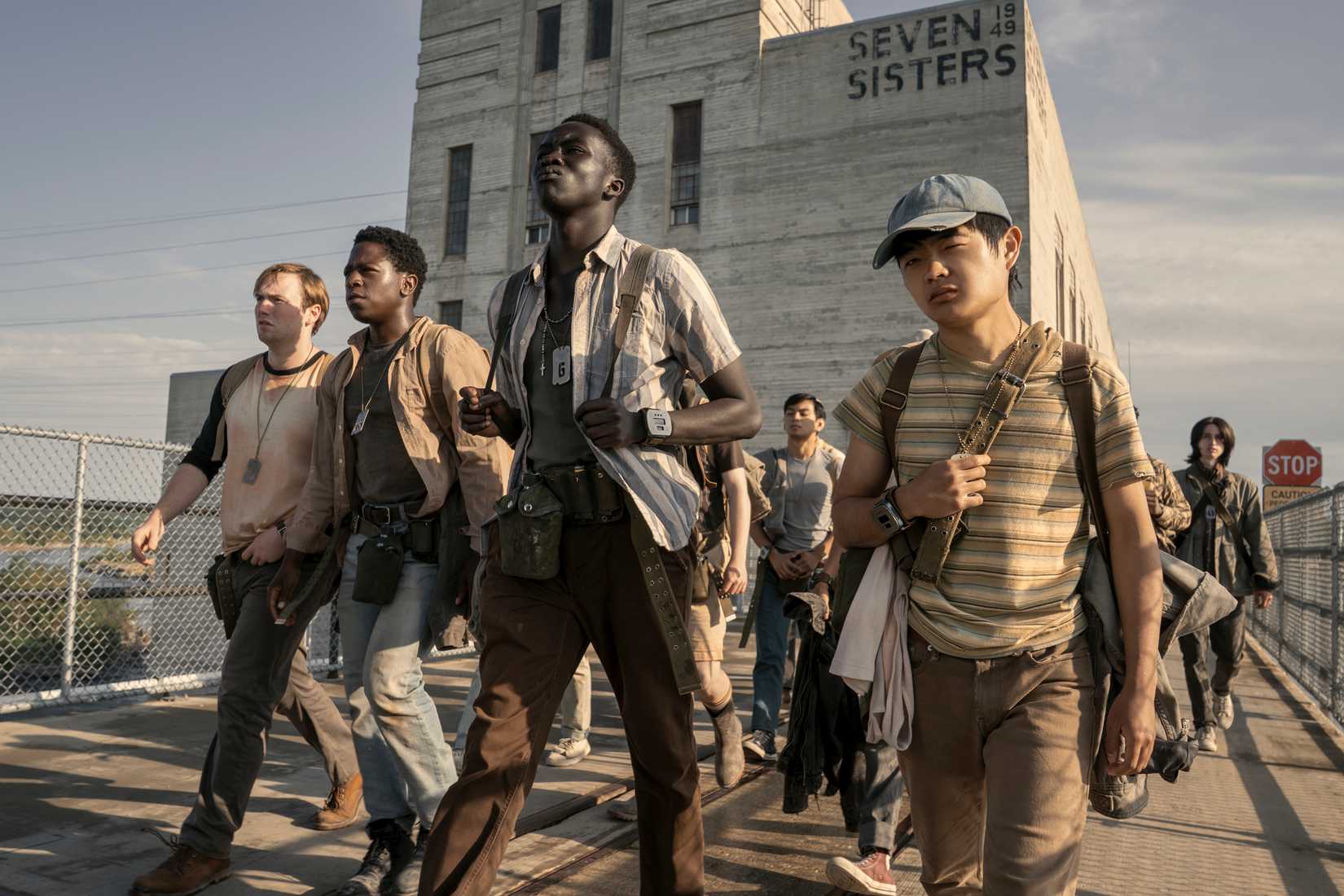
Stick with me — if you know only the book or only the film (or neither), this comparison will demand some detail. Skip ahead if you just want the “what’s real?” takeaway at the end.
In King’s novel, the Walk narrows to three boys: Ray Garraty (Cooper Hoffman in the movie), Peter McVries (David Jonsson), and the reticent Stebbins (Garrett Wareing). McVries, the compassionate protector, reaches his breaking point first and sits down, accepting his execution. That leaves Garraty and Stebbins to continue until Garraty, exhausted and broken, admits defeat; Stebbins suddenly collapses and dies. Garraty, too shattered to grasp that he’s the sole survivor, wanders on, hallucinating other walkers in the distance and unable to feel that he has actually won.
It’s a bleak, almost anticlimactic conclusion: a winner who can’t experience victory. Many readers praise the book’s emotional power but critique King’s tendency for abrupt endings — a reputation that follows him through his career.
The novel’s finale is spare and nihilistic; it leaves the survivor hollow. That ambiguity is what made me most curious to see how Lawrence — who directed multiple Hunger Games films — would stage the climax for the screen.
The Long Walk’s ending, book vs. film
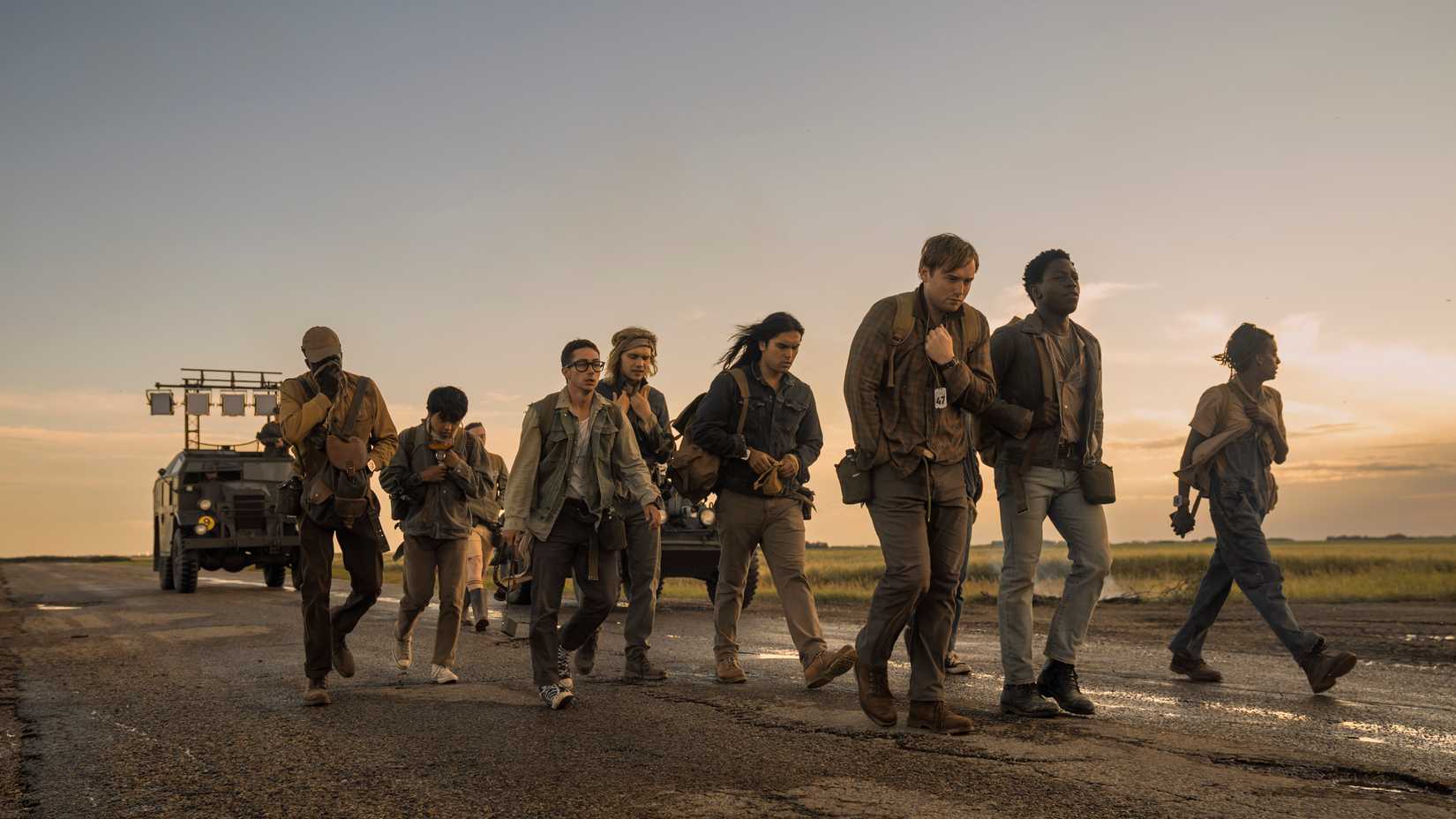
The film reconfigures the endgame. After Stebbins delivers his confession about why he joined the Walk and appears to refuse further theatrics for The Major (Mark Hamill), he turns and allows the soldiers to execute him. That leaves Garraty and McVries as the last pair — a setup that leans more toward emotional closure than the book’s bleakness.
King’s original choice to have McVries die before Stebbins isolates Garraty, stripping him of the last person he trusted and amplifying his emotional collapse. The movie instead stages a sequence where McVries appears willing to concede the Walk, and Garraty, who has long harbored a plan to demand a rifle and kill The Major, reacts in a way that ultimately subverts expectations.
On screen, when McVries falters, Garraty hugs and urges him forward; then Garraty slips behind and quietly stops walking, whereupon soldiers execute him before McVries notices. McVries is declared the winner, takes a rifle as Garraty planned, and shoots The Major. He then walks away — or at least the film lets us see him try to.
That sequence reads as more conventionally cinematic: it gives a satisfying arc of revenge and action, and it suggests the possibility of change after The Major’s death. Yet the film undercuts certainty by blurring the boundary between what happened and what might be imagined.
What’s actually real in the ending of The Long Walk?
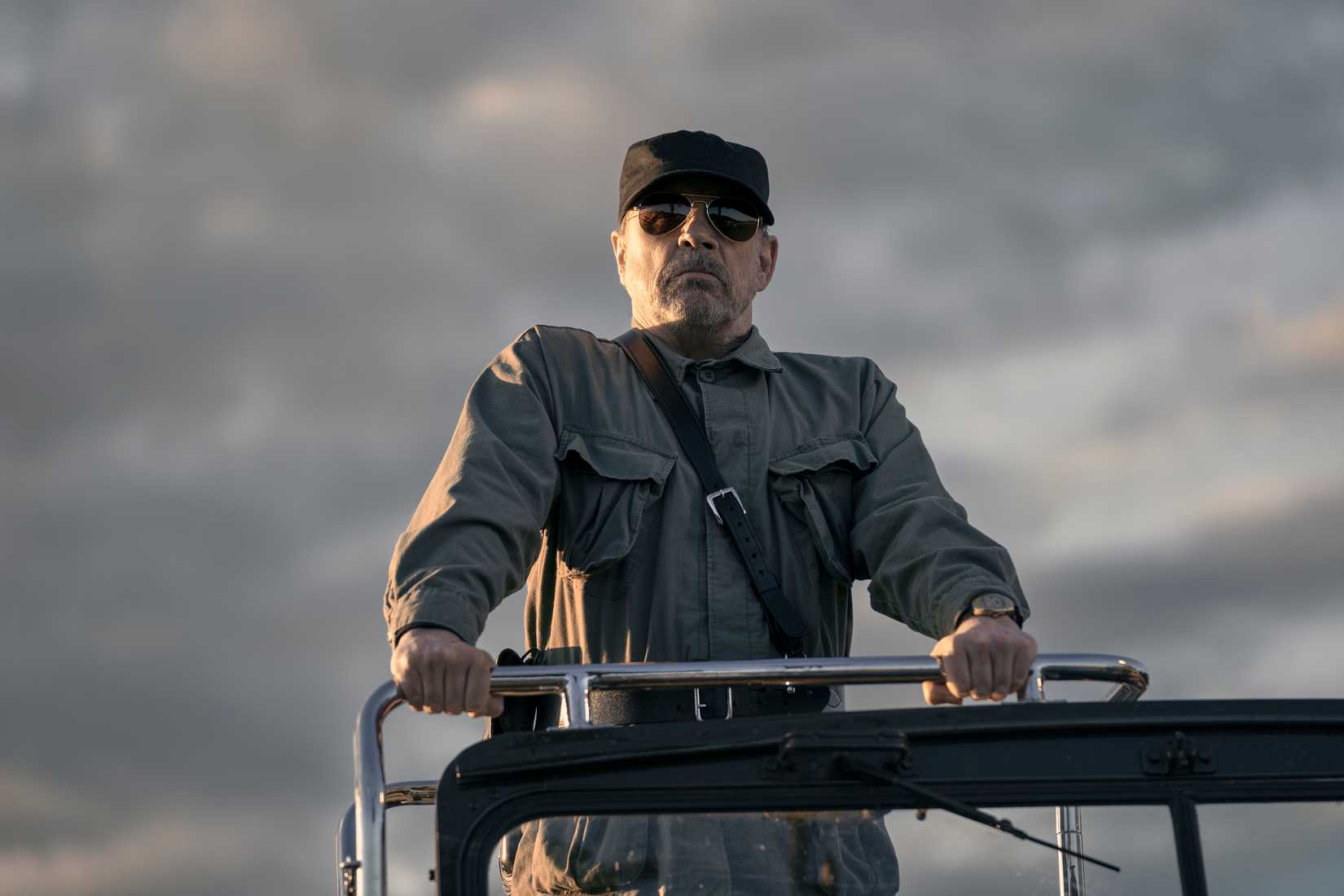
Up through Garraty’s death and McVries’ grief, the film reads as literal: those events land clearly on screen. After McVries takes the rifle and levels it at The Major, however, the presentation becomes dreamlike. Background noise and crowd reactions recede into an eerie silence, and the world around McVries loses detail and focus.
You can interpret that as subjective sound design — McVries’ tunnel vision at the climax. But the sequence goes further: the soldiers and onlookers offer no visible reaction to The Major’s assassination, no scramble, no retaliatory gunfire, no surge of chaos. The moment stretches past plausibility. The physical world seems to thin away, leaving McVries alone on a softly lit road. The film deliberately withholds confirmation of consequences.
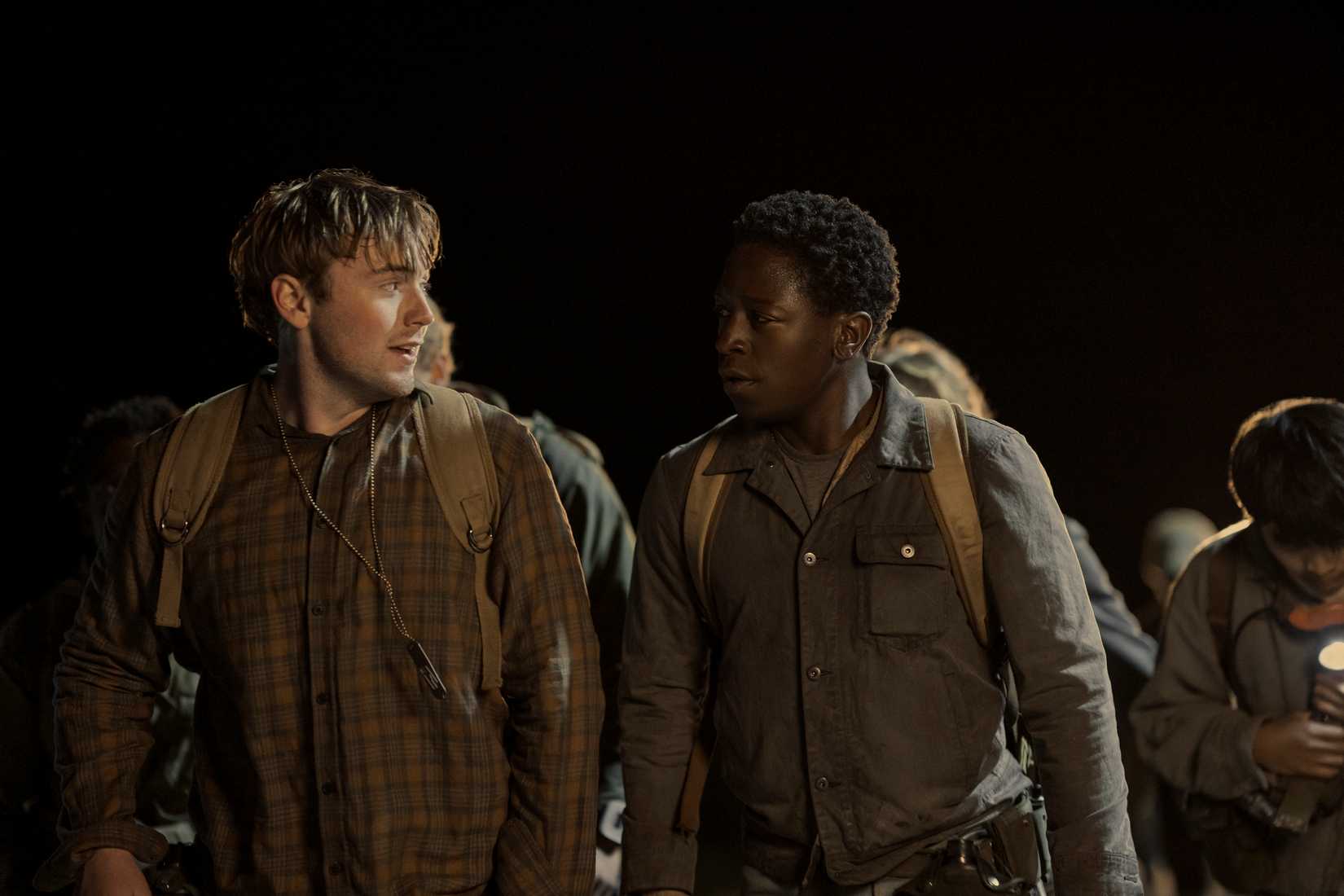
My read is that the film intentionally leaves the final sequence ambiguous: either McVries succeeds and the world around him momentarily dissolves into a metaphysical space, or he is killed almost immediately after firing and the soft-focus road is some postmortem limbo. Lawrence and Mollner refuse to show the aftermath, so the audience must choose an interpretation.
That ambiguity mirrors King’s book — a winner who doesn’t feel like one and a road that can be read in multiple ways. But while the book’s unresolved ending lands as existential emptiness, the film’s uncertainty leans cinematic, inviting viewers to decide whether the act of killing The Major changes anything in the real world, or only within McVries’ perception.
Whether that is a satisfying resolution depends on what you want: a clear catharsis, a bleak nihilism, or a haunting open question. The Long Walk delivers the latter, keeping the final moments deliberately, and powerfully, unsettled.
Source: Polygon
Related articles
 “The Bunker” starring Bardem and Cruz screened at Venice
 The Librarians: The Next Chapter Season 2 Has Concluded
 “The Mummy 4” filming has begun
 Urfin Jus Movie Announced
 Ellen Burstyn Receives Honorary Golden Lion
 Danny Boyle used artificial intelligence in his new film “Inks”
 Gary Oldman Reveals the Name of the New Bond
 Summer 2026 Becomes the Highest-Grossing Season in U.S. Box Office History