
Two Point Museum’s new DLC turned me into a manipulative monster
The Arty-Facts DLC for Two Point Museum, now available across all platforms, deposits you into a gritty industrial harbor with a modest $100,000 budget, a fragmented cubist triptych, and an artist whose creative output is exclusively dedicated to the theme of “love.” (Rest assured, this remains an E-rated experience—it is decidedly not that kind of art.) Your mission is to elevate these humble origins into a prestigious five-star institution. While this might sound like standard operating procedure, Arty-Facts offers far more than just familiar mechanics. Unlike the previous Zooseum expansion, which focused on new exhibit interactions, this DLC invites you to navigate the complexities of managing temperamental artists while refining your strategic layout to maximize visitor spending.
Every art expert arrives with a core specialty, tethered to a specific emotion that dictates the nature of their work. The results are often bizarre; for instance, a “love-themed” piece might manifest as a menacing, clawed purple hand with a cyclopean eye embedded in the palm. Surprisingly, the museum guests adore it, so who am I to judge? However, relying on a singular emotional output will only carry your museum’s popularity so far.
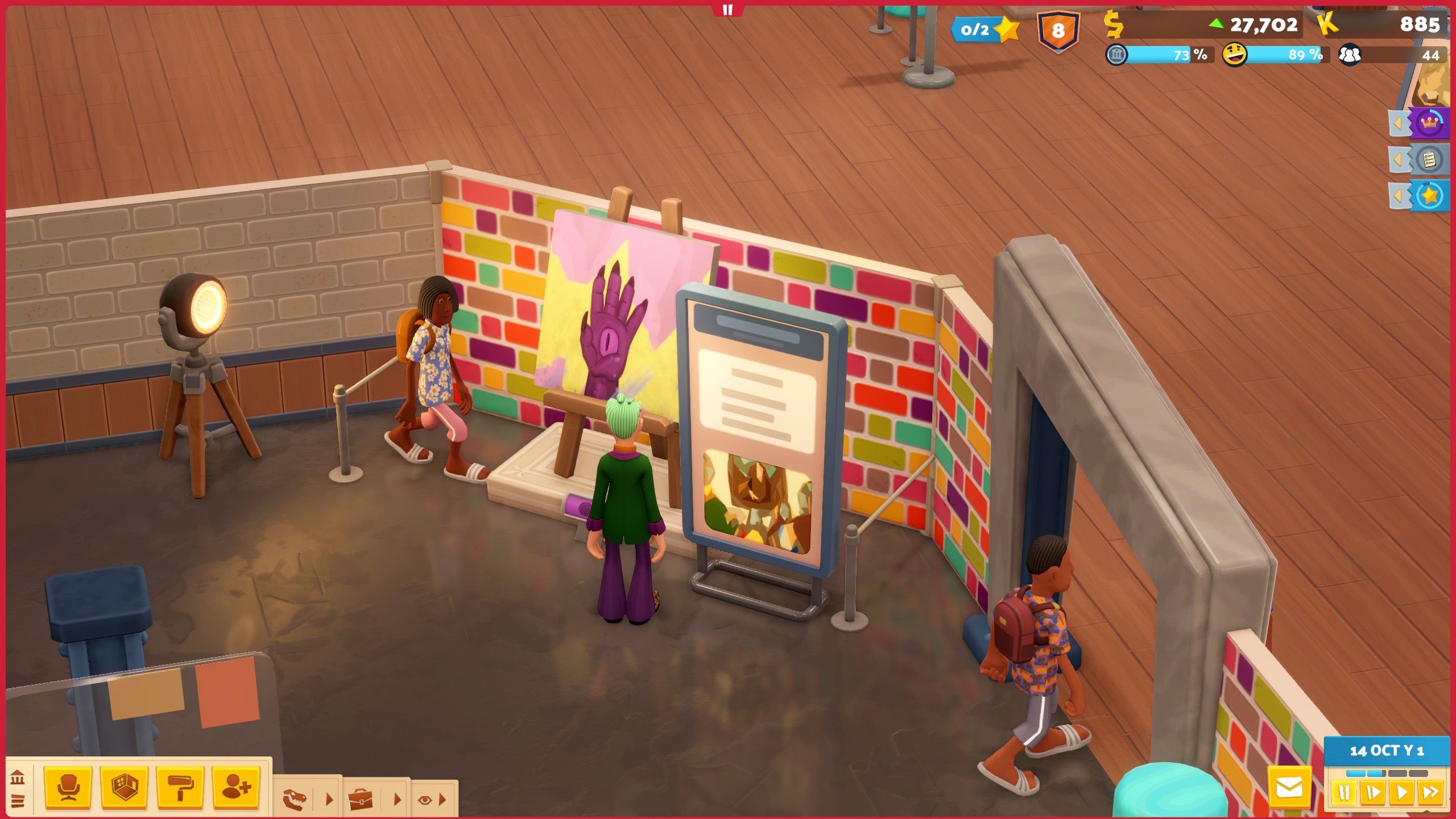
Commissioning pieces functions similarly to dispatching expeditions in the core game, yet your expert’s personal quirks and emotional state heavily influence the outcome. I currently employ a “technicolor” artist; while his exuberant use of paint drives up production costs, the resulting quality is exceptional, consistently padding my donation coffers. Other experts possess destructive tendencies or eccentricities that force you to be far more discerning about project alignment and professional development—a level of micromanagement previously unseen in the series.
Fiscal discipline is essential during the early stages of Arty-Facts. Much like the Zooseum expansion, overhead costs escalate rapidly. Between the steep price of commissioning original works and the inherent risks of standard expeditions—which occasionally yield worthless forgeries despite significant investment—you must manage your resources carefully. Your experts will travel to locations that inspired the museum’s founder, often returning with exquisite, rare artifacts. While these treasures impress the visitors, they won’t truly begin padding your donation buckets until the rest of your museum’s infrastructure is perfectly polished.
However, these costly expeditions are vital for long-term growth, as they provide the opportunities needed to teach your artists “emotional intelligence.” By sending an expert to a bleak, post-industrial site, for example, they might learn to capture melancholy in their work, turning their standard sky-scapes into evocative, sad-themed masterpieces. These themes extend beyond mere aesthetics; you can integrate themed artwork into unrelated galleries—such as science or horror exhibits—to generate buzz or entertainment bonuses. It is a brilliant expansion of the base game, encouraging a synergy between botany, history, and fine art that makes the design process infinitely more engaging.
The emotional manipulation system is arguably the most surprising addition. Initially, I dismissed it as a gimmick, questioning if controlling visitor overstimulation actually mattered. It turns out, it is a game-changer. You can leverage high ticket prices to fleece visitors, then steer them toward a rage-inducing exhibit to distract them from their expenses. Alternatively, you can curate a path toward gift shops that prioritize joy, allowing you to hike prices on merchandise without souring the experience. It is a ruthless business model, but an incredibly effective way to bolster your satisfaction ratings without overspending.
You aren’t forced to play this way, of course. You could simply curate a traditional gallery, but I’ve found the experimental layouts far more rewarding. Typically, I am a pragmatic, somewhat chaotic builder in management sims; my layouts are born from necessity rather than artistic intent. Arty-Facts, however, forces me to be deliberate. I now balance aesthetic harmony with cold, hard profit, ensuring my museum is as profitable as it is pleasing to the eye.
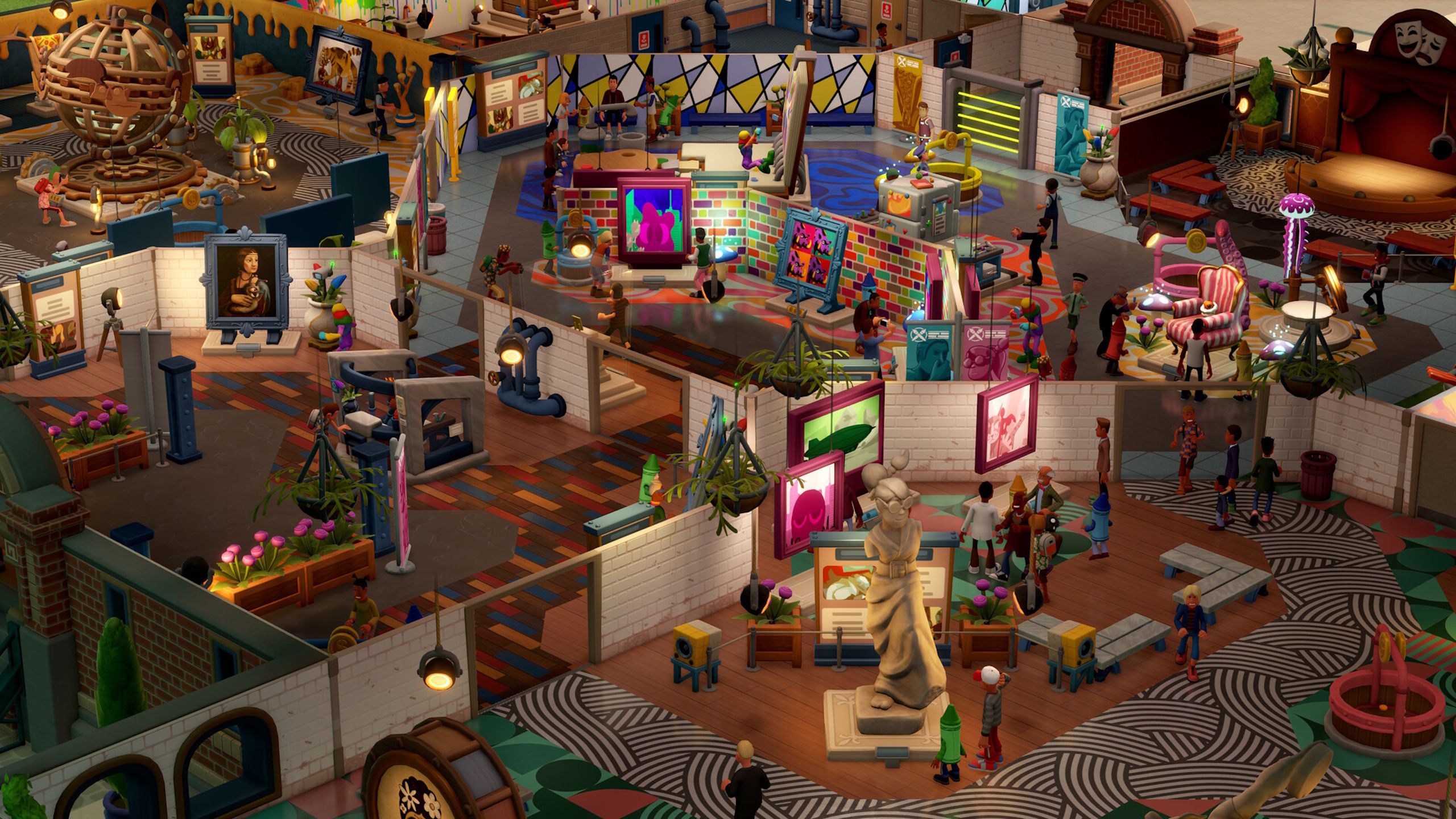
The wealth of new decorative assets—ranging from abstract, blobby sculptures to Art Deco wallpapers and psychedelic floor patterns—adds a fantastic layer of depth to the design suite. There are even some rather… suggestive crayon pillars, which certainly add a unique flavor. While the patrons might not discern between a bargain-bin decoration and a thematic masterpiece, the attention to detail is a personal delight.
I should be focused on securing my three-star ratings, yet I find myself obsessively planning for the future: mapping out a marine biology room accented with melancholic blue artwork, or perhaps integrating joyful, vibrant paintings into my botanical exhibits to lighten the mood after a run-in with man-eating fly traps. The possibilities for creative, albeit absurd, combinations are nearly endless.
I haven’t even fully explored the new live performance mechanics, where experts specializing in various theatrics take the stage. It offers a much more active form of entertainment compared to the passive experiences of the base game. It feels utterly ridiculous to host a mime performance next to a prehistoric dinosaur display, but in the world of Two Point Museum, where spring-loaded giraffes are the norm, why not? If the game can embrace such absurdity, why shouldn’t I?
Two Point Museum was already a standout simulation title, but Arty-Facts has proven that the developers still have plenty of innovation left in them. It captures the game at its absolute peak, offering a masterful reimagining of what you can accomplish within these familiar, virtual walls.
Source: Polygon
Related articles
 Gears of War 3 Can Now Be Fully Beaten on PC
 Bungie Outlines Marathon Development Plan Through March 2027
 Hideo Kojima Explains Why He Is Not Revealing Details About OD
 Buffy the Vampire Slayer Episode Inca Mummy Girl Turns 29
 Nolan North Expresses Readiness to Return as Nathan Drake in Uncharted 5
 Gameplay for Marvel Project COMET Leaks Online Ahead of Schedule
 Troy Baker Reflects on His Role in Mass Effect 3
 Insider Details Major Microsoft Changes Following Player Requests