
Developer Diary | Alt-stralia
G’day! Punchrullar and Mordred Viking are back to delve into the more radical political undercurrents of Australia during the interwar period: Fascism and Communism. While Australia remained a remarkably stable democracy, fringe movements were actively vying to steer the nation down a drastically different path.
How do these marginalized ideologies gain a foothold in a stable democracy? That is the core challenge. To showcase the depth of this Australian content, Mordred and Punchrullar will be hosting a live stream this Friday, May 22, at 15:00 CEST.
Let’s dive in.
Australia First: The Fascist Path
Fascism
In the late 1930s, organized fascism in Australia was largely dormant. Looking back to 1933, we find the Centre Party—an offshoot of the paramilitary New Guard—which blended fascist and monarchist ideals. It was short-lived, dissolving by 1935 after poor electoral performance. However, to represent the fascist potential of the era, we have chosen the Australia First Movement.
Formed in 1941 and lasting only a year with a mere 65 members, the Australia First Movement’s historical obscurity makes it the ideal candidate for a playable fascist party. Since it never had the chance to dictate a national policy, players have a blank slate to shape its destiny. The most critical turning point comes early: who will lead Australia First?
P.R. Stephensen
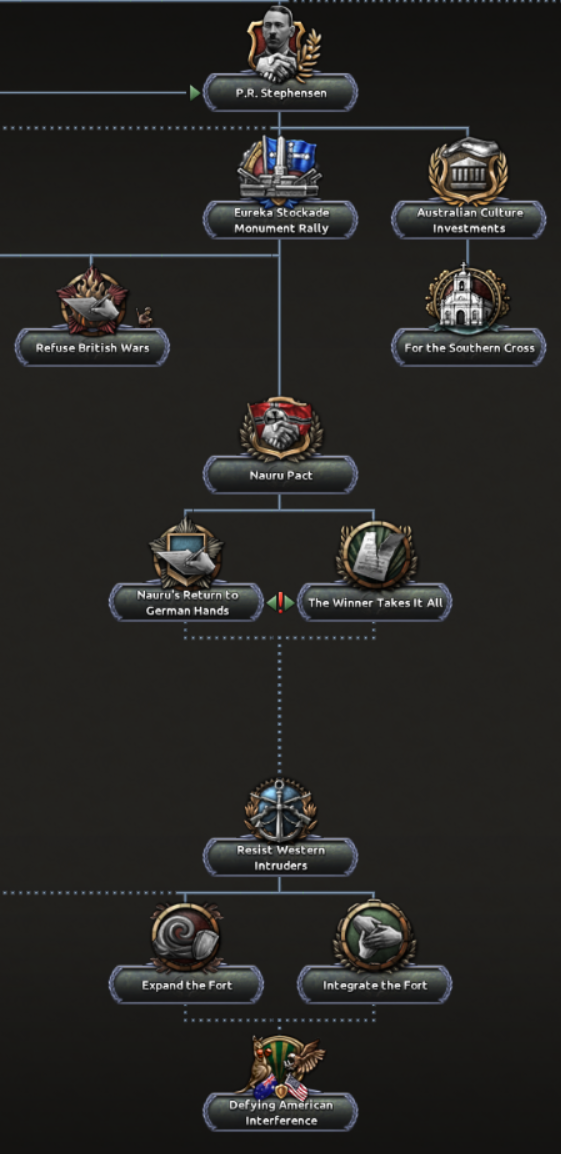
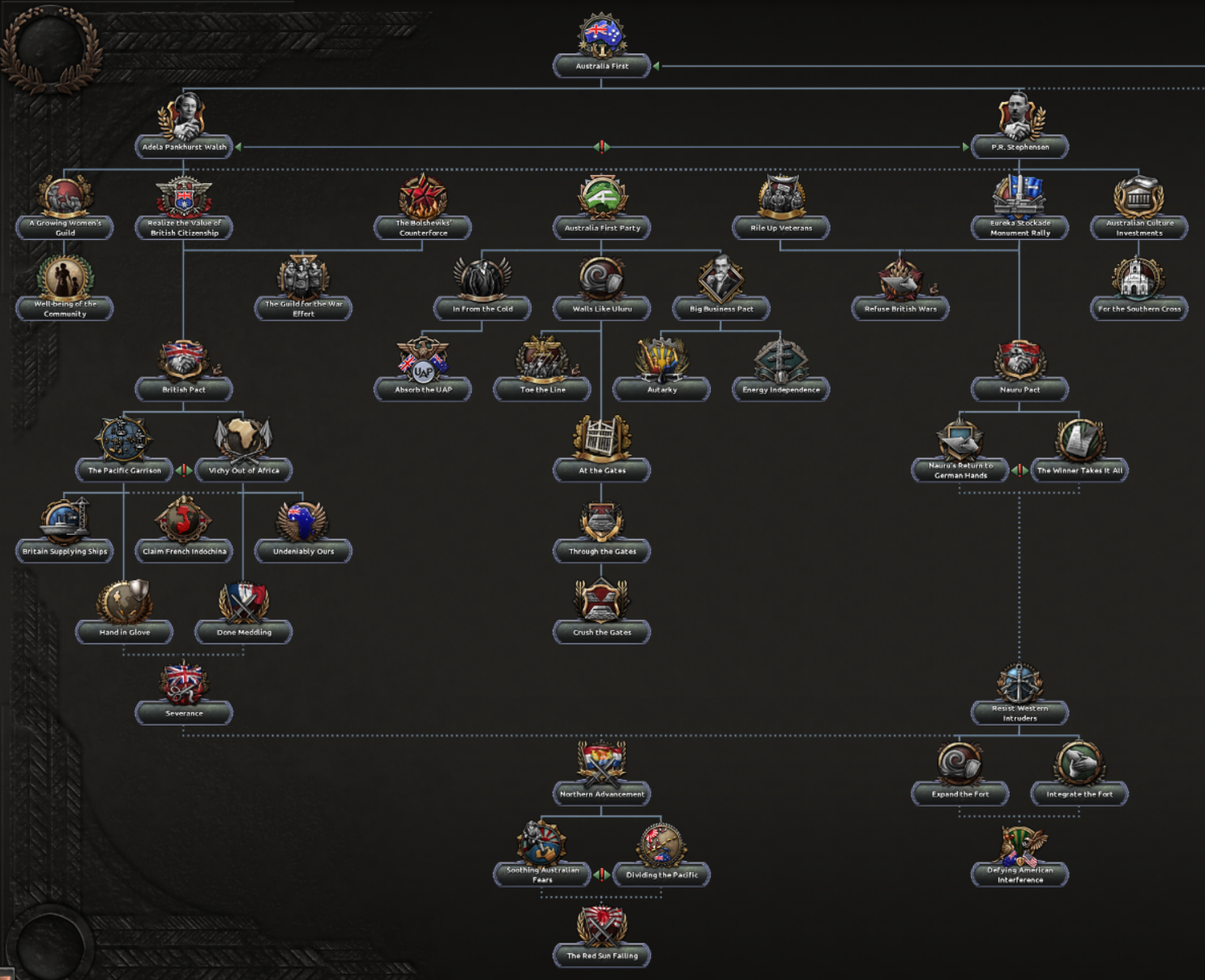
The Movement’s historical leader, P.R. Stephensen, was a writer driven by a fierce, isolationist nationalism. He advocated for a complete severance from Britain to protect Australian culture and avoid entanglement in foreign conflicts. Interestingly, his desire to preserve a distinct national identity led to an unusual stance on Indigenous rights; he personally funded advocacy organizations, viewing the welfare of the Indigenous population as essential to the nation’s integrity—a stark contradiction to his broader pro-Nazi and antisemitic views.
In Hearts of Iron, choosing Stephensen shifts Australia toward this isolationist, aggressive nationalism. Players can push for immediate independence, reject British war mandates, and collaborate with Germany to seize British territories in the Pacific. By offering to return Nauru to German control, players can secure a partner for invading New Zealand and the Solomons. Stephensen’s path also allows for massive investment in local culture to bolster national unity, eventually allowing for the integration of external territories. Above all, you will aim to push American influence out of the region—the Western Pacific belongs to Australia.
Adela Pankhurst Walsh
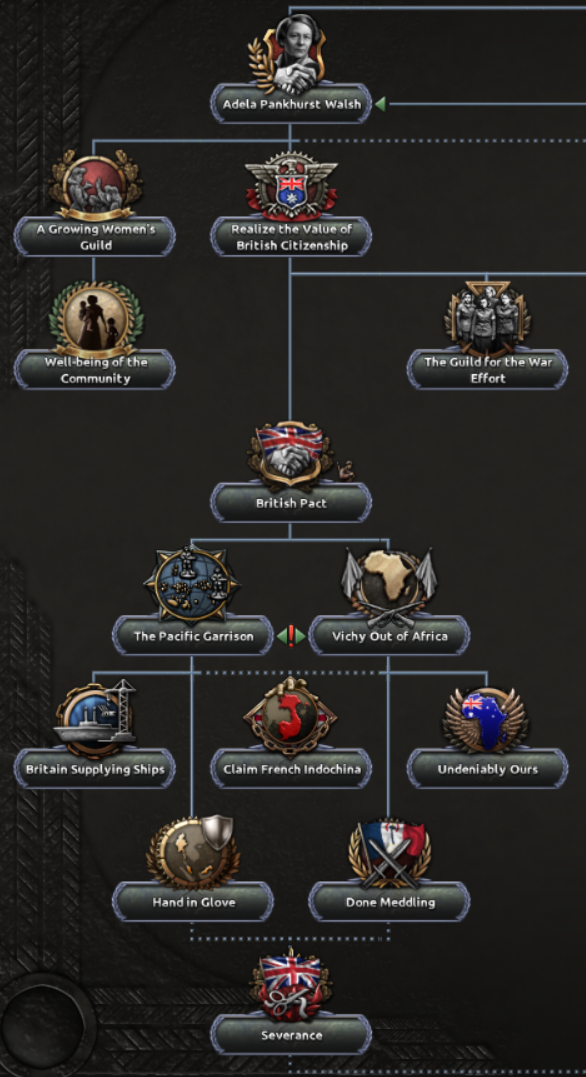
The second leadership option is Adela Pankhurst Walsh, a key organizer for the Movement. Though she shared the group’s anti-war stance, her vision for Australia was vastly different. Coming from a famous British suffragette family, she founded the ‘Australian Women’s Guild of Empire,’ which emphasized industrial cooperation and strong ties to the British Commonwealth. Unlike Stephensen, she saw significant value in British citizenship.
Playing as Pankhurst means rejecting the rush for independence in favor of a strategic, collaborative approach with Britain. You will work to bolster Australia’s military capabilities to defend Southeast Asia or support the British fight against Vichy France in Africa. As Britain grows increasingly overstretched, your reliance on them will wane, eventually leading to a path toward independence—either peacefully or through a final, decisive declaration of war against the United Kingdom.
Rising from the Ruins
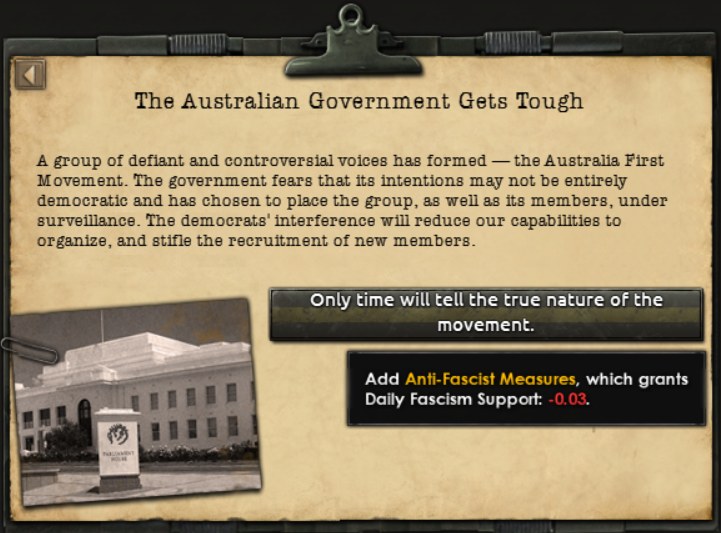
Regardless of your chosen leader, you must overcome the democratic status quo. Historically, the government kept a close watch on these groups, which is represented in-game by high resistance to fascist conversion. Only by accumulating sufficient support can you remove the ‘Fascism Control’ penalty and accelerate your rise. The endgame involves the Canberra Air Disaster—a catalyst for political instability that allows you to trigger a no-confidence motion and seize power from a failing democratic government.
Against War and Fascism: The Communist Path
Communism
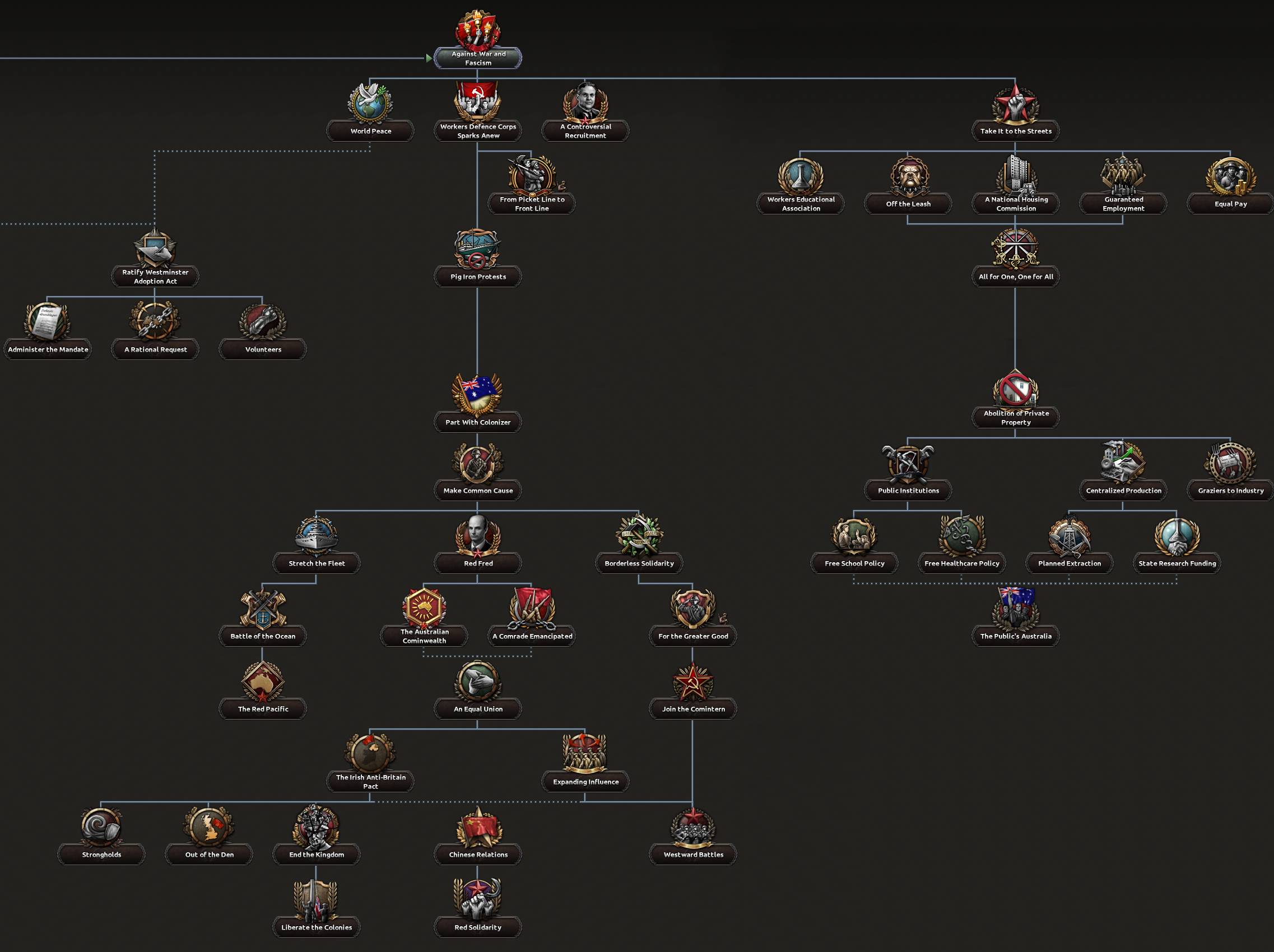
Communism in Australia begins as a grassroots movement, rooted in labor organizations and militant dockworkers. While many socialists historically aligned with the Australian Labor Party, our path imagines a scenario where economic desperation pushes these radicals to break away, forming a distinct industrial and political front.
The turning point is the Dalfram Dispute—a historical strike against iron ore exports to Japan. In our timeline, this spark ignites widespread economic discontent, bringing down the government. Once in power, you face a strategic choice: accelerate the collapse of the British Empire or align with global Communist powers to build a sustainable worker’s utopia.
The Struggle for Power
The early phase focuses on infiltration. Through the Trade Union Infiltration system, you can target individual states to build support at the cost of stability. But beware: rapid expansion makes the nation fragile. You will also face increasing aggression from members of the former New Guard, who may force the country into a civil war if pushed too hard.
Strikes and Nationalization
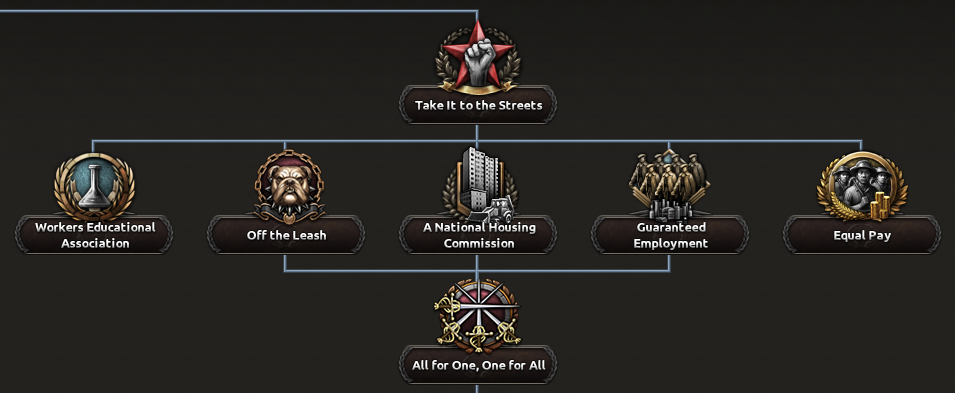
This branch is for those who enjoy high-stakes micromanagement. By utilizing the ‘Take It to the Streets’ decision, you can trigger strikes to force through essential industrial reforms. Once the Dalfram Dispute is resolved, the focus shifts toward a hardline, centralized state.
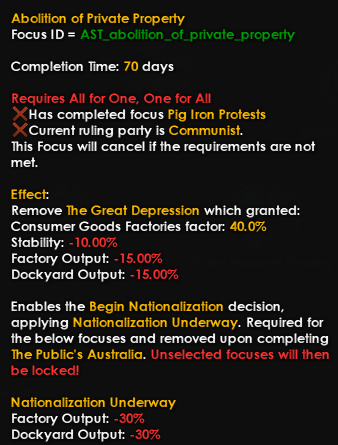
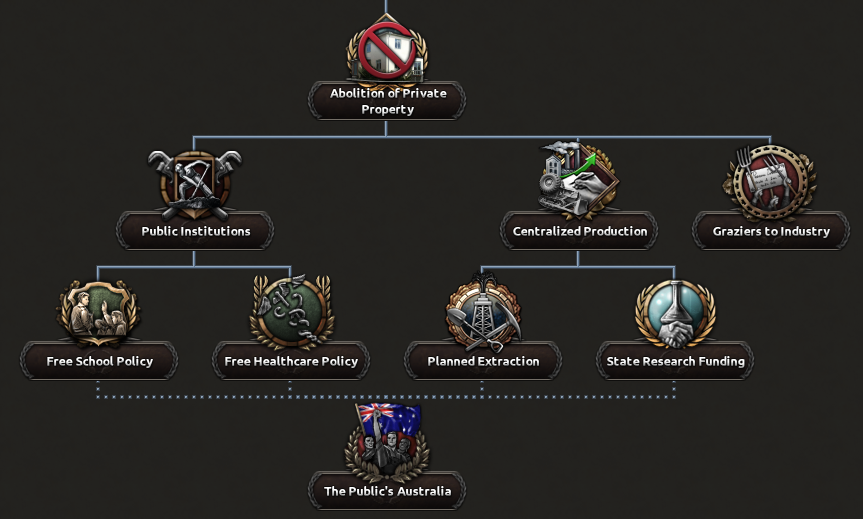
Abolishing Private Property is your milestone achievement, effectively ending the Great Depression in Australia while unlocking the path to total nationalization. This process is punishing, as capitalist forces will resist, but it is necessary to reach the final goal: The Public’s Australia. You must balance the pace of these reforms carefully; once chosen, these paths are permanent.
Communist At Last!
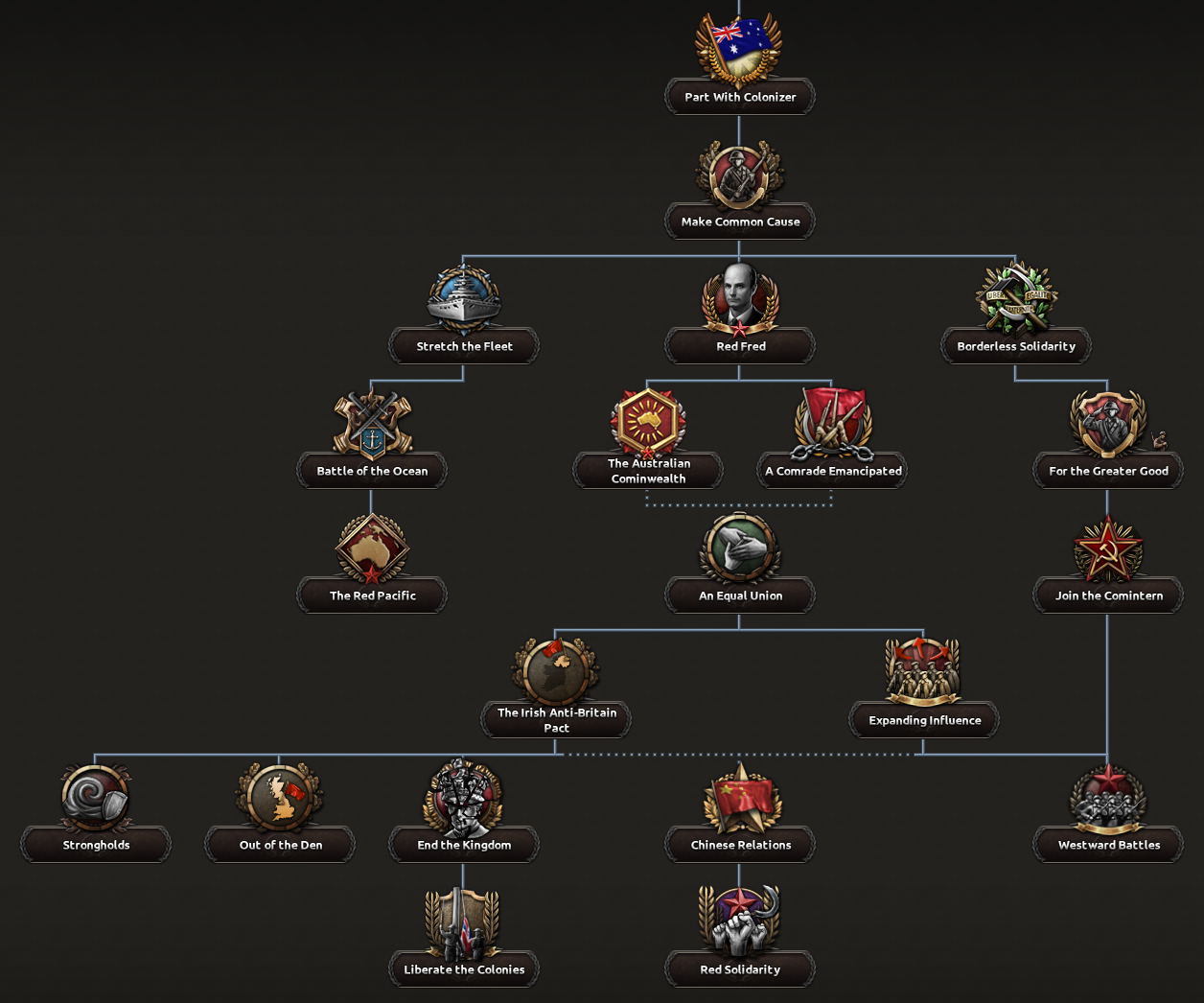
With power secured, you can focus on the global stage. By forming the ‘Cominwealth,’ you can export revolution to Malaysia, Burma, New Zealand, India, Indonesia, and the Philippines. You might also establish a foothold in the British Isles via the Irish Anti-British Pact or merge your faction with the Soviet Comintern to aid in the defeat of Germany. The world is ripe for transformation.
That’s all for now! Thanks for reading. If you have questions, drop them in the comments, and we’ll be sure to check them out. See you on Friday!
Related articles
 HOI IV Developer Diary | Romania: A Flawed Democracy
 Developer Corner & Open Beta: Energy #2
 Hearts of Iron IV Dev Corner | Strikes!
 Hearts of Iron IV Dev Corner: Old Canada Questions Before New Canada
 Hearts of Iron IV Dev Corner | Energy
 Steam Autumn Sale 2026
 HOI IV Dev Corner | The Great Depression
 Hearts of Iron IV | Patch 1.19.3