This Anime Fight Is One of the Greatest of All Time — But Not for the Reason You’d Expect

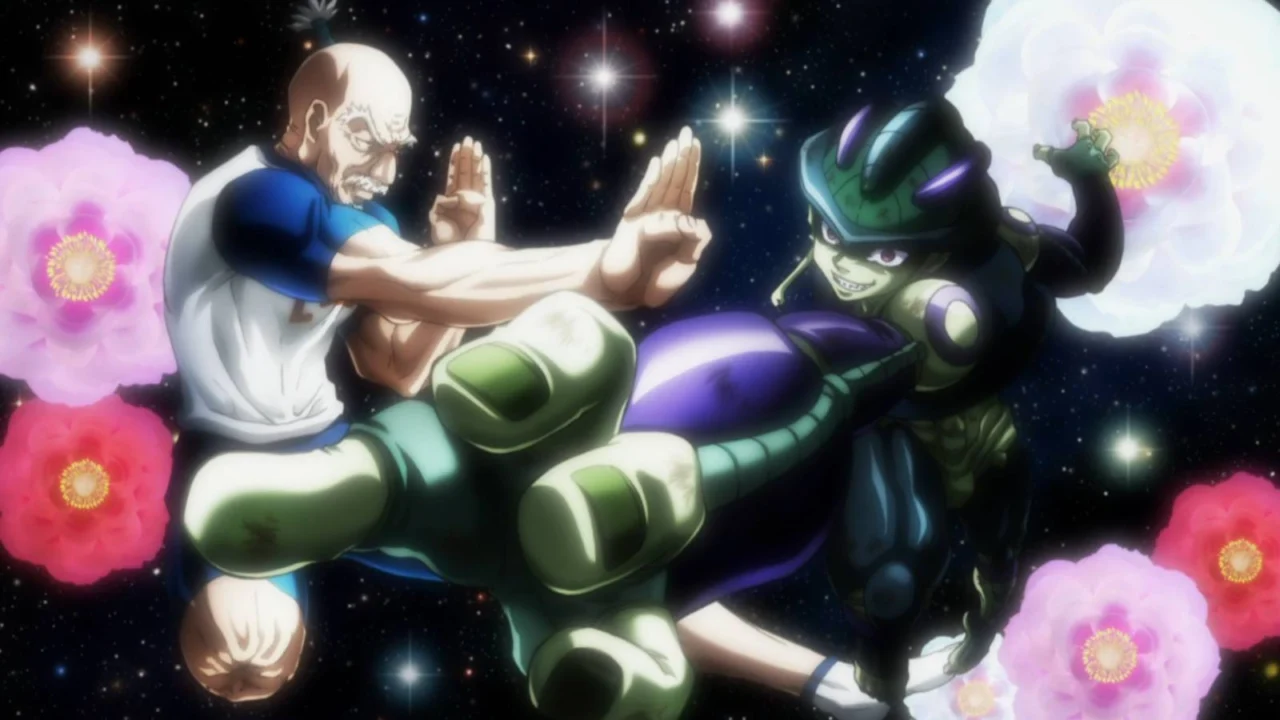
These days, many anime have the budget and technical polish to stage dazzling fight sequences. For example, Jujutsu Kaisen’s Sukuna vs. Jogo clash is a spectacle of kinetic animation and inventive camera work. Yet that contemporary virtuosity only highlights how exceptional an older sequence remains: the showdown between Isaac Netero and Meruem from 2011’s Hunter x Hunter. It lacks the frame-by-frame gloss of newer productions, but through careful narration and evocative imagery it achieves an emotional and thematic depth that still resonates.
The series introduces voice-over narration in the Chimera Ant arc (season six). That external voice supplies context, explains tactics and stakes, and gives the conflict a more expansive viewpoint. The arc becomes one of shonen’s most memorable stretches, and its potency is concentrated during this compact, two-episode duel.
 Credit: Madhouse/Crunchyroll
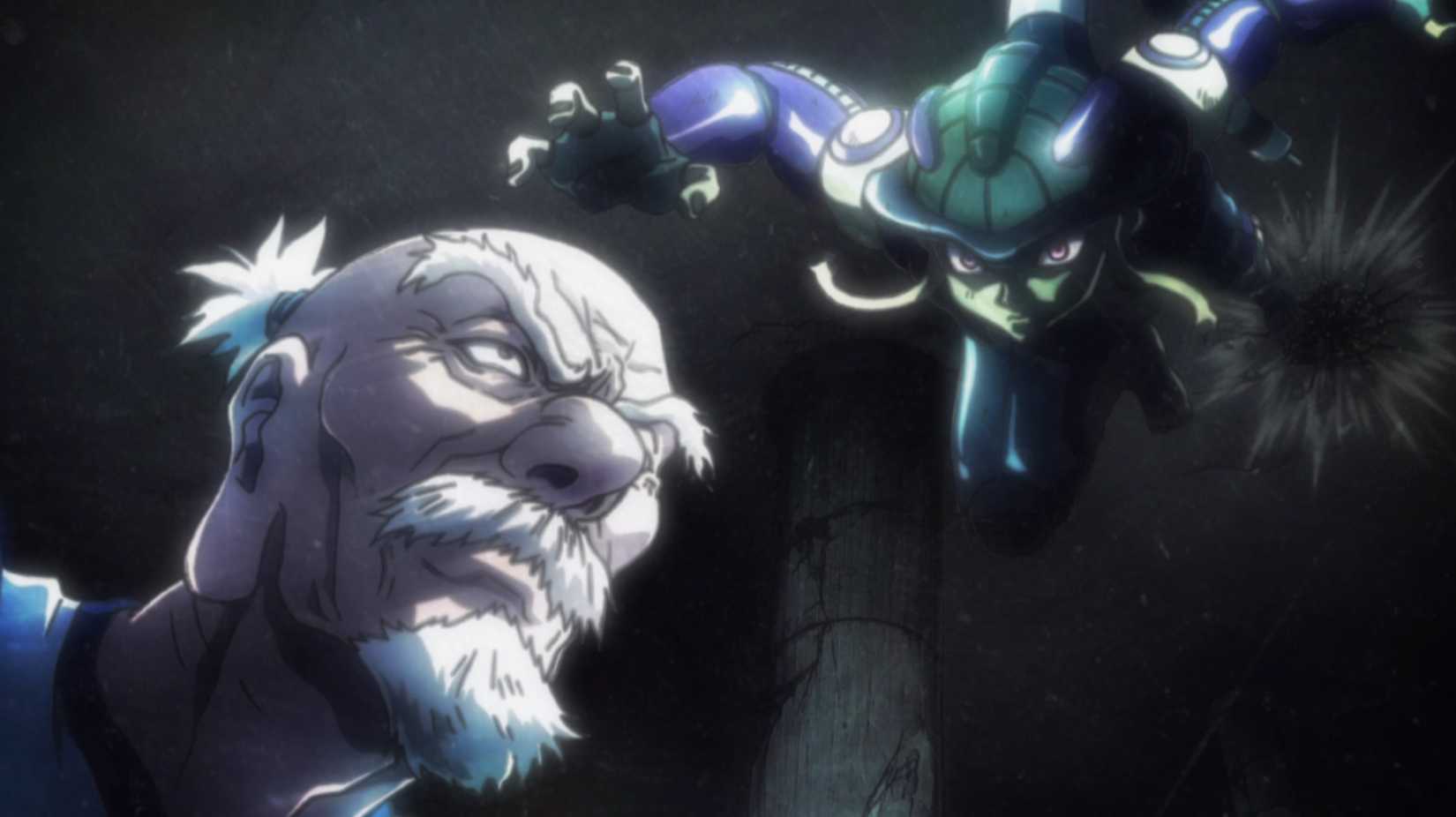
The Chimera Ant arc centers on an evolutionary crisis: the ants mutate into progressively more formidable forms, culminating in their sovereign, Meruem. The Hunter Association dispatches its elite agents to neutralize the threat before the ants’ power becomes uncontrollable. Isaac Netero, the century-old chairman of the Hunters Association and the strongest human combatant we’ve met so far, is the only figure capable of confronting the king.
The duel opens as an exhausting contest of timing and endurance. Netero must anticipate Meruem’s lightning-quick responses, where a single misstep could be fatal. Meruem, both dismissive and intrigued, admires the old man’s speed. In response, Netero calls forth his signature ability: the towering, gilded Hundred-Type Guanyin Bodhisattva, which lashes out with blinding rapidity whenever he clasps his hands. Yoshihisa Hirano’s haunting composition, “The Last Mission,” swells beneath the action—full choir and all—amplifying the scene’s ritualistic grandeur. The narrator punctuates the spectacle, noting that despite its ferocity the Bodhisattva seems to inflict “next to no damage” and the king has “no cause for fear.”
 Credit: Madhouse/Crunchyroll
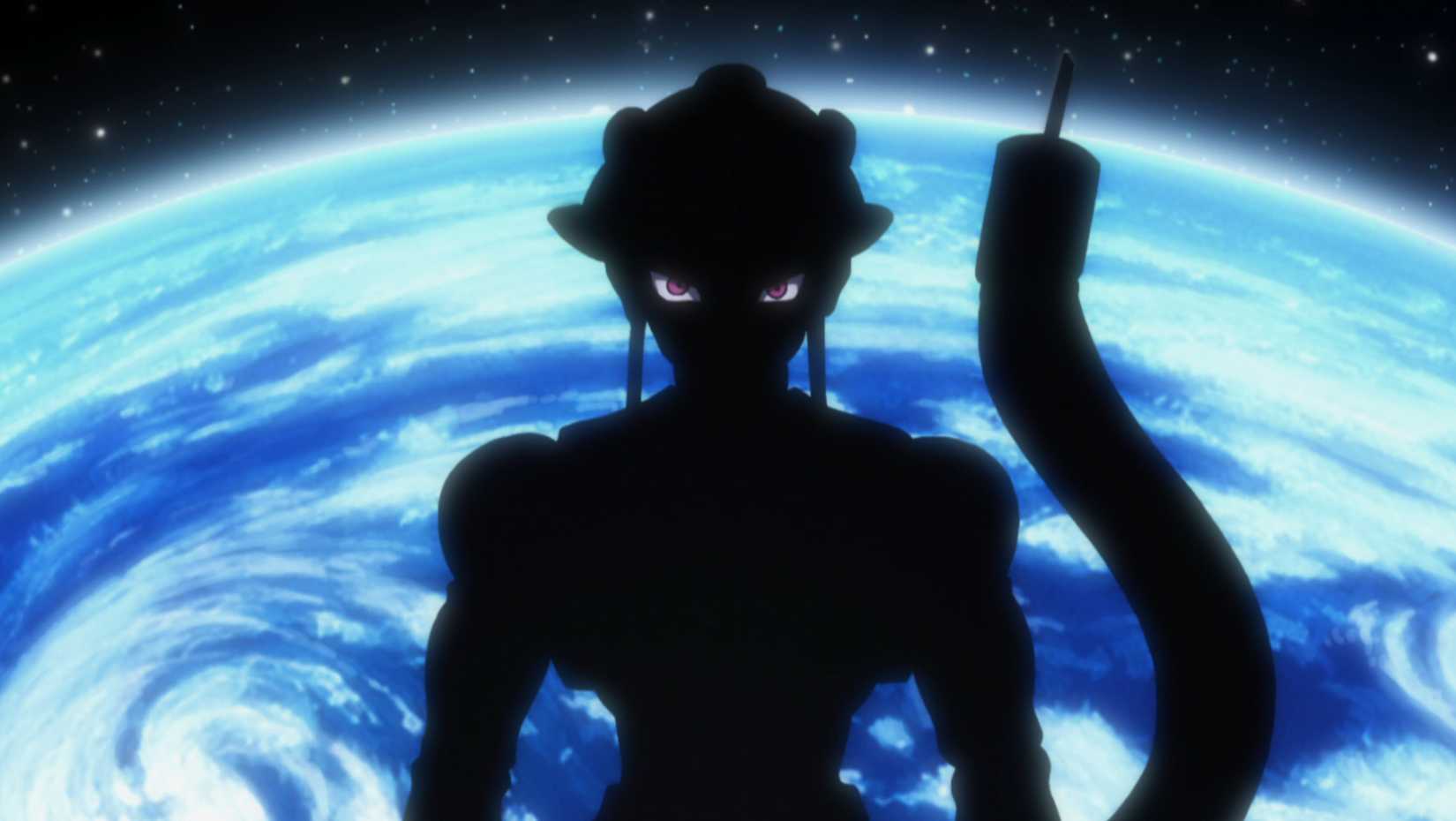
The narrator later reveals that “after hundreds and thousands of strikes, the King was beginning to feel the faintest hints of dull pain,” a line that underscores Meruem’s dominance even as he begins to notice wear. He severs Netero’s leg with ease, yet Netero seals the wound and presses onward, earning Meruem’s grudging respect. What begins as an endurance test becomes an ideological confrontation: a contest over which species—ant or human—embodies true superiority. The narrator compresses a vast exchange into a single image, saying the clash “did not even last a minute,” but within that span Netero delivers more than a thousand blows. Rather than animate every movement, the sequence opts for a luminous montage—hands, light, and silhouettes against a cosmic field intercut with blooming flowers—letting suggestion and metaphor evoke scale and fury where explicit choreography might overexplain.
Then Netero loses one of his arms.
 Credit: Madhouse/Crunchyroll
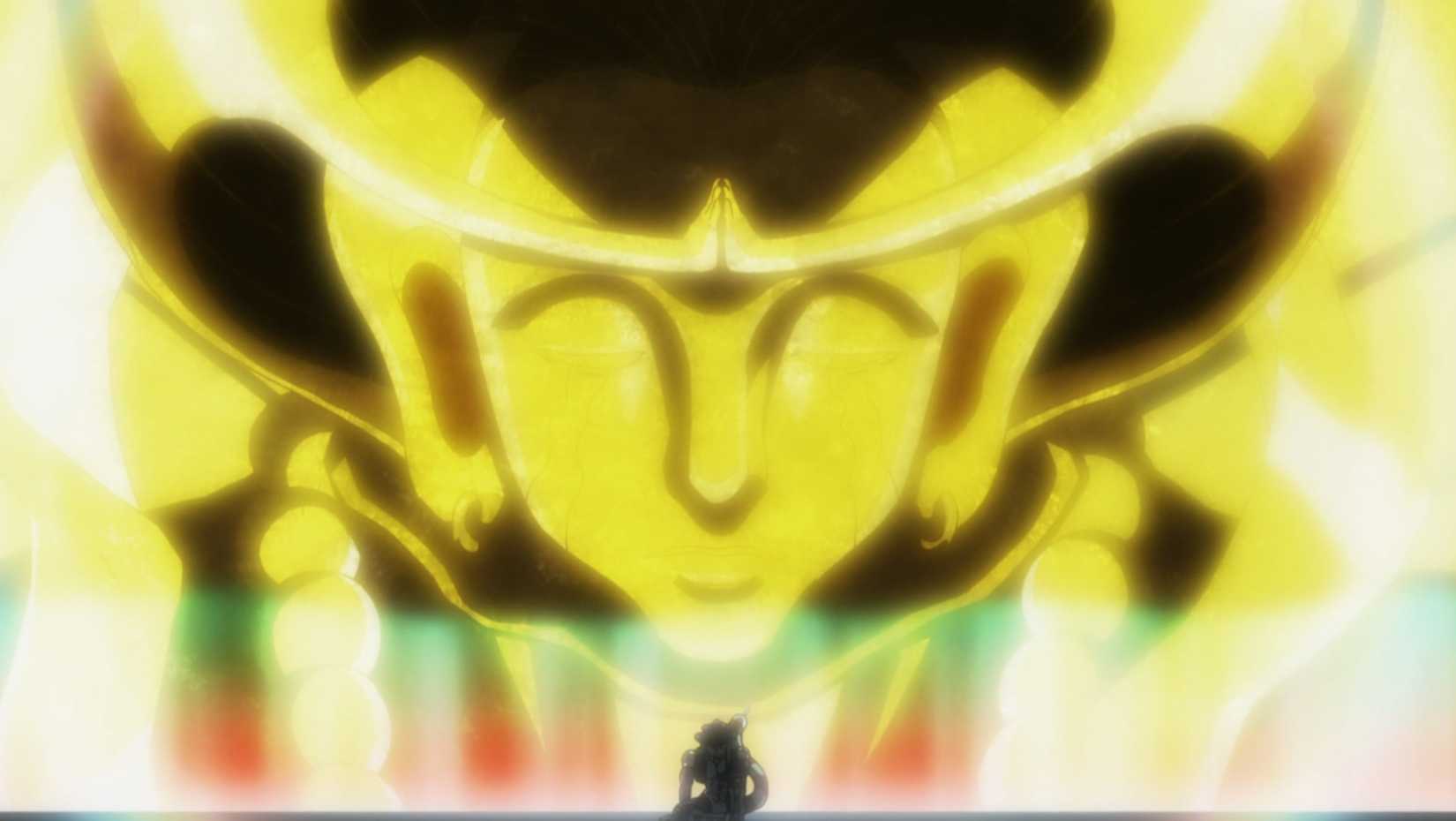
Meruem taunts Netero, demanding the old man speak his name as proof of defeat. It’s a gambit: with one arm gone, Meruem assumes Netero is finished. Instead, Netero uses the moment to trigger his most devastating technique—Zero Hand. The narrator’s description elevates the move before the visuals follow, portraying a Buddha manifesting behind the enemy to cradle them “with an indiscriminate love” before releasing obliterating force. That verbal framing gives the attack an operatic weight that an on-screen beam alone couldn’t achieve.
When Meruem emerges largely unscathed, it becomes clear Netero has expended everything. Meruem articulates his conviction that ants—products of cooperative evolution and collective design—are superior to solitary humans. He grants humanity a conditional reprieve, suggesting they be confined to an internment zone. Netero, exhausted and diminished, then surprises everyone: he laughs, says Meruem’s name, and with cold resolve plunges a finger into his own chest.
https://youtube.com/watch?v=IDCm4ZDdcBc%22+title%3D%22Netero+vs+Meruem%22+frameborder%3D%220%22+allow%3D%22accelerometer%3B+autoplay%3B+clipboard-write%3B+encrypted-media%3B+gyroscope%3B+picture-in-picture%22+allowfullscreen+style%3D%22position%3Aabsolute%3Btop%3A0%3Bleft%3A0%3Bwidth%3A100%25%3Bheight%3A100%25
A flashback then reveals the final act: Netero had a device hidden in his chest—a “Poor Man’s Rose”—a crude but lethal bomb whose smoke bloom gives it that name. On the operating table, surrounded by physicians, he accepted the cost: the bomb would detonate when his heart stopped. The explosion engulfs both men and brings the fight to its tragic close.
In Togashi’s original manga, Netero’s final line reads, “Do not underestimate humanity’s infinite potential for malice,” a darker formulation that emphasizes human capacity for destructive innovation. Whether read in the manga’s harsher phrasing or the anime’s more philosophical delivery, the scene underlines a grim truth: even in the face of superior strength, humanity can wield self-destruction as a form of agency.
The Netero vs. Meruem sequence contains personal vendettas, clashing worldviews, arresting imagery and a devastating denouement. But above all, it demonstrates how narration can transform a fight into something more than choreography—giving it context, scale and an almost mythic resonance that lingers long after the frames fade.
Hunter x Hunter is available to stream on Crunchyroll
Source: Polygon
Related articles
 The Librarians: The Next Chapter Season 2 Has Concluded
 “The Mummy 4” filming has begun
 Urfin Jus Movie Announced
 Ellen Burstyn Receives Honorary Golden Lion
 Danny Boyle used artificial intelligence in his new film “Inks”
 Gary Oldman Reveals the Name of the New Bond
 Summer 2026 Becomes the Highest-Grossing Season in U.S. Box Office History
 Shadow Movie Screenings in Russia Face Shutdown