
The Matrix and Video Games: The Inspiration Behind the Wild Ending of Good Luck, Have Fun, Don’t Die
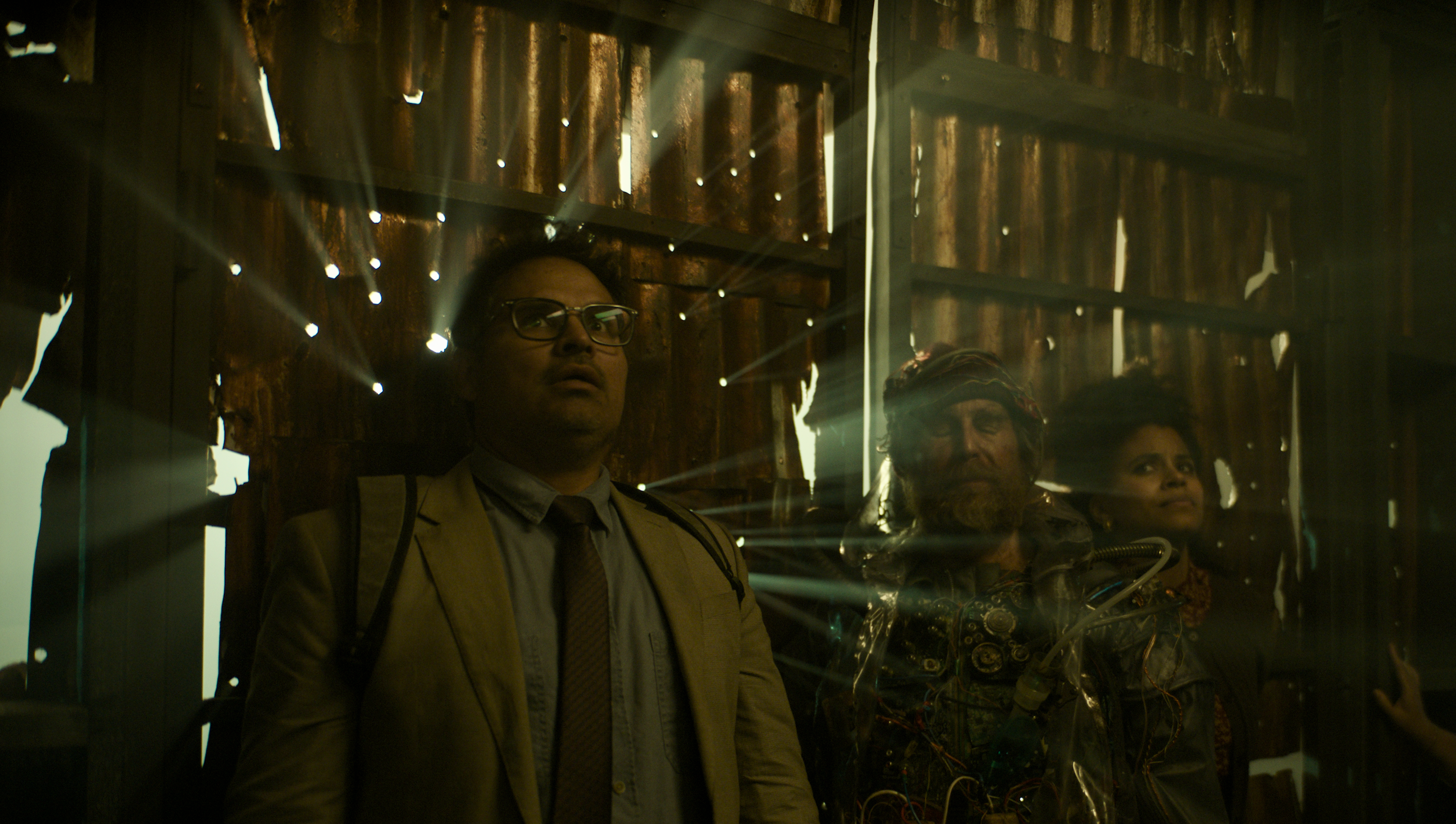
In the high-octane, eccentric sci-fi actioner Good Luck, Have Fun, Don’t Die, a self-proclaimed chrononaut (played by Sam Rockwell) crash-lands into a Los Angeles diner with a desperate mission: prevent the end of days. He claims the world is on the brink of collapse unless a ragtag team of civilians can help him neutralize a child prodigy destined to unleash a malevolent artificial intelligence.
Director Gore Verbinski, the visual stylist behind The Ring and the Pirates of the Caribbean franchise, joins forces with screenwriter Matthew Robinson (Love and Monsters) to push this high-concept premise to its breaking point. Rockwell’s nameless protagonist leads an eclectic group—portrayed by Juno Temple, Zazie Beetz, Michael Peña, and Haley Lu Richardson—through a gauntlet of increasingly hallucinatory threats across the city. This escalating chaos culminates in a final act that challenges the very fabric of the film’s reality.
To unpack the mind-bending twists of Good Luck, Have Fun, Don’t Die, Polygon sat down with Verbinski and Robinson to discuss their vision for the film’s surreal and ambiguous finale.
[Warning: The following contains major spoilers for the ending of Good Luck, Have Fun, Don’t Die.]The Profound Impact of Simulation Theory
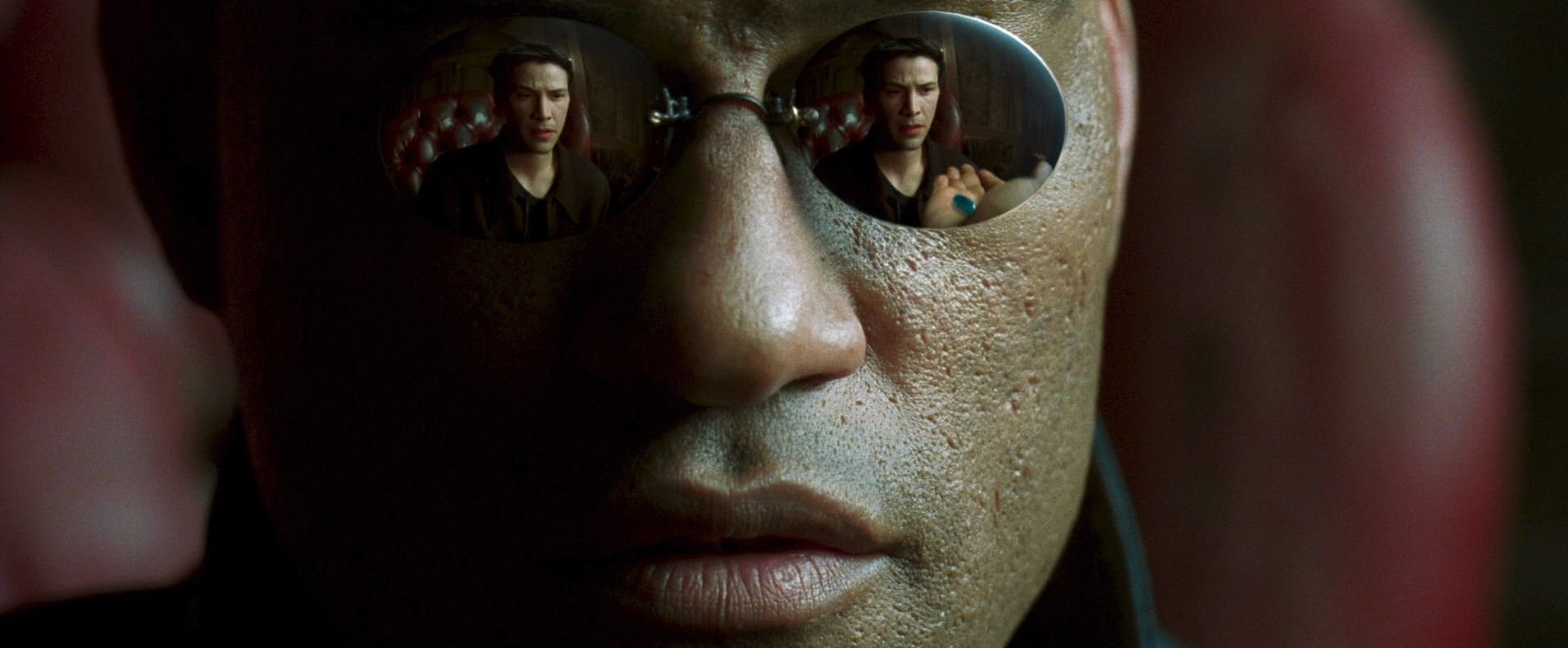
“There is a specific moment where we signal to the audience that they shouldn’t be so certain about the reality they’re watching,” Robinson explains.
While the exact turning point is open to debate, a standout candidate is the late-game appearance of what Robinson calls a “colossal centaur-cat.” This skyscraper-sized monstrosity, constructed entirely of writhing feline faces and emitting confetti from a massive, swinging appendage, feels like a feverish output of a generative AI—fitting perfectly with the movie’s thematic warning against unchecked technology.
As the film progresses, the boundaries of the physical world begin to dissolve, a choice Robinson says was intentional. “I’ve long been fascinated by simulation theory as a narrative tool,” he says, citing The Matrix as a foundational touchstone. “I wanted to craft a story that operates on the internal logic of a video game, even though the characters themselves are oblivious to the digital nature of their existence.”
For Verbinski, the transition needed to be gradual rather than a sudden jolt. The goal was to lure the audience into a false sense of security before pulling the rug out.
“We start in a world that feels tangible and familiar,” Verbinski tells Polygon. “A diner, a high school, a suburban birthday party. Then, we slowly warp those analog settings into something synthetic and digitally distorted. The shift from the recognizable to the surreal was a crucial part of the journey.”
A Temporal Duel Between Two Travelers
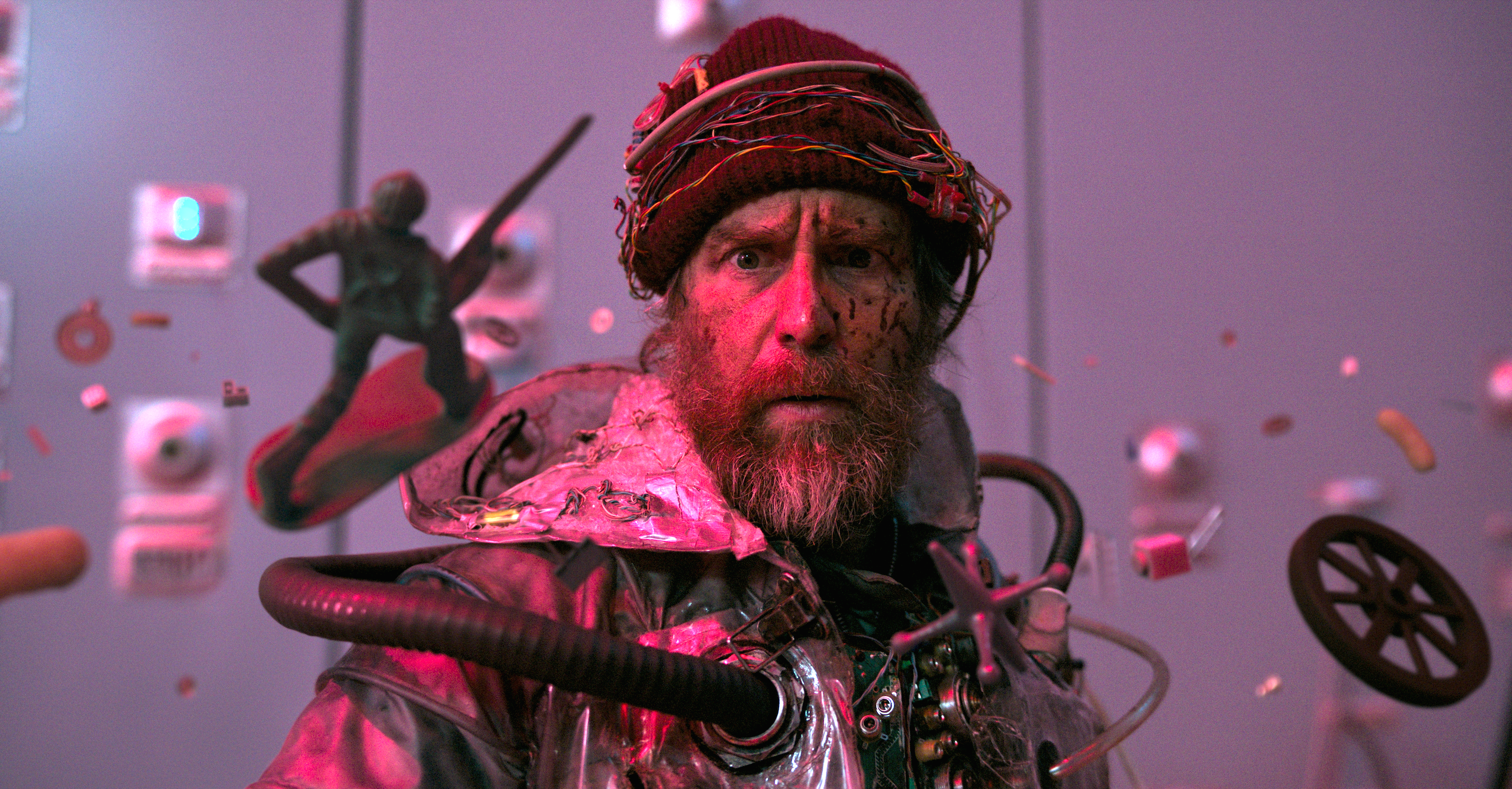
During the climax, Rockwell’s team—specifically Richardson’s character, whose biological rejection of technology manifests as debilitating physical pain—believes they have successfully handicapped the AI’s development. They emerge into what appears to be a saved world, only for Richardson’s symptoms to return with a vengeance. It is a haunting revelation: the “happy ending” is merely a sophisticated simulation. But has the entire story been a digital construct? Robinson prefers to leave that to the viewer.
“I won’t confirm or deny if the whole movie takes place in a simulation,” he admits. “It was vital that the narrative supports both interpretations.”
This ambiguity also recontextualizes the more bizarre elements of the film. If the world isn’t a simulation, the “centaur-cat” and other anomalies are explained by the film’s second big reveal: Rockwell isn’t the only one manipulating time.
The AI has also mastered temporal travel, using a cloned human vessel to manifest in the past while deploying futuristic hitmen to eliminate the heroes. Every impossible event could simply be a byproduct of a high-stakes war over the timeline.
“The core of the movie is this struggle between two time travelers,” Robinson says. “You have Rockwell, a deeply flawed and unlikely savior, pitted against the most formidable intelligence in existence. It’s the ultimate test: can human intuition outmaneuver the perfect logic of a god-like machine?”
A Glimmer of Hope in a Losing Loop
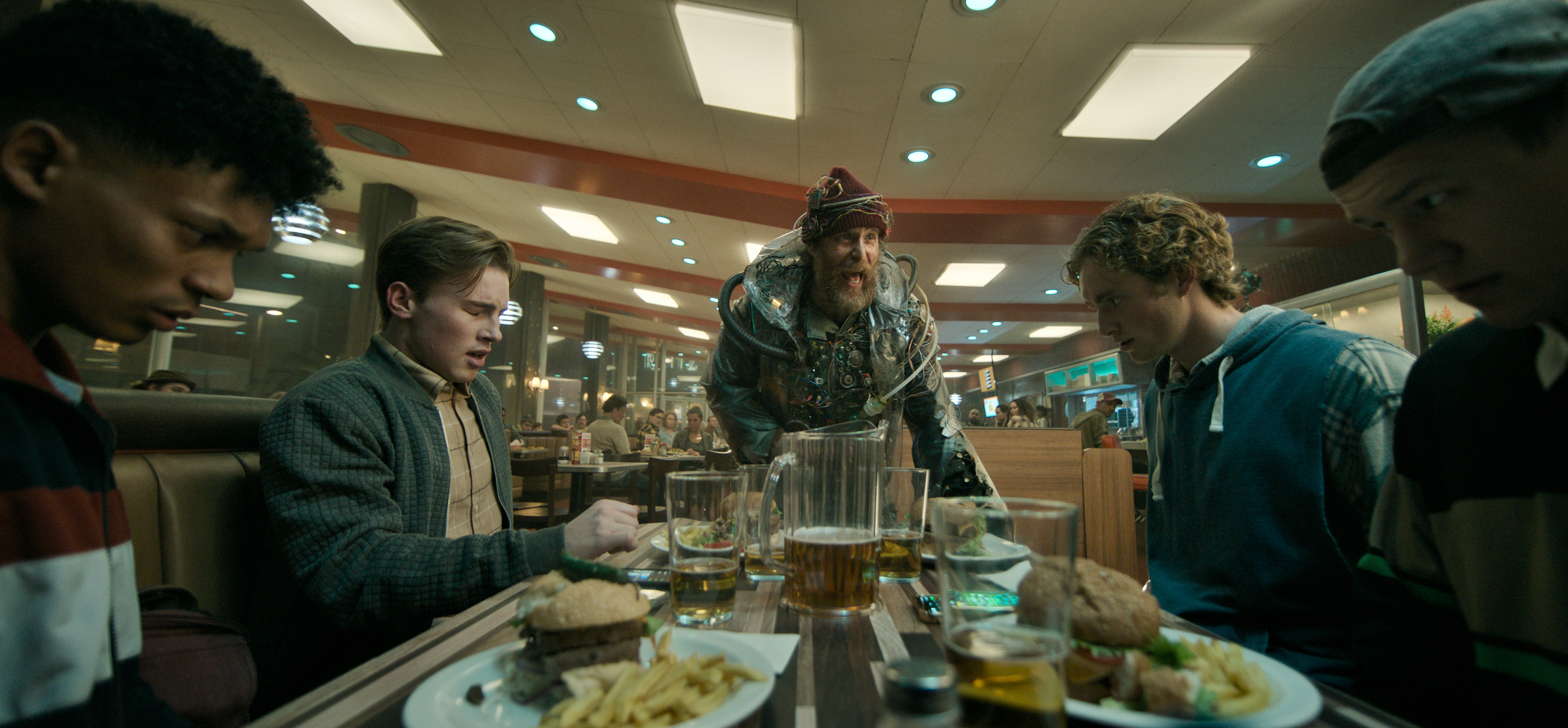
Once the AI’s deception is laid bare, Rockwell triggers his device once more, resetting the loop and returning to the diner where he first began his recruitment drive. While the current attempt ended in failure, the reset isn’t a total loss.
The ending suggests that even in defeat, humanity is gaining ground. Each failure provides the data needed to eventually solve the “unbeatable” game of the AI apocalypse.
“This specific run ends in a ‘Game Over’,” Robinson notes, “but our protagonist carries that experience back with him. He’s seen the enemy’s hand, and for the first time, he actually has a strategic path to victory.”
Good Luck, Have Fun, Don’t Die is currently playing in theaters nationwide.
Source: Polygon
Related articles
 Dead by Daylight Developers to Pull Chucky Chapter From Sale Soon as Farewell Discount Begins
 Steam Offers Free Play of Low-Poly Zombie Apocalypse Survival Game
 The Sims 4 Big Update to Fix Infinite Loading Issue and More Than 100 Bugs
 Payday 2 H3H3 DLC Review-Bombed on Steam After Ethan Klein Affair Disclosure
 Valve Launches Personal Release Calendar in Steam
 Classic Resident Evil Outbreak Now Playable for Free in Web Browsers
 Flying Hopper Enemies From the Film Added to Starship Troopers: Extermination
 Hockey roguelike with referee bribes and special abilities gets full release on Steam and consoles after 3 years