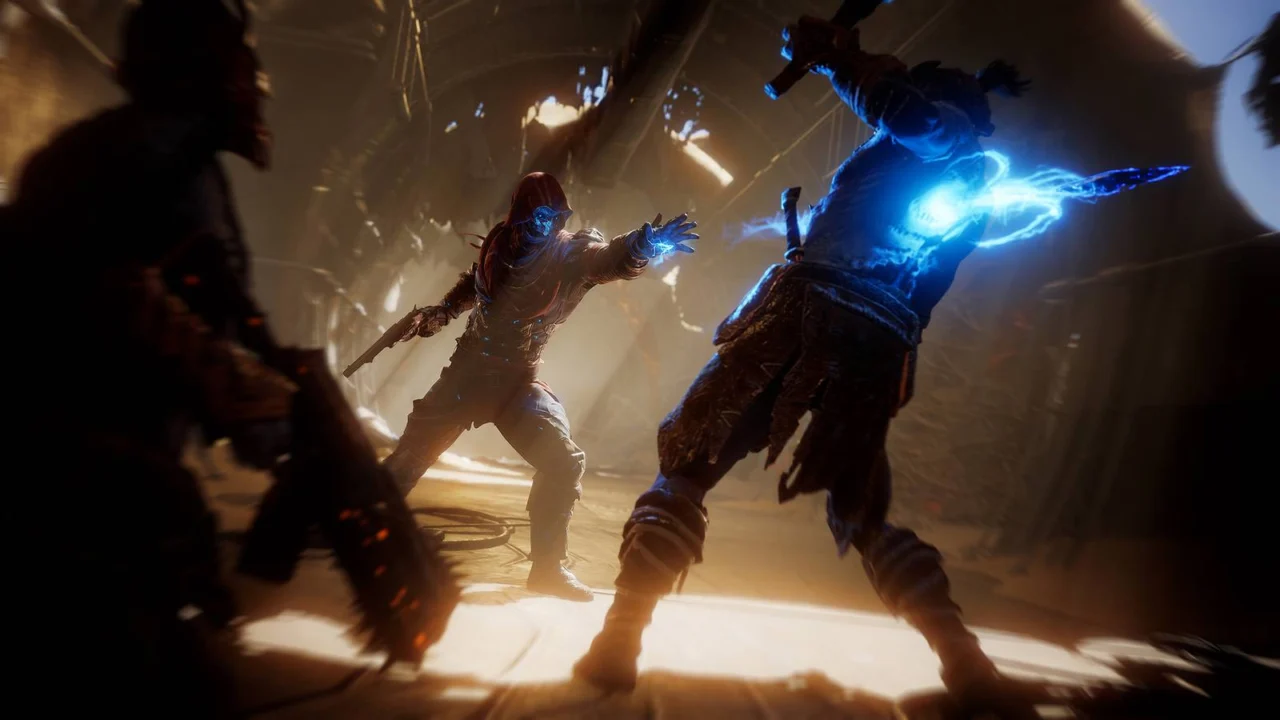
Square Enix’s Forgotten Loot-Shooter: The Blueprint for Arc Raiders and Marathon
The titans of today’s multiplayer landscape share a striking lineage. In titles like Marathon and Arc Raiders, players follow a familiar, high-stakes rhythm: depart from a secure hub, infiltrate a lethal environment, hoard resources, and retreat to safety. While these extraction-style loops have become modern gold mines, they are deeply indebted to a polarizing 2021 loot-shooter that arguably perfected the cadence: Outriders.
Developed by People Can Fly and published by Square Enix, Outriders arrived on April 1, 2021. While it didn’t strictly fit the “extraction shooter” label, it mirrored the genre’s most addictive qualities. Players transitioned from bustling hubs into hostile warzones to harvest gear and decimate foes before returning to base to optimize their loadouts. Although it lacked the cutthroat PvP tension of its successors, the feedback loop provided the exact same dopamine hit that defines today’s most popular shooters.
Thematically, Outriders was framed as a narrative-driven sci-fi epic. Set in the 22nd century, it chronicled humanity’s desperate flight from a dying Earth to a distant star system—a journey of some 12 light-years. Upon arrival, the pioneers discovered a world that violently rejected human presence, alongside a mysterious anomaly that bestowed survivors with god-like “space magic.” It possessed all the ingredients of a prestige single-player campaign—cryosleep, planetary mysteries, and a brutal civil war—but for many who played it at launch, the solo experience felt somewhat lackluster.
However, once you added friends into the mix, the game transformed into a chaotic masterpiece.
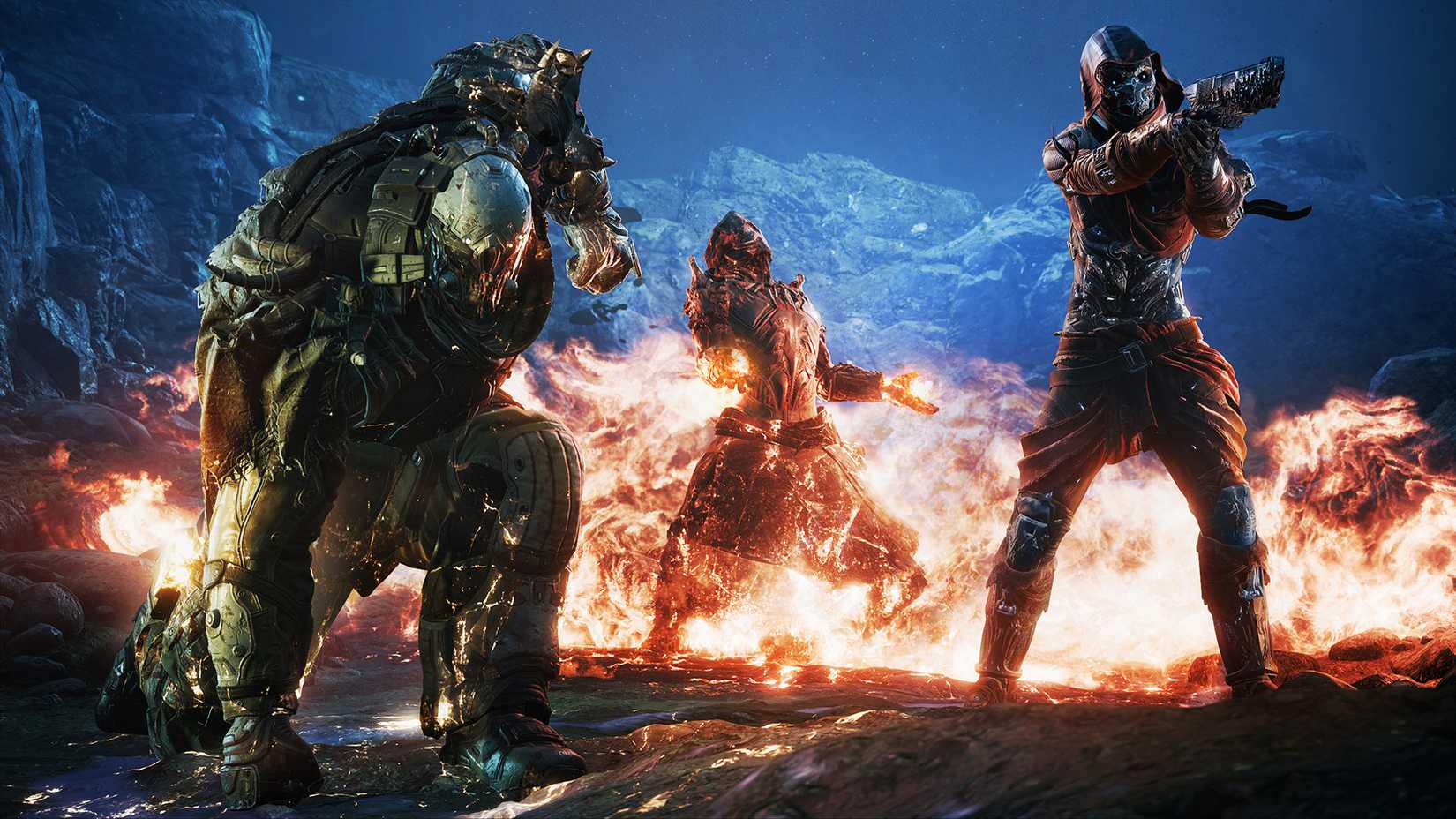
The soul of Outriders resided in its class system. Upon character creation, players chose from four distinct archetypes: the Trickster, capable of manipulating time into localized “bullet-time” bubbles; the Technomancer, a master of autonomous turrets and ordnance; the Devastator, a terrestrial tank who absorbed damage behind stone plating; and the Pyromancer, a conduit for raw volcanic fury.
While the early game allowed for solo power fantasies, the difficulty curve eventually demanded tactical synergy. A well-coordinated party was a force of nature: a Devastator would anchor the front line while a Trickster bypassed defenses to assassinate high-priority targets. Pyromancers could flush enemies from cover, herding them directly into a Technomancer’s pre-placed traps. The gunplay felt exceptionally polished—hardly a surprise given People Can Fly’s pedigree with visceral shooters like Bulletstorm and Gears of War: Judgment.
The game also introduced an innovative “World Tier” mechanic, allowing difficulty to scale dynamically alongside the player. Rather than a static difficulty toggle, players could navigate 15 granular levels of challenge; higher tiers yielded exponentially better loot but required near-perfect builds. This customization extended to quality-of-life features as well, such as an automated loot system that allowed players to bypass low-tier gear entirely, focusing only on the rare items that mattered.

The debut of Outriders was far from seamless, plagued by the server instability and balancing hurdles that often haunt online-only launches. However, People Can Fly remained diligent, stabilizing the experience and even adding self-deprecating emotes to acknowledge the rocky start. The game eventually reached over 3.5 million unique players in its first month—aided significantly by its day-one inclusion on Xbox Game Pass—leading Square Enix to project it as their next major franchise.
Unfortunately, that bright future dimmed over time. The 2022 Worldslayer expansion failed to revitalize the player base or attract fresh blood. Between 2024 and 2025, People Can Fly faced significant internal struggles, resulting in multiple rounds of layoffs and the suspension of several projects—including a rumored Outriders sequel that was reportedly nearing completion.
While a follow-up remains unlikely in the current climate, Outriders hasn’t vanished. Unlike many modern live-service games that are unceremoniously shuttered when interest wanes, its servers remain active, standing as a playable monument to a game that anticipated the next big trend in multiplayer gaming.
Source: Polygon
Related articles
 Unofficial Port Brings Forza Horizon 2 to PC in 4K
 Valor Mortis: ‘The Scarecrow’ Quest Walkthrough
 Microsoft Updates Xbox Cloud Gaming Requirements, Leaving Outdated TVs Behind
 Nintendo Details Switch 2 Battery Replacement Process
 US Gaming Industry Demands Action Against Piracy Amid Threat to Cheap Retro Consoles
 Nvidia Plans to Double DLSS 5 Speed and Add New Game Support
 Jinx It announced for Steam with dice customisation and hand-drawn opponents
 Phantom Blade Zero Developers Show Boss Fight and Deluxe Edition Costume