Have you ever reached a moment in a relationship — with a partner, family member, friend, fictional world, app, or even a kitchen tool — and noticed you depend on it more than is healthy? Playing Hollow Knight: Silksong forced me into that exact moment: my dependency wasn’t on a person but on video game maps.
When I first booted up Silksong, discovering there was no map available in the opening areas triggered a thin panic. If I’d remembered the original Hollow Knight better I might not have been surprised; I’d only played it briefly, and it felt like ages had passed since.
Silksong is a Metroidvania: a game built around exploration, dead-ends that hide secrets, alternate routes, shortcuts, locks and keys, and curiosities that demand later returns. It’s essentially a labyrinth. That genre identity makes clear why spatial awareness matters — to navigate intelligently you need to understand how locations interconnect and when to retrace your steps.
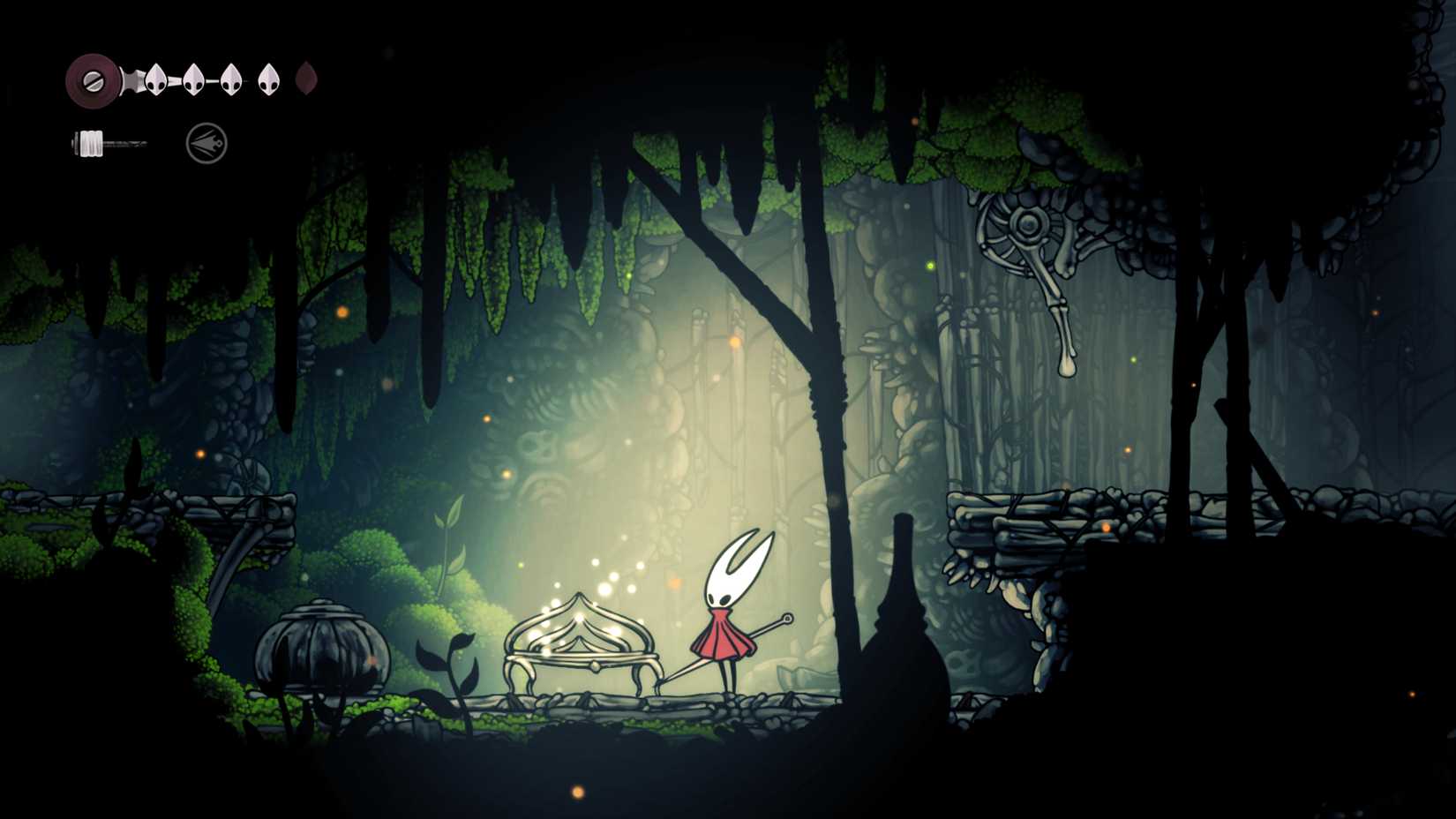 Image: Team Cherry via Polygon
That absence of a map — even in the simpler opening regions — felt destabilizing. I don’t expect a Metroidvania to hand me a full, labeled atlas; exploration is part of the joy. But without a visual reference I found it hard to hold the game’s layout in my head. The unsettling truth was that the game expected me to do something I rarely trust myself to do: rely on my memory.
The point landed when I finally located Silksong’s cartographer, Shakra. (I’ll admit I hunted for her rather than discovering her by chance.) Shakra is a striking figure — a formidable fighter with a resonant singing voice. She sells maps, but only fragment by fragment, and only after you encounter her in each new district.
Shakra also sells map conveniences as separate purchases: icons that mark benches (save points) and fast-travel sites, symbols for other merchants and for her own stall, a quill that annotates and clarifies where you’ve already explored, and placeable markers for noteworthy locations. Even a compass that shows your on-map location is tied to a purchasable, equipable skill — one you must choose over another ability.
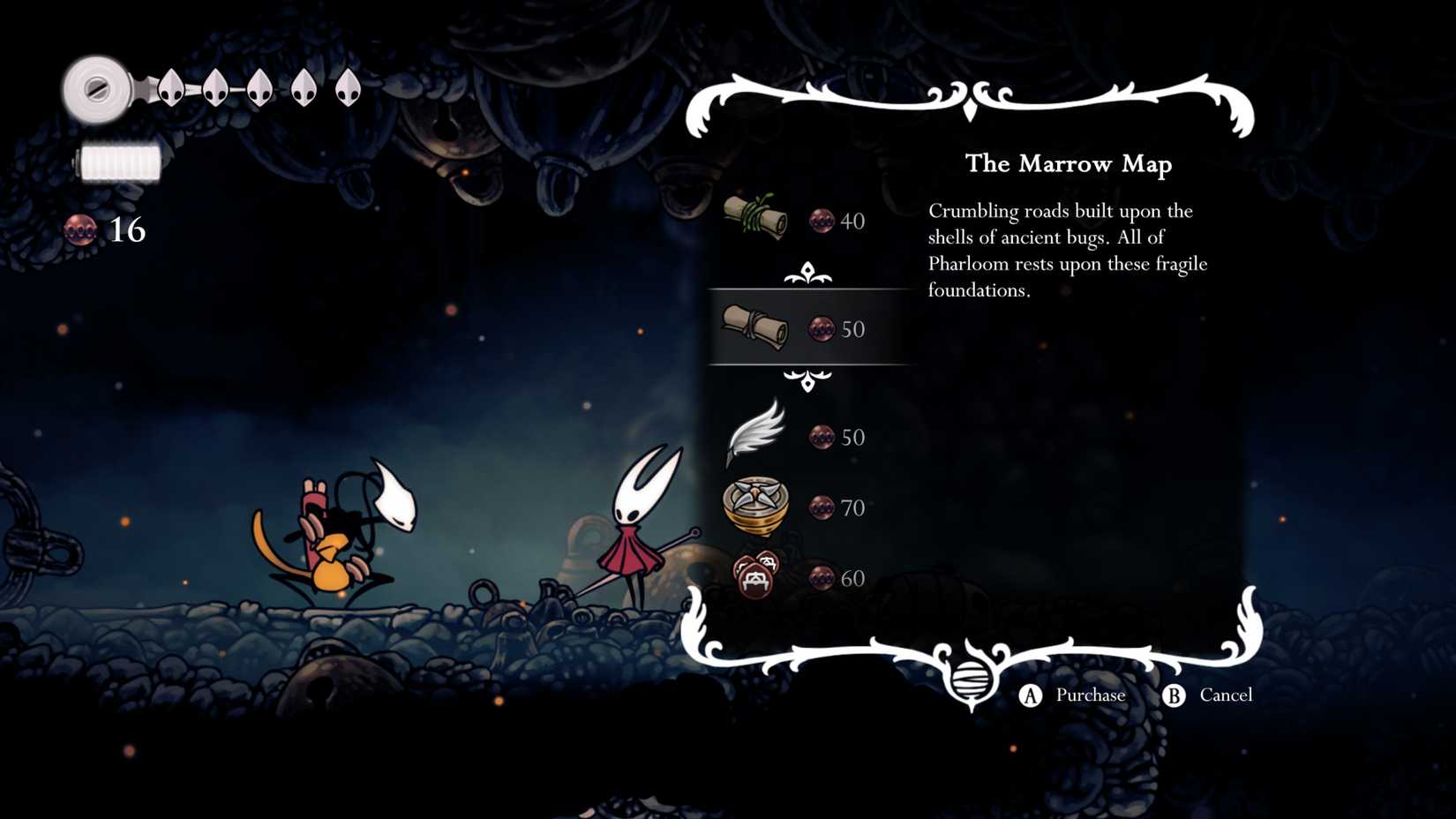 Image: Team Cherry via Polygon
I spent time farming rosaries — the game’s currency — to purchase as many mapping tools as I could. Still, when I step into a district whose map I haven’t bought yet, Silksong is quick to remind me how exposed I am: vulnerable, cautious, and disoriented.
By parceling out mapping conveniences and occasionally withdrawing them, Shakra and developer Team Cherry teach a lesson about how privilege and crutches coexist. A detailed map can be a gift that deepens play, but it can also be a dependency that robs the player of a fuller engagement with the space. If you’re forced to hold the area in your head, don’t you engage with it more attentively and learn it more thoroughly?
Shakra puts the idea plainly in an early exchange with Hornet:
Hornet: Your charts and instruments are impressive, Shakra; few are as skilled.
Shakra: Cartography? Tch. It’s a common craft of my people. What matters more is keeping the mind sharp while traveling.
Mapping caverns, remembering the paths you’ve taken, and knowing where you stand in the kingdom — that is the work of a warrior’s mind.
“Knowing one’s place within the kingdom.” In that respect, Silksong has taught me mine.
Source: Polygon