
Rango Director Reflects 15 Years Later: ‘We Didn’t Know How to Make an Animated Movie’
Article Highlights
Rango remains a cinematic anomaly. What began as a fiercely independent project from Pirates of the Caribbean visionary Gore Verbinski was initially dismissed by major studios. Ultimately, it was Industrial Light and Magic—the legendary VFX powerhouse—that realized the vision as its inaugural full-length animation. Even a decade and a half later, the film’s gritty, dust-caked Western aesthetic, populated by a cast of wonderfully grotesque anthropomorphic critters, has no contemporary equal.
The narrative follows a sheltered pet chameleon who finds himself marooned in the unforgiving desert. Stumbling upon a parched outpost known as “Dirt,” he assumes the persona of a fearless drifter to survive. Through a series of fortunate accidents—culminating in the demise of a predatory hawk—Rango is thrust into the role of sheriff. Tasked with solving a catastrophic water shortage, he uncovers a conspiracy that mirrors the noir depths of Chinatown, a cinematic homage Verbinski cites with pride.
The film’s evolution was intimate; it took shape within Verbinski’s home as a collaborative effort between writers and visual artists. Drawing from his live-action expertise, Verbinski implemented a “theatrical” recording style where actors performed scenes physically rather than sitting in booths—a technique that provided invaluable references for the animators. This unorthodox approach culminated in an Academy Award for Best Animated Feature, triumphing over heavyweights like Kung Fu Panda 2 and Puss in Boots.
“We were navigating without a map,” Verbinski admits to Polygon. “We lacked the traditional blueprint for animation, but we understood visual storytelling and the architecture of a scene.”
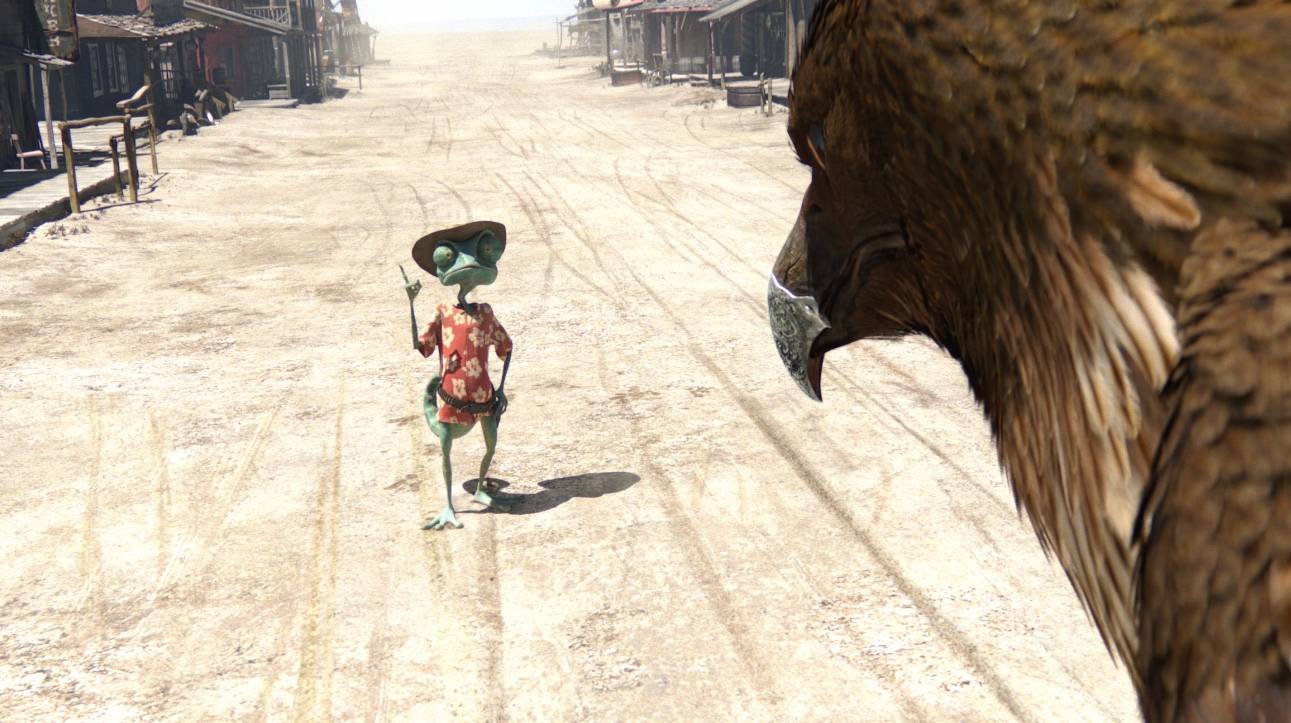
Reflecting on the film’s 15th anniversary, Verbinski discusses the singular creative process, the hurdles of transitioning from live-action, and whether he’ll ever venture back into Rango’s world.
The Genesis of an Outlaw
Fresh off the success of his Pirates trilogy, Verbinski sought the uncharted territory of animation. His lack of experience in the medium was the very thing that compelled him.
Gore Verbinski: Animation has always fascinated me. My background in storyboarding means I naturally visualize through the lens of a camera; I think in shots. The mystery of the process was the draw. There is a specific kind of creative spark that only ignites when you’re doing something for the first time.
The concept took root during a 2007 breakfast at Art’s Deli with David Shannon and John Carls. David tossed out the idea: “What about an animated Western featuring desert life?” It wasn’t a full story yet, just a provocative hook that stayed with me.
I crafted a 12-page treatment at home shortly after. As a devotee of Sergio Leone, I knew the tropes: an outsider arrives in a desperate town. I thought, if he’s a desert outsider, let’s make him an aquatic creature—totally out of his element. A chameleon fits perfectly because he is the ‘great pretender,’ literally changing to suit his environment.
Rango is the beautiful result of total naivety.
This narrative allowed us to explore identity. When the town looks to him as a savior, he has to reckon with his own fraudulence to become the hero he’s been portraying. For the plot, I looked to the best water-starved mystery in cinema: Chinatown.
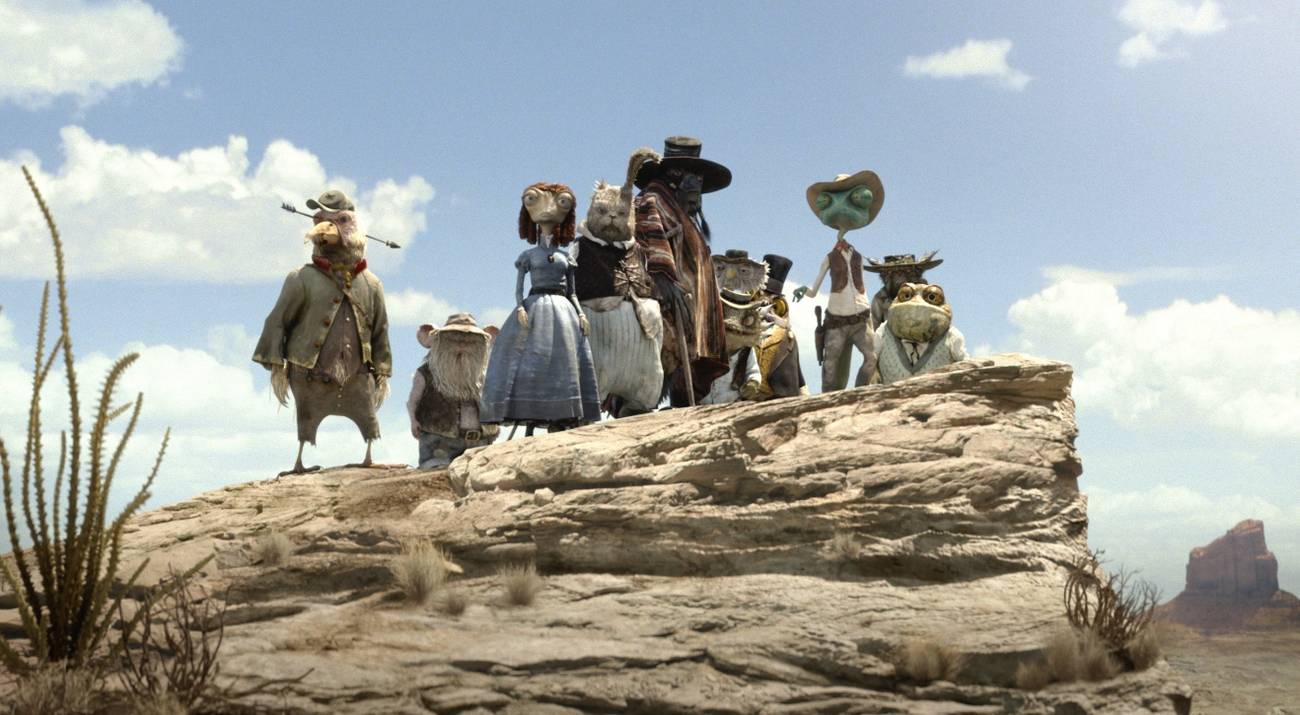
With John Logan and James Byrkit, we began to flesh out that outline, expanding the world during long creative walks.
Designing the Mojave’s Misfits
To establish the visual identity of Dirt, Verbinski collaborated with designers Mark “Crash” McCreery, David Shannon, and Eugene Yelchin, emphasizing character over convention.
Gore Verbinski: I told the artists, “Don’t let the story limit you yet. Think about the archetypes of the West. Imagine Klaus Kinski as a rabbit or Slim Pickens as a rodent.” I wanted them to meld nature with the gritty soul of a Western character.
Embracing asymmetry was vital to the film’s soul.
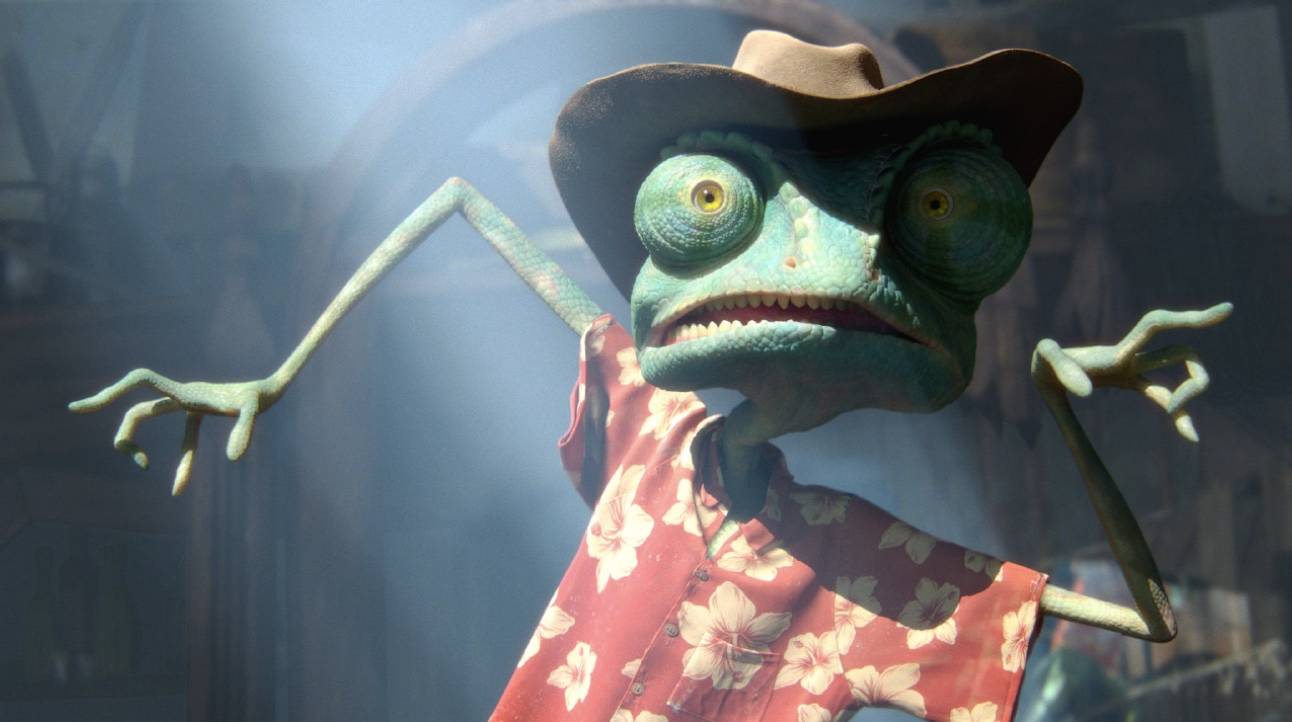
We abandoned realistic scaling. We weren’t chasing the polished, symmetrical aesthetic of Pixar—they do that brilliantly, but the world didn’t need a cheap imitation. I wanted Dirt to feel tactile, greasy, and weathered. We purposely designed characters with lopsided features to fight the digital urge toward perfection.
Securing a Sanctuary for Rango
Verbinski and editor Wyatt Jones produced a rough “story reel” using sketches and temporary audio. While Johnny Depp was always the choice for the lead, the initial version featured the creative team’s own voices.
Gore Verbinski: It was a lo-fi experiment that lasted a year. When we finally screened it for studio heads, the reaction was largely bewilderment. They didn’t know what to make of it.
But Brad Grey at Paramount saw the potential. There was a bit of studio politics involved—DreamWorks had recently departed, and he wanted to prove Paramount could thrive solo. He took one look at the ‘Johnny Depp as a desert lizard’ pitch and gave us the green light immediately.
Redefining Vocal Performances
Instead of isolated recording booths, Verbinski staged the entire film on a Universal soundstage with props, capturing the actors’ physical interactions as well as their voices.
Gore Verbinski: We spent nearly two weeks acting it out. It wasn’t motion capture with digital sensors, but rather ’emotion capture.’ We filmed the actors so the animators could study a twitch of an eye or the timing of a stumble. It allowed us to bring live-action intuition into a digital medium.
The Hurdle of Visual Imperfection
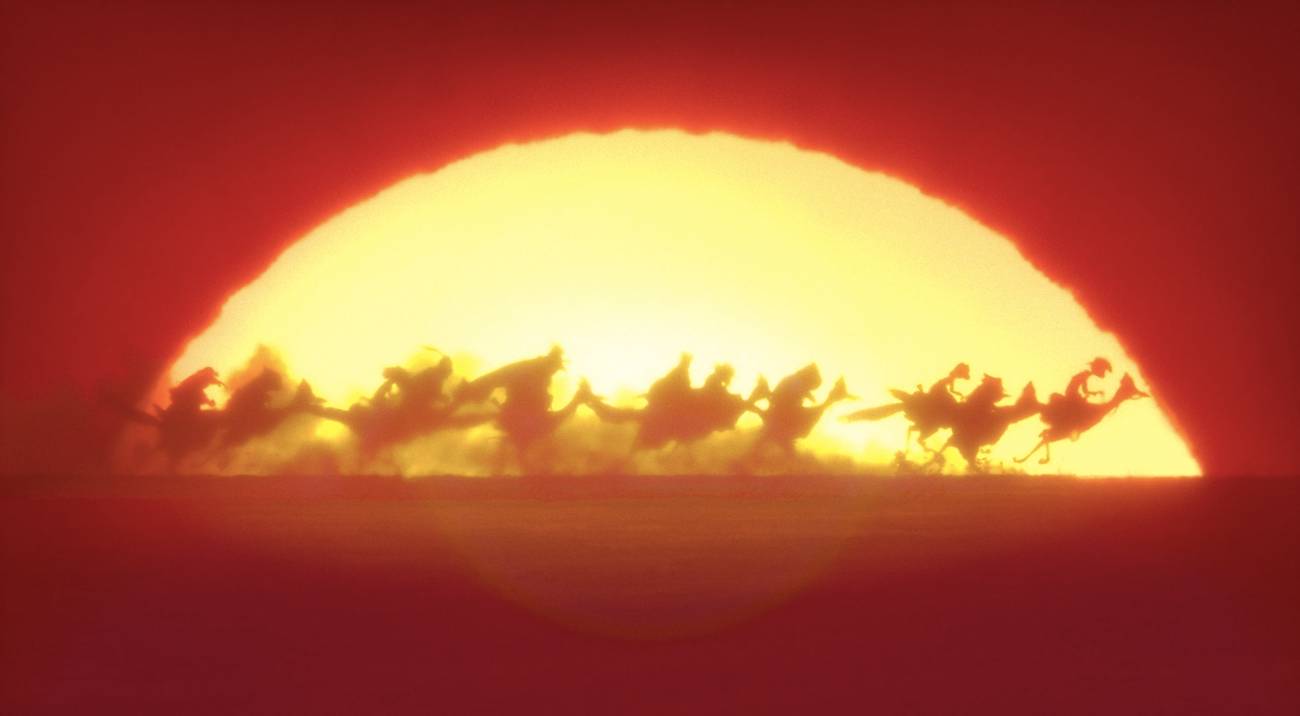
Transitioning to animation required Verbinski to fight against the software’s innate tendency to clean up the frame.
Gore Verbinski: Computers crave order and symmetry. In live-action, you get gifts like lens flares or a character tripping by mistake. In animation, you have to manually ‘break’ the perfection. We had to ask for dust, for door hinges to catch, for the ‘film weave’ that makes a movie feel real. We were meticulously fabricating anomalies.
A Return to the Desert?
Despite its financial and critical acclaim, Verbinski views Rango as a complete thought, though his interest in animation hasn’t waned.
Gore Verbinski: I don’t see a sequel in Rango’s future. However, I’m deeply invested in a project called Cattywampus. It’s an animated musical about eccentric space cats that we’ve been refining for years. It pushes the boundaries we set with Rango even further, and I’m determined to bring that bizarre vision to life.
Source: Polygon
Related articles
 Modder Turns Diablo Into a 3D Shooter With Multiplayer and Scalable Interface
 Rockstar Co-Founder Says Bully and Red Dead Redemption Nearly Got Canceled During Difficult Development
 10 Nearly Flawless PS4 Games That Nobody Played
 Toxic Crusaders Gameplay Shown, Featuring Retro-Style Brawling
 Castlevania: Belmont’s Curse Launches on PC With Technical Issues
 GTA VI Suspected of Graphics Downgrade, Fans Offer Explanation
 Persona Creator Sums Up the Series in One Word and Explains What an Ideal RPG Should Be
 Quiet Express: Cabin 909 Is a Blue Prince-Style Mystery About a Train That Crashes Every 7 Days