No one expected Forza Horizon 6 to feature one of gaming’s greatest anime moments
When Playground Games announced that Forza Horizon 6 would be set in Japan, they made a clear promise: to capture the authentic spirit of the nation. Naturally, players expected iconic landmarks—the delicate beauty of cherry blossoms, traditional torii gates, the stoic silhouette of Mount Fuji, and the legendary Hachiko statue at Shibuya Station. What no one anticipated was a 100-foot-tall mechanical titan.
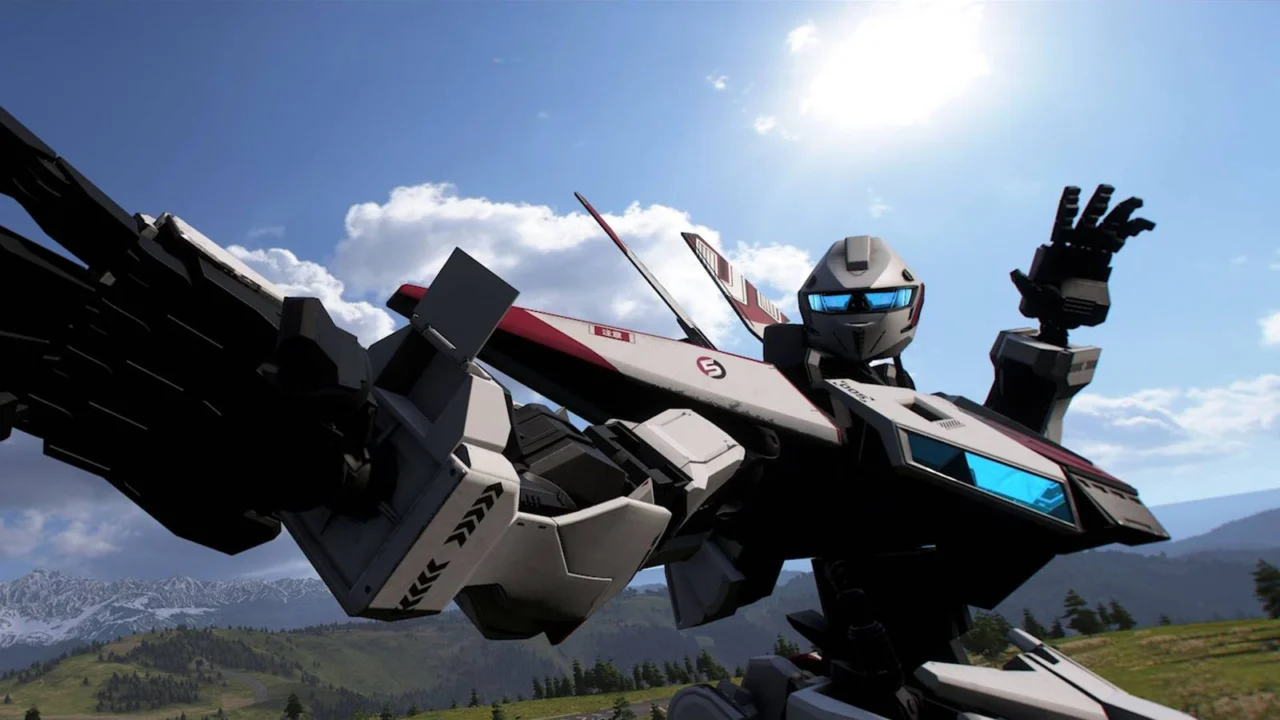
The campaign’s opening act includes a mandatory race titled “Mech My Day,” where you pilot a 2022 Acura NSX through the Japanese countryside, duking it out with a towering humanoid robot known as Chaser Zero. While high-octane mecha battles are a staple of science fiction, they are arguably the last thing you would expect in a racing sim. Even in a series famous for tossing cars out of cargo planes and pitting supercars against bullet trains, this stunt reaches a new level of surrealism.
For most of the event, Chaser Zero glides alongside your vehicle on integrated wheels, but it doesn’t stop there. The machine wades through the ocean, leaps gracefully over your car, engages thrusters, and even swings from Tokyo Tower like a mechanical acrobat. Despite the 2022 Acura NSX being one of the most formidable machines in your garage, keeping pace with this behemoth is impossible. You only secure the victory due to a convenient system glitch that halts the robot just inches from the finish line. As Dominic Toretto famously mused, “It don’t matter if you win by an inch or a mile. Winning is winning.”
Admittedly, the race feels jarring, even for a title that never prioritized rigid realism. While Forza Horizon 6 occasionally dips into the absurd—such as when you plow through cute, food-themed mascots—those are usually fleeting moments in a game otherwise dedicated to the grounded beauty of automotive culture. Yet, in this bold display, Playground Games makes an unmistakable point: technology and pop culture are inseparable threads in the modern tapestry of Japan.
As someone of half-Japanese, half-Brazilian heritage, giant robots evoke a sense of home just as strongly as a postcard of Mount Fuji. My childhood was shaped by tokusatsu staples like Jaspion, where heroes commanded colossal mechs, and later by anime pillars like Gundam Wing and Patlabor, which cemented the connection between Japan and these metallic giants.
While my personal history with these mechs dates back to 1990s Brazil, their cultural footprint is vast. From the 1963 debut of Tetsujin 28-go, which featured a young protagonist steering a giant robot, to the 1978 Japanese adaptation of Spider-Man—where the spacecraft Marveller transformed into the mighty Leopardon—these goliaths have long dominated the creative landscape.
Chaser Zero isn’t a direct copy of any specific franchise, yet its design clearly riffs on legends like Gundam, the Nirvash typeZERO from Eureka Seven, and the iconic mechs of Macross. With its pronounced shoulder armor, a crisp red-and-white paint scheme, and powerful leg boosters, the robot feels like a nostalgic love letter to the genre.
Image: Playground Games/Xbox Game Studios via PolygonThe robot’s movements are equally referential. When Chaser Zero leaps from the water, it strikes a pose—arms swept back, hands splayed, and a knee pulled up—that serves as a cheeky homage to Sailor Moon. It is a brilliant nod to the 1990s aesthetic that defined so much of the global perception of Japan. Elsewhere in the race, the robot executes a precision slide beneath an overpass, echoing the legendary motorcycle drift from the 1988 classic Akira. Whether it’s a futuristic vehicle or a giant robot, the spirit of stylish, high-speed movement remains the same.
Ultimately, the “Mech My Day” race is a clever tribute to Japan’s technological obsession. One of the race’s final shots features your Acura emerging from a tunnel, flanked by Chaser Zero on one side and a sleek Shinkansen bullet train on the other. In one frame, Playground Games captures the intersection of reality and fiction, showcasing the different forms that Japanese innovation takes.
Image: Playground Games/Xbox Game Studios via PolygonThere are likely dozens of hidden details I missed, but the convergence of these elements was a genuine joy to witness. By weaving together personal nostalgia with a broader anthropological view of Japanese culture, Playground Games managed to turn a completely absurd set-piece into a truly memorable experience.
Source: Polygon
Related articles
 Xbox Chief Promises to Restore Console Owners’ Trust and Alter Game Pass
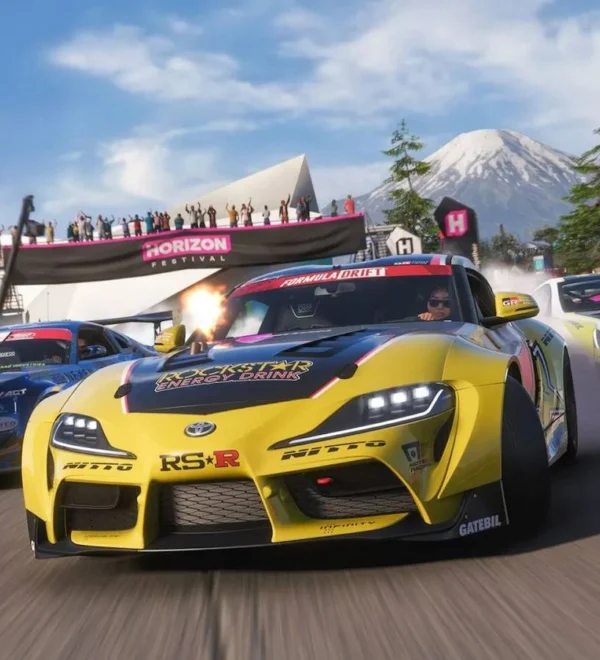 ‘Forza Horizon 6’ Officially Delayed to 2027 on PS5
 Remedy Begins Full Production on Max Payne 1 and 2 Remake as Actor is Revealed
 Timothy Zahn to Write New Star Trek Deep Space Nine Novel
 Square Enix Shuts Down Final Fantasy VII Ever Crisis and Erases In-Game Purchases
 Magic: The Gathering Expensive Warhammer 40K Decks Officially Getting Reprints
 Reviewers Praise Twin Peaks and Silent Hill-Inspired Horror Game Silver Pines
 Grand Theft Auto VI: Here Are All The Songs We Heard In Rockstar’s In-Game Radio Preview