
Metal Gear Fans Need to Read Hideo Kojima’s Latest Manga Recommendation

Hideo Kojima has long demonstrated an affinity for master sharpshooters, particularly those of the female variety. His iconic Metal Gear Solid franchise boasts memorable figures like Sniper Wolf and Quiet—and even The End, if one wishes to bolster the roster. Consequently, when the legendary game designer recently praised a manga centered on a young girl working as a sniper, I was immediately compelled to investigate.
Miharu’s Seat of War, penned by Hamada Gouten (the mind behind Shimazaki in the Peaceful Land), shares a certain DNA with the acclaimed Gunslinger Girl. However, rather than focusing on a collective of child assassins, it skillfully melds classic shonen elements—such as a solitary protagonist learning to trust her allies—with a gritty, more mature seinen atmosphere. Beyond the aesthetic of girls wielding heavy ordinance, the narrative explores quintessential Kojima-esque themes: the essence of the soldier, the brutality of conflict, and Japan’s complex geopolitical standing. Yet, despite these weighty reflections, the story maintains a charming balance of whimsy and emotional warmth.
 Image:© Shogakukan, Hamada Gouten, Fujimoto Kenshi
Currently, Miharu’s Seat of War is accessible in its original Japanese via Manga One. While English iterations are largely found through fan translations online, the effort to track them down is well worth it for anyone who appreciates the “Kojima vibe.”
The story unfolds against the backdrop of an alternate World War III, where Japan has been fractured and occupied by foreign adversaries. Miharu, a young prodigy with a sniper rifle, finds her personal quest for vengeance swept up in the larger struggle for national sovereignty. Her path intersects with Shou, a former elite marksman who has grown weary of the battlefield. Together, they form a compelling, high-stakes partnership, navigating pivotal battles that will shape Japan’s destiny while wrestling with the psychological scars inherent to their trade.
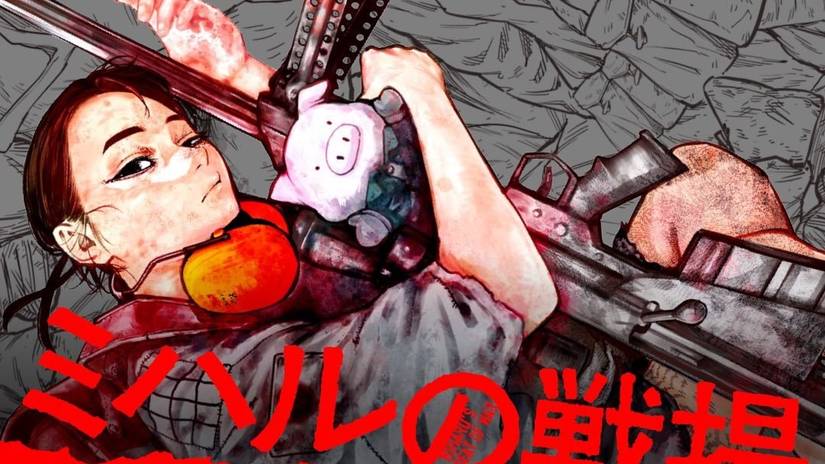 Image: © Shogakukan, Hamada Gouten, Fujimoto Kenshi
The duo’s dynamic evokes various classic pairings, such as the mentor-protege relationship of Batman and Robin, or the lethal efficiency of Hit-Girl and Big Daddy from Kick-Ass. Most strikingly, however, Miharu and Shou mirror the legendary rapport of Solid Snake and Otacon. Miharu is the composed, stoic operative, while Shou serves as the intellectual support and spotter. Though Shou is more active in combat than Otacon, his eccentric personality and signature afro make him an unforgettable presence. Their “odd-couple” chemistry provides much-needed levity, yet it is deeply sincere; Shou is the only one capable of breaking through Miharu’s defenses. This is further highlighted by her attachment to a plush pig named Buu-chan, whom Shou treats as a genuine tactical partner, much to Miharu’s silent appreciation.
Miharu is a character forged in the crucible of war, abandoned to witness horrors that turned her into a hardened survivalist. Initially, she views her recruitment into the military merely as a means to an end—specifically, finding the man responsible for destroying her home. Under the guidance of Shou and their squad leader, Louise, Miharu must learn that being a soldier isn’t about raw violence; it’s about tactical negotiation and restraint. She is challenged to abandon her “lone wolf” mentality and realize that her role is one of deterrence rather than assassination. This character growth adds immense weight to her eventual confrontation with a mysterious antagonist who bears a striking resemblance to a fusion of Vulcan Raven and Skullface. The sense of camaraderie and the high stakes of survival also echo the atmosphere of Attack on Titan, where no character is ever truly safe.
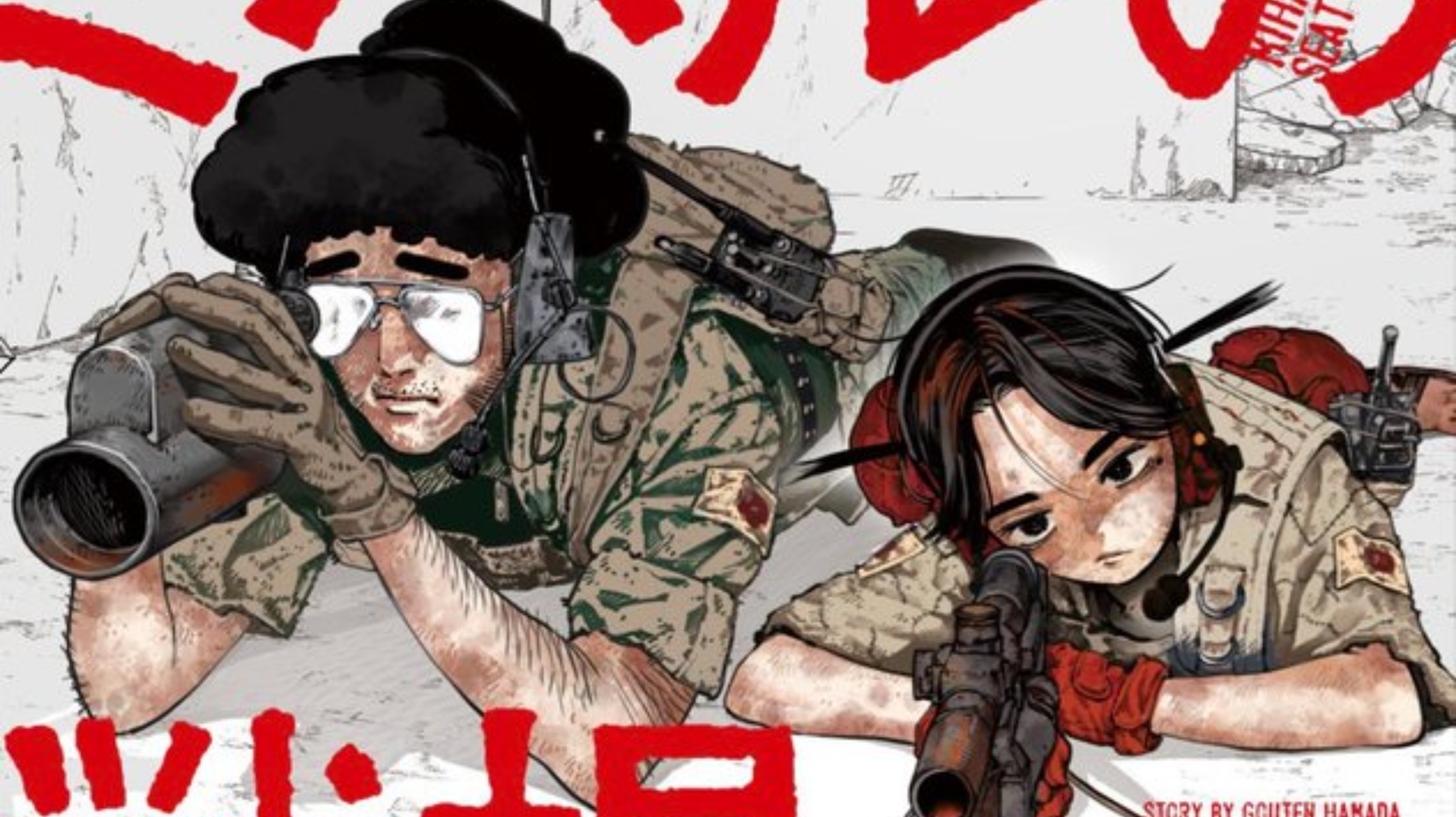 Image: © Shogakukan, Hamada Gouten, Fujimoto Kenshi
The visual presentation by Fujimoto Kenshi is nothing short of masterful. The paneling is expansive and cinematic, often emphasizing the immense scale of the characters and Miharu’s oversized rifle. This broad layout makes the narrative flow effortlessly, avoiding the visual clutter found in many modern series. The action sequences are uncompromisingly visceral; military grade ballistics are depicted with a gruesome realism that captures the true horror of the battlefield. It is the kind of artwork that makes you marvel at a clever trick shot in one moment, only to be struck by the grim reality of its aftermath in the next.
If you are eagerly awaiting Death Stranding 2 but find yourself craving the specific military-thematic depth of Kojima’s earlier masterpieces, Miharu’s Seat of War is an essential read. Here’s hoping its popularity grows enough to warrant a high-budget anime adaptation in the near future.
Source: Polygon
Related articles
 CD Projekt Red Begins Development on New Game Outside The Witcher and Cyberpunk Franchises
 Dragon’s Dogma 2 Receives Performance Boost From 25 to 60 FPS
 Devil May Cry Creator Reveals His Biggest Fear Beyond the Death of Physical Discs
 Journalists Praise Silent Hill: Townfall Demo
 Developers Say Tomb Raider Catalyst Retains 2013 Trilogy Lara Croft
 Ori Creator Evaluates Media Scores and Notes Discrepancies With Player Opinions
 Saros to Receive Free Expansion with New Modes and Secrets
 Bodycam 0.8 Locked & Loaded adds Trenches map and 400 weapon attachments